President Bola Ahmed Tinubu has declared that Nigeria’s electricity sector is undergoing a major transformation, citing far-reaching reforms aimed at boosting power generation, improving transmission infrastructure, reducing metering deficits, and expanding electricity access across the country.
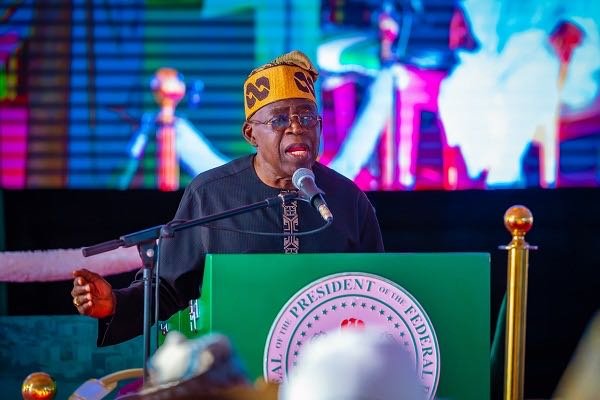
Delivering his 2026 Democracy Day address on Thursday, President Tinubu said his administration inherited a power sector plagued by low generation capacity, unreliable gas supply, weak transmission infrastructure, massive distribution losses, and billions of naira in accumulated debt.

Key Highlights:
- Tinubu says Nigeria inherited a struggling power sector with low generation and transmission capacity.
- Electricity Act empowers states to generate, transmit and distribute power.
- Federal Government moves to clear legacy electricity debts through a proposed N4 trillion bond.
- Rural Electrification Agency expanding mini-grid and off-grid power projects nationwide.
- Administration commits to reducing metering deficit and improving electricity access.
- President says economic reforms are restoring investor confidence and boosting non-oil exports.
- Security spending hits a record N5.41 trillion in the 2026 budget.
According to the President, when his administration assumed office in 2023, Nigeria’s power sector was generating far below its installed capacity of 13,500 megawatts, while transmission networks lacked the capacity to evacuate available electricity.
He noted that distribution companies were burdened by operational inefficiencies and a metering deficit exceeding four million customers, creating a situation where electricity generated could neither be effectively transmitted nor adequately paid for.
Read Also:
- Breaking: Tinubu intervenes in Warri ward delineation dispute as Gov. Oborevwori hails peace deal
- Akwa Ibom community hails Tinubu over appointment of FUATECH pioneer vice chancellor
- Ethnic differences shouldn’t threaten Delta’s stability, pro-Tinubu group coordinator warns
“By 2023, when we came on board, the electricity sector was characterised by chronic generation shortfalls, an unreliable gas supply, and transmission infrastructure so fragile that it could not evacuate available power,” Tinubu stated.
To address these challenges, the President highlighted the signing of the Electricity Act, describing it as a landmark reform that grants states greater authority to generate, transmit and distribute electricity independently.
Tinubu also disclosed that the Presidential Power Sector Task Force has intensified efforts to reduce the country’s metering gap and has been authorised to raise a N4 trillion bond to settle verified legacy debts within the electricity value chain.
The President further revealed that the Rural Electrification Agency, with support from the World Bank and the African Development Bank, has expanded off-grid and mini-grid power projects to underserved communities, universities, hospitals and markets nationwide.
“Electricity is a democratic dividend we owe every Nigerian. We intend to deliver it,” Tinubu said.
Beyond the power sector, the President said his administration’s economic reforms have restored confidence in Nigeria’s economy, leading to increased investments across agriculture, manufacturing, technology, transportation, mining, energy and the creative sector.
He noted that federation revenues have risen significantly since 2023, enabling state and local governments to invest more in infrastructure, healthcare, education and security.
Tinubu also pointed to improvements in domestic refining capacity, which he said have strengthened Nigeria’s energy security and reduced dependence on imported petroleum products.
On security, the President disclosed that the Federal Government has approved the recruitment of more than 50,000 police officers and thousands of military personnel, while allocating a record N5.41 trillion to defence and security in the 2026 budget.
He added that enhanced military cooperation with international partners and precision intelligence operations have contributed to a sharp decline in terrorist activities, with more than 13,000 terrorists neutralised over the past year.
Reflecting on Nigeria’s democratic journey, Tinubu paid tribute to the heroes of the June 12 struggle, including Chief M.K.O. Abiola, Kudirat Abiola, Gani Fawehinmi, Beko Ransome-Kuti and several others who fought for democratic governance.
The President urged Nigerians to remain united, optimistic and committed to nation-building, stressing that the next phase of governance would focus on accelerating economic growth and ensuring that the benefits of democracy are felt in every household.
“We are moving from uncertainty to stability. The next phase is about accelerating growth and ensuring the benefits are felt in every home, every community, and every region,” he said.
Tinubu concluded by expressing confidence that Nigeria’s diversity remains its greatest strength and called on citizens to renew their commitment to democracy, unity and national development.