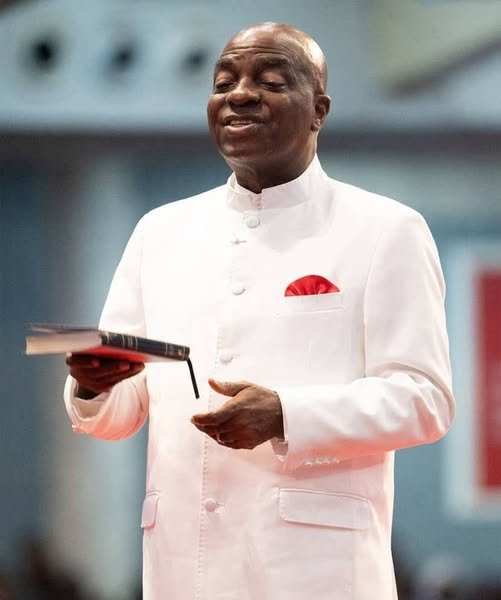
Social media commentator Daniel Regha has called out prominent cleric David Oyedepo over a recent prophetic declaration concerning banditry in Nigeria.
The criticism follows the expiration of a seven-day period, earlier announced by Oyedepo, during which he declared divine judgment would befall bandits and their sponsors.

Speaking during a church service on the theme: “Covenant Day of Vengeance,” Oyedepo addressed the growing insecurity across the country, including kidnappings and killings.
In his sermon, he declared that within seven days, those responsible for the violence would face divine retribution.
The statement drew widespread attention at the time, particularly amid ongoing concerns about security challenges nationwide.
Read Also:
- Daniel Regha tackles Deji Adeyanju over controversial electricity remark
- Churchill denies divorce rumours, speaks on relationship with Tonto Dikeh
- Deji Adeyanju alleges Obi deposited state funds in bank for personal interest
Reacting after the seven-day timeline reportedly elapsed, Regha questioned the outcome of the declaration, citing continued reports of violent attacks across several states.
In a post shared online, he listed incidents allegedly recorded within the past 24 to 48 hours, including attacks in Kogi, Benue, Katsina, Plateau, Ondo States, and parts of north eastern Nigeria.
The incidents involved killings, abductions, and assaults on communities.
He argued that the persistence of such events contradicts the expected outcome of the prophecy, stating that “it didn’t work.”
Nigeria continues to grapple with security challenges, particularly in rural and conflict-prone regions where banditry and insurgent activities remain prevalent.
Despite efforts by security agencies, attacks on communities have persisted, raising concerns among citizens.
The development has sparked mixed reactions online. While some users echoed Regha’s concerns and called for accountability in public declarations, others defended Oyedepo, noting that spiritual pronouncements may not always align with immediate physical outcomes or timelines.
The debate highlights the intersection between faith-based expressions and public expectations in times of crisis, as Nigerians continue to seek solutions to the country’s security challenges.