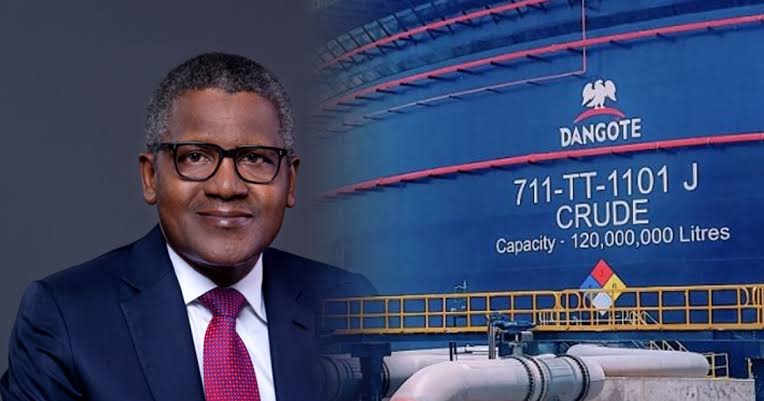
Dangote Petroleum Refinery’s recent petrol price increases have raised questions over its explanation that the adjustments reflect the cost of crude oil purchased weeks earlier, with analysts saying the timing and size of the hikes did not fully match the stated rationale.
Key Highlights
- Dangote’s petrol pump price rose by ₦100, or about 8.6%, in nine days.
- The refinery raised its ex-gantry Premium Motor Spirit price three times between August 21 and 29, from ₦1,165 to ₦1,185, then ₦1,200 and finally ₦1,265 per litre.
- Brent crude fell by nearly 10% during part of the same period.
- Dangote maintains its pricing reflects crude already purchased and delivered for processing, not prevailing international prices.
- NNPC subsequently raised its own petrol prices in Abuja and Lagos.
- Analysts say greater disclosure of crude purchase costs could help explain future price adjustments.
Dangote Defends Petrol Price Adjustments
A senior Dangote executive explained that petrol prices reflect the cost of crude oil already purchased and delivered for processing, rather than the prevailing international crude price. The explanation rests on the time lag between negotiating crude purchases, loading, shipping, discharge and processing, meaning a drop in international oil prices does not necessarily translate immediately into lower production costs for crude already sitting in storage.

However, EBC Financial Group said the timing and size of the three August increases raised questions the crude-cost explanation did not fully address. David Precious, Senior Market Analyst at EBC Financial Group, said an explanation based on stored crude costs would normally be expected to correspond with the timing and size of the underlying cost changes. He noted that the three increases were different in size, with the largest adjustment coming while Brent crude was still declining.
Petrol Price Rose As Brent Crude Fell
Between August 21 and 29, Dangote increased its ex-gantry petrol price from ₦1,165 to ₦1,265 per litre, a cumulative rise of ₦100, or roughly 8.6 percent. Over the same period, Brent crude fell from about $95 per barrel on August 21 to around $86 by August 26, a decline of nearly 10 percent in five trading days.
That divergence does not, on its own, establish that the increases were unjustified, given the refinery’s explanation that it was pricing crude bought earlier at higher levels. The open question is whether the cost of the crude behind each adjustment can be independently verified.
Read also:
- Dangote Refinery Expands Free Fuel Delivery To Kano, Imo, Anambra, Nasarawa
- Dangote Refinery’s Reported $40bn Valuation Could Reshape Nigeria’s Stock Market
- Nigeria Lacks Enough Crude Oil to Fully Supply Dangote Refinery, Says Oyedele
NNPC Prices Also Increased
The Nigerian National Petroleum Company Limited subsequently raised its own petrol prices, with its Abuja price moving from ₦1,250 to ₦1,270 per litre and its Lagos price from ₦1,210 to ₦1,225. Chinedu Ukadike, national publicity secretary of the Independent Petroleum Marketers Association of Nigeria, said retailers had little choice but to adjust pump prices once their acquisition costs rose. The movements do not by themselves prove coordination between suppliers, but they show how quickly changes in refinery and replacement costs can ripple through to retail prices.
Import-Parity Gap Raises Further Questions
The Major Energies Marketers Association of Nigeria’s August 27 Energy Bulletin placed Dangote’s gantry price at ₦1,200 per litre against an estimated spot import-parity price of ₦1,222.32 — meaning Dangote was then pricing about ₦22 below the estimated import-parity level. Two days later, however, the refinery’s ₦1,265 price stood about ₦43 above that same reference point. The comparison should be read cautiously, since the import-parity figure was a snapshot from an earlier date and is not a live benchmark for the exact day the new price took effect.
Diesel Price Also Increased
Dangote separately adjusted its Automotive Gas Oil (diesel) price on September 4, raising the ex-gantry rate from ₦1,750 to ₦1,850 per litre, a ₦100, or 5.7 percent, increase. That adjustment was separate from the three August petrol price increases; Dangote’s petrol gantry price remained at ₦1,265 per litre as of September 7.
What Could Resolve The Pricing Debate?
Greater transparency around the cost structure behind each price adjustment could help settle the questions surrounding Dangote’s petrol pricing. Publishing details of the crude cargo involved, purchase date, purchase price, delivery date and other major cost components would let marketers, regulators and investors independently assess the basis for each change. The Nigerian Midstream and Downstream Petroleum Regulatory Authority has identified crude sourcing, domestic refinery supply, delivery timelines, and logistics and transportation costs as contributors to petrol-price volatility, meaning international crude prices alone may not fully explain movements in Nigeria’s petrol market. For Dangote, clearer disclosure could matter even more as the refinery prepares for a reported stock market listing and seeks to attract investors.
The debate goes beyond whether any single adjustment was justified. It raises broader questions about how domestic refinery costs are calculated, how quickly changes in crude prices should feed through to petrol prices, and how consumers and investors can independently assess what is driving pump prices. As Nigeria leans further into domestic refining, pricing transparency will remain central to building confidence among consumers, marketers, regulators and investors. For more updates, follow us on X.