
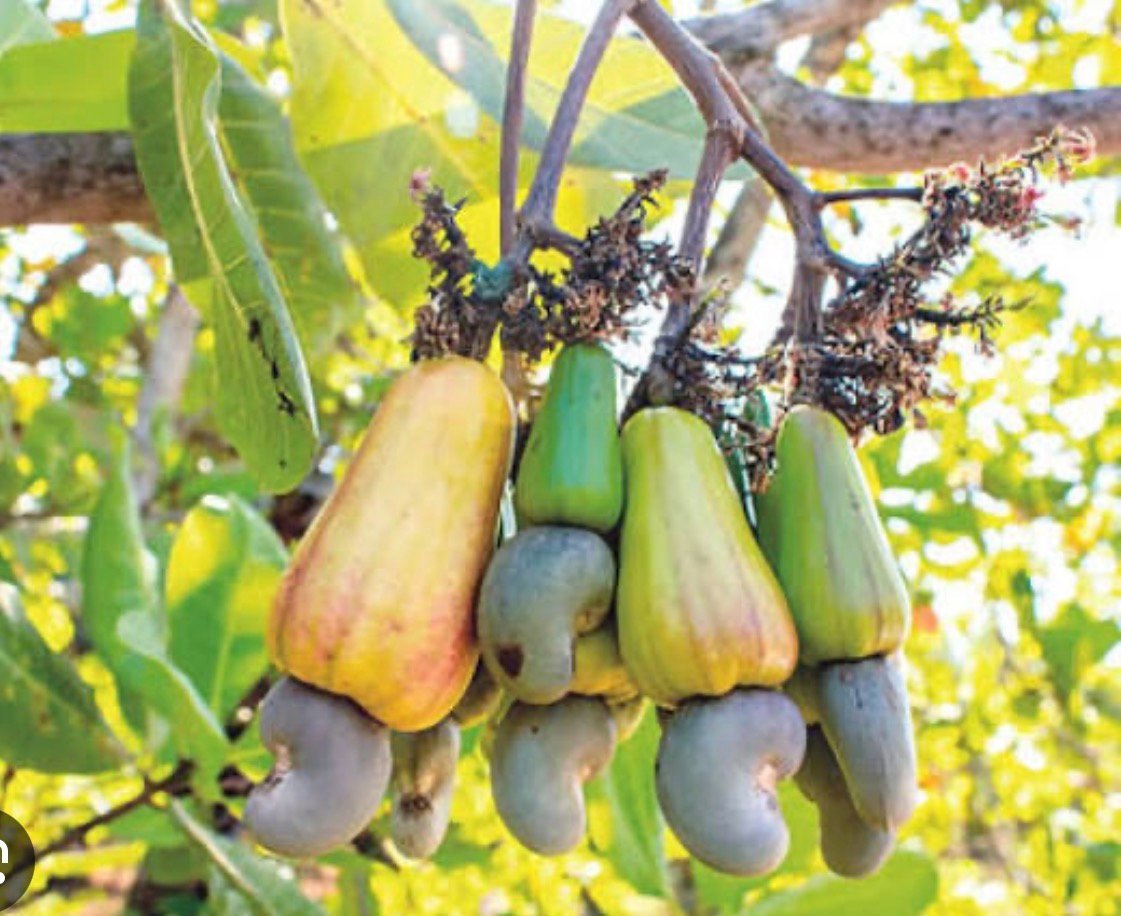
Cashew farmers in Nigeria have rejected proposed plans to ban the export of raw cashew nuts, warning that such a policy could harm livelihoods and destabilise the sector.
Instead, they are urging the Federal Government to provide targeted financial support to boost local processing capacity.

The position was made known by the President of the National Cashew Association of Nigeria (NCAN), Dr. Ojo Joseph Ajanaku, following a joint meeting with the association’s board of trustees.
Ajanaku argued that an export ban would disproportionately affect smallholder farmers, who dominate cashew production in Nigeria.
According to him, most farmers cultivate less than one hectare of land and are already grappling with high production and transportation costs, which significantly reduce their earnings.
He stressed that limiting access to international markets would further depress farmers’ incomes, noting that price competitiveness remains the primary incentive for production.
Read also:
- IITA celebrates Mercy Diebiru-Ojo as 2025 Africa Food Prize Laureate for breakthrough in Cassava, Yam research
- IITA, IFAD unveil plan to lift 30,000 Nigerian youths into agribusiness
- IITA releases over 200 improved Crop varieties to boost food security in Nigeria
- NSIPA begins release of shortlisted beneficiaries for GEEP FarmerMoni scheme
- Defamation: Roby Ekpo rejects Mayowa Lambe’s ₦100m demand, threatens legal showdown
- Africa risks losing mineral wealth without unity, Alake warns
- “One Inhaler Can Wipe Out Monthly Salary”- Foundation raises alarm over Asthma crisis in Nigeria
- Forum of ex- South-East Councillors hail Gov. Otti for offsetting colleagues’ entitlements
The NCAN president recalled that a decline in cashew prices in 2017 led many farmers to cut down their trees, a setback the association worked hard to reverse.
He cautioned that similar policy decisions could undo recent progress recorded in the industry.
Nigeria’s cashew production has declined from an estimated 700,000 metric tonnes annually to between 350,000 and 400,000 metric tonnes.
Meanwhile, countries like Côte d’Ivoire have expanded their output to over one million metric tonnes, overtaking Nigeria in global rankings.
Ajanaku also pointed out that restricting exports would not automatically translate into increased domestic processing.
He said processors continue to face major structural challenges, including high energy costs, expensive loans, and inadequate storage facilities.
He explained that while processing requires year-round operations, cashew harvesting lasts only three to four months, forcing processors to store raw materials for long periods while servicing loans with interest rates as high as 25 to 35 per cent.
To address these challenges, the association called for the establishment of a dedicated agro-processing fund with single-digit interest rates of between three and five per cent, which would enable processors to compete effectively in the global market.
Ajanaku emphasised that any policy aimed at increasing value addition must not come at the expense of farmers’ incomes.
He noted that logistics alone can consume up to 40 per cent of farmers’ revenue, while production costs account for about 30 per cent.
The association further warned that the cashew value chain supports more than five million Nigerians, particularly in rural areas, and that restrictive export policies could have widespread economic consequences.
“Excluding farmers from competitive markets could destabilise a value chain that sustains millions,” he said, adding that current local processing capacity is insufficient to absorb all those involved in raw cashew production.
In a related development, NCAN announced disciplinary actions within its leadership, including the suspension of the Chairman of its Board of Trustees, Irezondu Sunny Stevenson, and the Board Secretary, Chief Abraham Adesida.
The ongoing debate highlights broader policy challenges in Nigeria’s agricultural sector, as authorities seek to balance the push for increased domestic processing with the need to protect farmers’ incomes and sustain production levels.