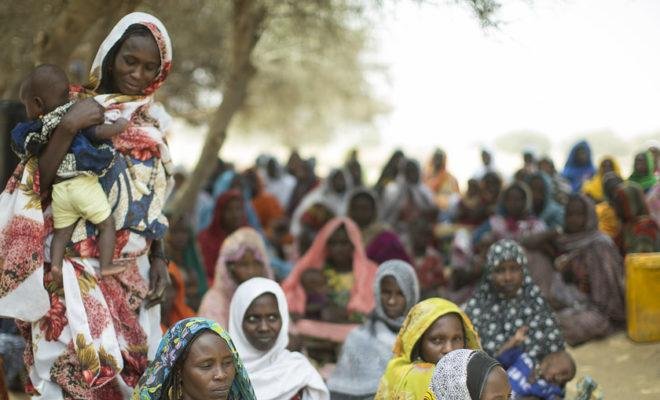
Under the ancient trees lining the palace of the Chief of Mumuye in Yorro, voices that had long been muted by tradition found renewed strength. On Monday, residents from several communities across Yorro Local Government Area of Taraba State gathered not for a ceremony, but for change, calling for the urgent end to harmful cultural practices that have, for generations, shaped their lives and limited their futures.
The gathering formed part of activities marking the Global 16 Days of Activism Against Gender Based Violence, and it brought together community members, traditional authorities, civil society organisations, and local leaders. At the centre of the appeal was a clear message: some long-held customs within the Mumuye ethnic group are no longer serving the people and must be reformed to protect human dignity, especially that of women and girls. Community representatives spoke candidly about practices they said have hindered social development, reinforced inequality, and deepened the marginalization of vulnerable groups. Addressing the Chief of Mumuye, Alhaji Ado Adamu Manzan, they appealed to him in his role as the custodian of their culture to lead a decisive shift by removing such practices from Mumuye traditions.

“We cannot grow while holding on to customs that harm our people,” one speaker noted, echoing a sentiment that resonated across the gathering. The call for reform was strongly supported by the organisers of the event, the Women and Children Health Empowerment Foundation (WACHEF) and ActionAid Nigeria. Both organisations urged the monarch and the Yorro Local Government leadership to go beyond dialogue by enacting by-laws that would formally abolish harmful cultural practices, many of which disproportionately affect women and girls. Some members of the Mumuye ethnic group who had previously raised concerns about these traditions joined the advocacy, stressing that the persistence of such practices has continued to push certain segments of the community to the margins. For them, reform was not only cultural, but a matter of justice and inclusion.
Read also:
- Rise Against Rape, Women And Girl-Child Violence, Akeredolu To FIDA
- Ebonyi Governor’s wife unveils Pet project
- ‘Perpetrators of Female Genital Mutilation risk four years jail term in Edo’
Providing a broader context, the Chairman of WACHEF’s Board of Trustees, Dr. Danjuma Garba, revealed that gender-based violence remains prevalent in Yorro Local Government Area. He called for a collaborative approach involving traditional institutions and local government authorities to address practices he described as obstacles to development. Garba, who also serves as the Executive Secretary of the Taraba State Health Service Management Board, highlighted ongoing interventions by WACHEF and ActionAid Nigeria in eight communities across the council. These efforts, he said, are aimed at protecting vulnerable populations, addressing harmful traditions, and fostering healthier, more inclusive communities.
Beyond cultural practices, he also drew attention to a worrying rise in hepatitis cases in one of the communities, pledging WACHEF’s commitment to tackling the health challenge alongside its advocacy work. For ActionAid Nigeria, the struggle against harmful practices is closely tied to economic realities. Speaking, Hajara Opaluwa Adamu, Advisor for Partnership and Local Rights Programme, identified poverty as a key driver of gender-based violence. “Poverty is not accidental,” she said. “It is the result of long-standing structural inequalities that deny women access to resources, opportunities, and power. One of its most devastating consequences is gender-based violence.”
To confront these inequalities, ActionAid Nigeria unveiled an economic empowerment grant scheme targeting women in its local rights programme communities. Cheques totaling over ₦3 million were presented to women trained in various skills, providing start-up or scale-up capital for small businesses. “These grants are not handouts,” Ms. Adamu explained. “They are strategic investments in women’s resilience, dignity, and leadership.” She added that the initiative would be backed by continuous mentorship and business management training, implemented in collaboration with relevant government agencies to ensure sustainability.
In all, 70 women from communities in Yorro and Gashaka Local Government Areas benefited from the grants. The communities include Bolimika, Dasso, Mika, Mazala, Nyaja Davo, Nyaladi Shumbo and Yali in Yorro, as well as Balewa, Mayang, Mayo Jakaza, and Pumpo in Gashaka. As the event drew to a close, the chief of Mumuye offered a response that many in attendance had hoped for. Moved by the testimonies of his people and the advocacy of WACHEF and ActionAid Nigeria, the monarch pledged to urgently address the concerns raised. He vowed to take immediate steps to expunge harmful cultural practices associated with the Mumuye ethnic group.
For the communities of Yorro, the gathering marked more than an event; it signaled a turning point, where tradition and progress met in honest conversation, and where the possibility of change began to take root.