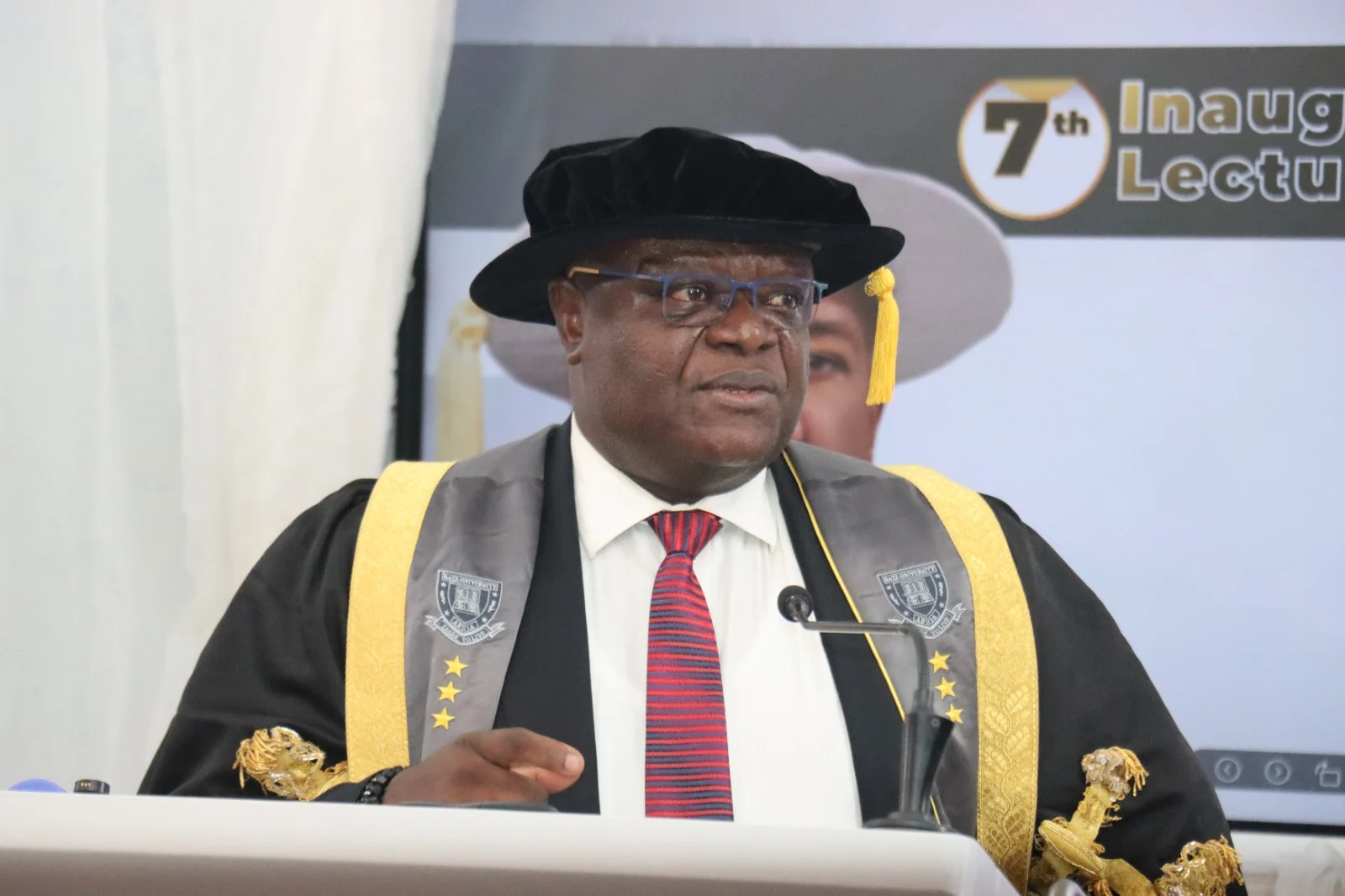
The Vice-Chancellor of Baze University, Abuja, Prof. Abiodun Adeniyi, has called on the federal government to provide greater support for private universities, arguing that they play an important role in developing Nigeria’s human capital.
Prof. Adeniyi made the appeal on Monday, during an interaction with journalists in Abuja, where he highlighted the financial pressures involved in running a private university and maintaining acceptable academic standards.
According to him, private institutions face substantial costs associated with recruiting qualified academic and non-academic staff, providing modern facilities, maintaining infrastructure, paying for utilities and meeting regulatory requirements.

He therefore challenged the perception that private universities exist primarily as profit-making ventures.
“Anybody who thinks it is a profit-making organisation is just making a mistake. Look at what it entails to hire staff, buy facilities, provide utilities and execute huge capital-intensive projects. It is difficult,” he said.
The vice-chancellor noted that graduates from both private and public universities eventually contribute to the same national workforce and economy.
“We are all citizens of this country. I don’t mind if TETFund wants to support us,” Prof. Adeniyi said.
He commended the Executive Secretary of the Tertiary Education Trust Fund (TETFund) for initiatives that have opened opportunities for private universities to participate in some research programmes, but called for broader interventions.
According to him, increased government support would help private universities strengthen their academic capacity, improve research output and remain financially sustainable.
Prof. Adeniyi also highlighted Baze University’s location in Abuja, describing the Federal Capital Territory as a strategic position that gives the institution access to students from different parts of the country.
He said the university was established about 15 years ago by its Founder and Chancellor, Senator Datti Baba-Ahmed, with the objective of creating a Nigerian university capable of competing with leading institutions internationally.
The vice-chancellor said the institution had invested in creating a conducive learning environment while keeping its fees competitive despite operating without direct government allocations.
He added that the university had maintained compliance with requirements set by the National Universities Commission (NUC), Joint Admissions and Matriculation Board (JAMB) and Federal Ministry of Education.
According to him, Baze University is also strengthening its academic standards by recruiting scholars from different parts of the world and plans to engage international external examiners to assess academic programmes and recommend improvements based on global best practices.
Prof. Adeniyi described research as the “hallmark of development”, saying the university was developing partnerships and programmes aimed at strengthening its research culture.
He said the university is equally focused on producing graduates who could adapt to changing labour-market demands by combining academic knowledge with entrepreneurship and other transferable skills.
The vice-chancellor explained that the modern employment environment increasingly requires graduates to work across different fields rather than remain restricted to the discipline in which they obtained their degrees.
He cited the university’s participation in the World Bank-supported IDEAS programme as part of efforts to equip young Nigerians with practical and entrepreneurial capabilities.
Adeniyi said the institution’s objective was to ensure that its graduates were prepared to navigate the realities of an evolving economy.
Read also:
- Nigerians react as Baze University owner Yusuf Datti Baba-Ahmed’s son graduates from Queen Mary University in UK
- Imo State University ASUU Embarks On Indefinite Strike Over Non- Implementation Of 2025 ASUU- FG Agreement.
- FG, Yakubu Gowon University To Collaborate On Diplomatic Training, Policy Research, Capacity Building
The vice-chancellor also rejected the perception that Baze University caters mainly to politicians and influential Nigerians.
While acknowledging that politicians and senior professionals were among its students, he said the university had a much broader student population comprising Nigerians and students from other African countries, particularly within the West African region.
He said Baze was also working to strengthen academic and institutional relationships with countries including Sierra Leone and Kenya.
Prof. Adeniyi said the university would continue to expand gradually while complying with regulatory requirements and pursuing its broader commitment to education in Nigeria and Africa.