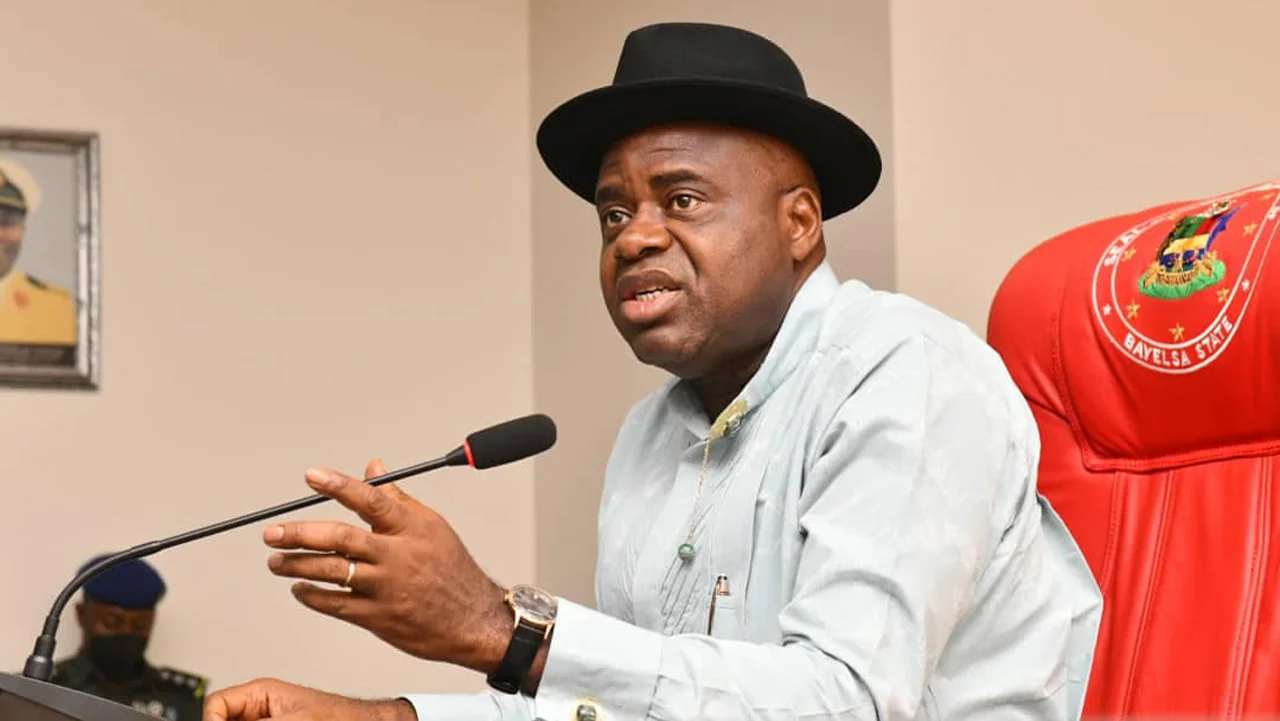
Governor of Bayelsa State, Douye Diri, has flagged off the maiden fish harvest at the Bayelsa Aquaculture Village in Yenegwe, describing the revived facility as a major step towards diversifying the state’s economy, creating jobs and strengthening food security.
Latest: Bayelsa proposes N1.24trn 2027 budget with N840.79bn for capital projects

Key Highlights
- Governor Diri flagged off the maiden fish harvest at the Bayelsa Aquaculture Village, Yenegwe.
- The facility was recovered after the state terminated a non-performing concession.
- The 831-hectare site has an 80-tank hatchery, 40 nursery ponds, 500 grow-out ponds, a feed mill and 30 smoking kilns.
- The hatchery has produced about 100,000 fish fry, alongside a 30,000-fish monosex tilapia pilot.
- Diri ordered rehabilitation of the Igbogene access road and funds to complete the Glory Drive link road.
Governor Diri said the revival of the aquaculture facility demonstrates his administration’s commitment to transforming the state’s natural resources into productive enterprises that would benefit the people.
He said the facility established by the immediate past administration in the state remained moribund for years due to a stalled concession arrangement until it was repositioned by his administration.
The governor noted that although oil and gas play a significant role in the state’s development, their finite nature and fluctuating fortunes made it necessary to explore other economic opportunities.
He said: “Our future must now be built on our waters. Our fathers and forefathers relied on these waters. These waters gave them life, and these waters fed them.
“That is why our administration is investing in agriculture, aquaculture and the blue economy alongside education and the energy sector.”
How the facility was recovered
He explained that efforts to revive the facility after he assumed office in 2020 were unsuccessful due to the contractual agreement, adding that his administration eventually terminated the non-performing concession and recovered the asset for the state.
The governor said the recovery was necessary to protect public funds already invested in the facility and ensure that the state’s resources were put to productive use.
He disclosed that his administration earlier spent about N200 million in an attempt to revive the facility, but the intervention was unsuccessful.
Governor Diri also commended President Bola Tinubu for establishing the Federal Ministry of Marine and Blue Economy, describing it as a recognition of the economic potential of Nigeria’s coastal communities and that Bayelsa and the Ijaw nation were direct beneficiaries of the ministry’s creation.
He also said the ministry provided an opportunity for Bayelsa to strengthen its relationship with the Federal Government and advance its marine and blue economy agenda.
The governor further appreciated the technical support of CSS Farms in Nasarawa State and the cooperation and support of the host communities.
He directed the commissioner for works to assess the deteriorated road linking the facility from Igbogene for immediate rehabilitation and ordered the release of additional funds for the completion of another road connecting it to the Glory Drive.
Beyond fish production
Diri said the state’s ambition extends beyond fish production to developing a complete fisheries value-chain involving processing, transportation, marketing and trade.
He urged young people to embrace fish farming and entrepreneurship, noting that the facility would also serve as a training ground for students and aspiring aquaculture practitioners.
The governor expressed confidence that Bayelsa State could supply fish to other parts of the country, adding that the state’s natural environment remained a major advantage for aquaculture development.
Read also:
- Bayelsa Proposes N1.24trn 2027 Budget, Allocates N840.79bn to Capital Projects
- China To Partner ABER On Blue Economy, Coastal Management, Delta Governance In Africa
- Only God-fearing Person Will Succeed Me, Gov. Diri Declares At Bayelsa 15th Thanksgiving
- Bayelsa Rises from 16th to 3rd in BudgIT Fiscal Performance Ranking
- Blue Economy: Senate Urges African Coastal States to Harness Marine Resources for Economic Growth
100,000 fish fry produced
Earlier, the Commissioner for Marine and Blue Economy, Faith Zibs-Godwin, said the maiden harvest marks the revival of a major public investment and the beginning of sustained aquaculture production in the state.
She disclosed that the facility, which covers approximately 831 hectares, comprises an 80-tank hatchery, 40 nursery ponds, 500 grow-out ponds, a feed mill with two production lines, a processing centre with 30 smoking kilns and other supporting infrastructure.
The commissioner said the hatchery produced about 100,000 fish fry, while a 30,000-fish monosex tilapia pilot had also been undertaken to diversify production.
She added that fresh spawning had commenced for the next production cycle, while students from the Niger Delta University and National Youth Service Corps members were receiving practical training at the facility.
Zibs-Godwin called on credible investors and technical partners to support the expansion of the facility’s production, processing, cold-chain distribution and access to wider domestic and export markets.
For more Niger Delta and agriculture news, follow us on X.