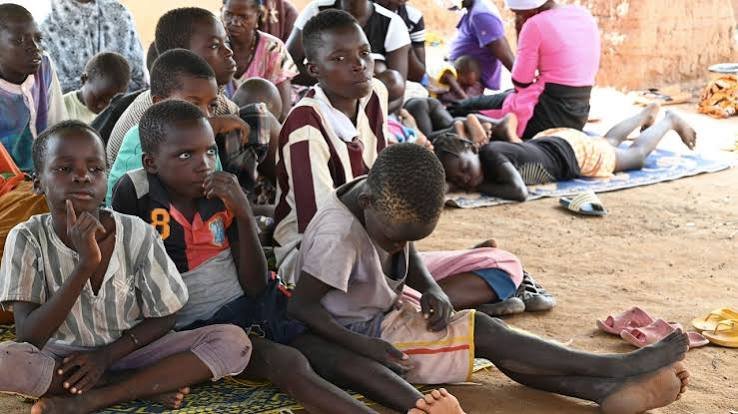
Minister of Education, Tunji Alausa, has warned that the growing neglect of boy-child education in the country could become “a major disaster to the world” if urgent steps are not taken to reverse the trend.
Key Highlights
- Alausa warns of boy-child education crisis, saying continued neglect could become a “major disaster to the world.”
- Government’s focus on girls has produced results, with nearly 6.7 million girls reportedly returned to school through the Adolescent Girls Initiative for Learning Empowerment.
- More than one million out-of-school children have reportedly been reintegrated into formal education over the past 20 months.
- Minister says boys are increasingly being left behind, with data showing declining school enrolment and retention among boys.
- UNESCO urged to support boy-child education by adapting successful interventions previously used for girls.
Alausa raised the concern when the newly appointed UNESCO Country Representative to Nigeria, Prof. Isaiah Barreto Da Rosa, paid him a courtesy visit.

The minister said government’s interventions targeting girls’ education has produced significant results, but the success has inadvertently shifted attention away from the boys.
According to him, available data now show that more girls are enrolling and remaining in school, while the number of boys doing the same is declining.
“Somebody brought this to my attention, and I’ve known this, that we focus a lot on girl-child education. We should not drop that. But what we’re seeing now, I think we’ve moved focus away from boy-child education,” Alausa said.
“Now we’ve seen that more girls are going to school, less boys are going to school. So this is a dichotomy that we’ve created.”
Read also:
- UNIZIK ASUU Begins Indefinite Strike Over Unpaid August Salary
- Pioneer Vice-Chancellor of Pan-Atlantic University, Lagos, Dies At 87
- Governor Zulum Pledges Swift Reforms, Upgrade Of Facilities At Mohammed Goni College, Maiduguri
The minister commended existing interventions, particularly the adolescent girls initiative for learning empowerment, saying nearly 6.7 million girls had been returned to school through the programme.
He also disclosed that more than one million out-of-school children had been reintegrated into the formal education system over the past 20 months.
“That is good. That means every intervention that the world has made, governments, individual governments have made, are working,” he said.
However, Alausa urged UNESCO and other development partners to replicate successful girl-child education interventions for boys.
“I’m talking to UNESCO now, and we need to sit back and also bring boy-child education back into our agenda. We’ve heavily focused on girl-child education.
“,Good. We’ve seen a lot of results. Let’s go back to those templates and use for boy-child education,” he said.
The minister warned that allowing boys to continue falling behind in education could have serious consequences beyond Nigeria.
“UNESCO has a role to play here. You are the one, as a UN agency, that has the total purview, the work to support education.
“We’re leaving the boys behind. And it’s going to be, if we continue at this level, it will be a major disaster to the world,” Alausa said.
“We’re leaving the boys behind. We need to go back, pull the boys along.”
He stressed that education policies must address the needs of both genders to ensure sustainable human-capital development.
“We should focus both on girl-child education and boy-child education. That’s how we can build the world. That’s how we can build human capacity,” he added.
Alausa identified six priority areas of the federal government’s education agenda as Technical and Vocational Education and Training (TVET), Science, Technology, Engineering and Mathematics (STEM), reintegration of out-of-school children, data and digitalisation, girl-child education, and quality assurance through teacher capacity development.
He said the government remained committed to evidence-based planning and domestic resource mobilisation to sustain reforms in the education sector.
The minister also expressed Nigeria’s readiness to strengthen collaboration with UNESCO in areas aligned with the country’s education priorities.
Speaking earlier, Prof. Da Rosa reaffirmed UNESCO’s commitment to supporting Nigeria’s education reforms, describing the organisation as a technical partner capable of providing expertise in areas identified as national priorities.
He recalled that UNESCO has operated in Nigeria since the 1960s, with interventions spanning TVET, teacher development, education for peace, science, culture, communication and information.
Prof. Da Rosa commended the ministry’s progress in digitising education data and expressed UNESCO’s readiness to deepen collaboration in TVET, teacher capacity development and the reintegration of out-of-school children.
He said UNESCO-supported programmes have trained more than 28,000 teachers across Nigerian states and reached over 1.7 million students.
The UNESCO representative added that the organisation’s specialised institutes remained available to provide technical support to Nigeria as the Federal Government implements its education reforms.