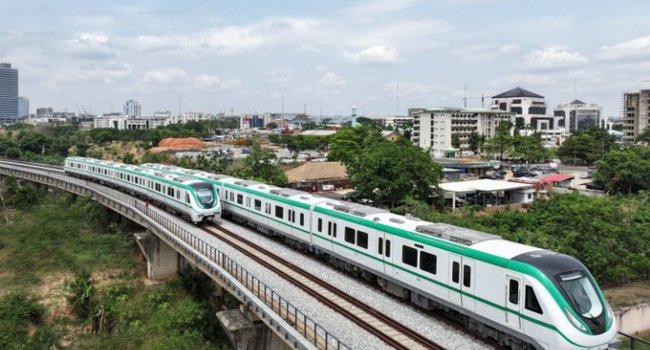
Nigeria’s planned capital, has long struggled with traffic congestion despite its wide roads and modern layout. The existing Abuja Light Rail (also called Abuja Rail Mass Transit or Abuja Metro) represents a key effort to build a sustainable public transport system. While the main system is mostly above-ground light rail, recent announcements highlight plans for Nigeria’s first underground rail section—a short but strategic link in the Central Business District (CBD).

Background: The Abuja Light Rail Project
The broader Abuja Rail Mass Transit project was conceived in the 1990s as part of the FCT’s transportation master plan. Construction of the first phase (Lots 1 and 3) began around 2007–2009 by China Civil Engineering Construction Corporation (CCECC), with significant funding from a Chinese Exim Bank loan.
Phase 1 Details: Approximately 45 km of track with two lines and 12 stations, connecting the Abuja Metro Station in the CBD to Nnamdi Azikiwe International Airport via Idu (linking with the Lagos-Kano standard gauge railway).
Cost: Around $823–840 million for the initial sections.
Timeline: Launched in 2018, suspended during COVID-19, and relaunched in May 2024 with limited daily services (initially free rides). By late 2024, it had carried over 250,000 passengers in its first 100+ days of resumed operations.
Full Vision: A 290 km network across six phases/lots to better serve the growing capital.
Read also:
- Tinubu saddened by Abuja-Kaduna train derailment, awaits full briefing
- Abuja-bound train derails at Jere, passengers stranded
- NRC confirms Abuja-Kaduna train incident, assures passengers of safety, swift service restoration
The system has faced challenges, including delays, limited service frequency, design critiques (noted by FCT Minister Nyesom Wike), and integration issues with other transport modes.
The Proposed Underground Rail Component
In August 2024, during the flag-off of the CBD Bus/Taxi Terminal construction at Eagle Square, FCTA officials announced plans for an 8-meter-deep underground light rail line. This is not a massive new metro network but a targeted underground corridor to integrate the existing light rail with bus and taxi services.
Key Features:
Route: Connects the Abuja Metro Station (CBD) to the new Central Business District Bus Terminal at Eagle Square.
Depth: Approximately 8 meters underground, following the original Abuja Master Plan.
Design: Underground train stops with seamless intermodal transfers to surface-level buses and taxis. Passengers would disembark from underground trains and move directly to bus/taxi facilities above.
Purpose: Create a true multi-modal transport hub, reduce reliance on private cars, ease traffic congestion in the city center, and improve overall mobility and safety (e.g., reducing “one-chance” crimes on informal transport).
The new CBD terminal is designed like a mini-airport, with provisions already reserved in its layout for the future underground rail corridor.
Current Status and Timeline
As of 2024–2026 reports, this underground section remains in the planning/proposal stage, aligned with the master plan rather than a fully funded, under-construction project with a detailed public timeline or budget. The surface bus terminal construction is progressing (with expectations of completion by the end of 2026 in some updates), and the underground rail is positioned as a complementary future addition.
FCT Minister Nyesom Wike has emphasized integrating road expansions with mass transit hubs for long-term efficiency. No specific cost, contractor, or exact completion date for the underground link has been widely publicized yet.
Potential Benefits
Traffic Relief: Abuja’s population and vehicle numbers are growing; better public transport integration could significantly cut congestion.
Seamless Connectivity: Easier transfers between rail, bus, and taxi.
Modern Urban Mobility: Aligns Abuja with global capitals that use underground systems for dense central areas.
Economic and Safety Gains: More reliable, regulated transport options; reduced fuel consumption and vehicle wear.
Challenges Ahead
Funding: Nigeria’s infrastructure projects often face financing hurdles.
Execution: The existing light rail has seen delays and operational limitations; underground construction adds complexity (geology, cost, urban disruption).
Integration: Ensuring the full network (including remaining lots) is completed and services run frequently enough to be attractive.
Maintenance and Operations: Sustaining service post-construction.
Broader Context
This underground proposal fits into wider FCT efforts under the current administration to build bus terminals and improve transport. It complements other Nigerian rail initiatives but remains distinct from high-speed intercity projects.
The Abuja underground rail link, though modest in scope initially, could serve as a pilot for deeper underground infrastructure in Nigeria if successful. It represents a forward-looking step in the FCT’s master plan to create an efficient, integrated transport system for a modern capital. We will keep watching out for updates on funding, detailed designs, and construction timelines from the FCTA.