The 15-day ultimatum issued by the Academic Staff Union of Polytechnics (ASUP) to state governments over unpaid academic allowances expired on Wednesday, November 11, 2026, putting Delta State’s government-owned polytechnics in Ogwashi-Uku and Otefe-Oghara under pressure to clarify whether lecturers have received the Consolidated Academic Tools Allowance (CATA) and Earned Academic Allowance (EAA).

The development raises concerns about a possible disruption of academic activities in Delta State, as ASUP chapters across the country continue to demand the implementation of allowances covered by the April 2026 agreement between the Federal Government and the union.
Key Highlights
- ASUP’s 15-day ultimatum to state governments expired on November 11, 2026.
- The union is demanding payment of the Consolidated Academic Tools Allowance (CATA) and Earned Academic Allowance (EAA).
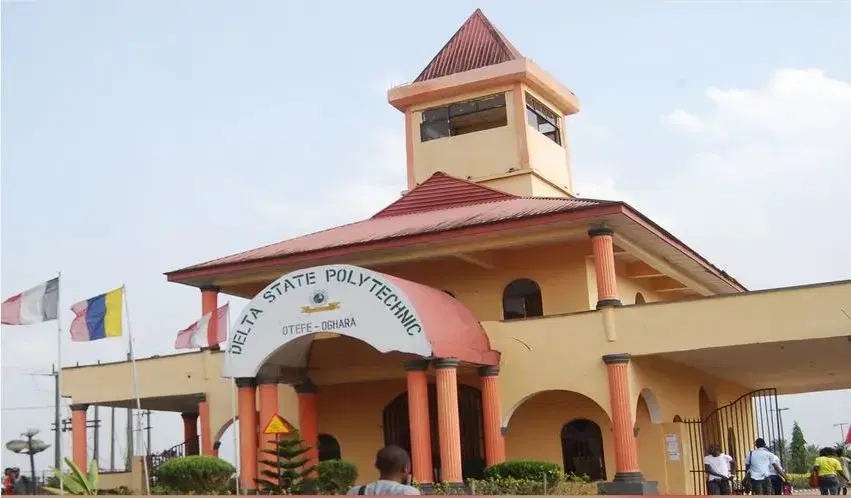
- Delta State’s two government-owned polytechnics, in Ogwashi-Uku and Otefe-Oghara, are affected by the dispute.
- Rivers State ASUP has directed institutional chairmen to mobilise members for a possible shutdown.
- Payment or implementation of the disputed allowances in Delta’s polytechnics remains unverified.
ASUP Demands Payment of CATA and EAA Allowances
The Academic Staff Union of Polytechnics is demanding the implementation of two allowances for lecturers in state-owned polytechnics and colleges of technology: the Consolidated Academic Tools Allowance and the Earned Academic Allowance.
According to the union, the Federal Government and ASUP signed an agreement on April 8, 2026, providing for the implementation of the allowances with effect from January 2026.
ASUP maintains that the allowances have been implemented in federal polytechnics, while state governments are expected to extend the same benefits to lecturers working in their institutions.
The union’s national leadership reportedly wrote to state governors on August 5 and September 21, 2026, urging them to implement the agreement. However, ASUP says the level of compliance among state governments has remained unsatisfactory.
The union’s demand is for state governments to honour the agreement by approving and paying the allowances to eligible academic staff in their institutions.
Delta State Polytechnics Under Pressure as Deadline Expires
Delta State’s response to the ultimatum directly affects lecturers in its two government-owned polytechnics:
- Delta State Polytechnic, Ogwashi-Uku, in Aniocha South Local Government Area.
- Delta State Polytechnic, Otefe-Oghara, in Ethiope West Local Government Area.
The state’s third polytechnic, formerly Delta State Polytechnic, Ozoro, has since been converted into the Delta State University of Science and Technology, Ozoro.
The major concern is whether the two institutions have commenced payment of CATA and EAA, issued payment schedules or received clear directives from the Delta State Government on implementing the allowances.
The dispute is not restricted to Delta State. ASUP’s national leadership issued the 15-day ultimatum to state governments generally, while union chapters in Ogun, Osun and Katsina have also raised concerns over the implementation of the allowances.
If Delta has complied with the demands, the state could distinguish itself from governments yet to implement the agreement. However, failure to address the demands could increase tensions between lecturers and institutional management, potentially paving the way for industrial action.
ASUP’s 15-Day Ultimatum Expires November 11
The union’s National Executive Council issued the ultimatum following its 118th regular meeting held in Abuja on October 22, 2026.
The 15-day notice took effect on October 27, giving state governments until November 11 to demonstrate their commitment to implementing CATA and EAA.
With the deadline now expired, attention has shifted to the next steps ASUP may take against governments that have failed to meet its demands.
For Delta State, the immediate questions are whether the government has approved the payments, whether the polytechnics have received funding and whether the respective ASUP chapters have been informed of any implementation arrangement.
The expiration of the ultimatum does not automatically mean that a strike has commenced in Delta State. However, it places additional pressure on the government and institutional authorities to resolve the dispute before it escalates.
Rivers ASUP Threatens Polytechnic Shutdown
While Delta’s compliance status remains unclear, ASUP Zone D in Rivers State has already directed union chairmen in three state-owned institutions to mobilise members for a possible total shutdown.
The affected institutions are Kenule Beeson Saro-Wiwa Polytechnic, Bori; Captain Elechi Amadi Polytechnic, Rumuola; and Rivers State College of Health Science and Management Technology, Port Harcourt.
The union reportedly warned that a shutdown could commence if the affected institutions fail to provide a clear commitment to implementing CATA and EAA by the end of November.
However, the directive should not be mistaken for confirmation that academic activities have already been suspended. Rather, it represents an escalation warning and a mobilisation strategy aimed at pressuring the relevant authorities to address the outstanding allowances.
The development in Rivers State could also influence how ASUP chapters in other states, including Delta, respond to the failure of their governments to implement the agreement.
Read also:
- Ogun Poly Lecturers Threaten Strike, Demand ₦100m Monthly Funding From Abiodun Government
- FG Releases CATA Payments To Academic Staff In Universities, Polytechnics, Colleges of Education
- NANS Gives Benue 5-Day Ultimatum To Resolve Disputes With COEASU, ASUP
How a Possible ASUP Strike Could Affect Students
A potential shutdown of polytechnics could have serious consequences for students, academic staff and institutional management.
For students, industrial action could disrupt lectures, practical sessions, examinations and other academic activities. It could also lead to adjustments in academic calendars, delayed graduation timelines and additional financial pressure on students who depend on timely completion of their programmes.
For lecturers, the dispute centres on allowances they say were agreed upon for implementation from January 2026.
The Federal Government has announced the commencement of payments of approved allowances to eligible personnel nationwide from January 1, 2026, under agreements with relevant academic and non-academic staff unions.
However, ASUP’s complaint concerns state-owned institutions, where the implementation of the agreement requires action and funding arrangements by the respective state governments. Federal Government implementation does not automatically establish that state governments have approved and paid the allowances in their own polytechnics.
What Delta State Government Must Clarify
With ASUP’s deadline expired, the Delta State Government and the management of the two polytechnics face growing pressure to clarify their positions. The key issues requiring clarification include:
- Whether Delta State Polytechnic, Ogwashi-Uku, has implemented the allowances.
- Whether Delta State Polytechnic, Otefe-Oghara, has received approval or funding for the payments.
- Whether the Delta State Government has issued an official circular or payment directive.
- Whether ASUP chapters in both institutions have received formal assurances from their managements.
Until these issues are addressed through official statements or verifiable payment records, the compliance status of Delta’s polytechnics remains unconfirmed. It would therefore be premature to conclude that the institutions have either complied with or rejected ASUP’s demands.
Will Delta Polytechnics Face an ASUP Strike?
The expiration of ASUP’s 15-day ultimatum marks a critical moment for state-owned polytechnics across Nigeria, particularly in Delta State, where lecturers are awaiting clarification on the implementation of CATA and EAA.
While Rivers State ASUP has already moved towards possible industrial action, the position of Delta’s government-owned polytechnics remains unclear. The Delta State Government now faces an important decision: demonstrate its commitment to implementing the allowances or risk an escalation of the dispute.
For students, parents and academic staff, the major concern is whether the disagreement will be resolved through dialogue and payment or eventually lead to disruption of academic activities at Ogwashi-Uku and Otefe-Oghara.
The central question remains: Has Delta State paid ASUP’s disputed allowances, or are its polytechnics heading towards another industrial crisis?
For more Delta State education and strike updates, follow us on X.