


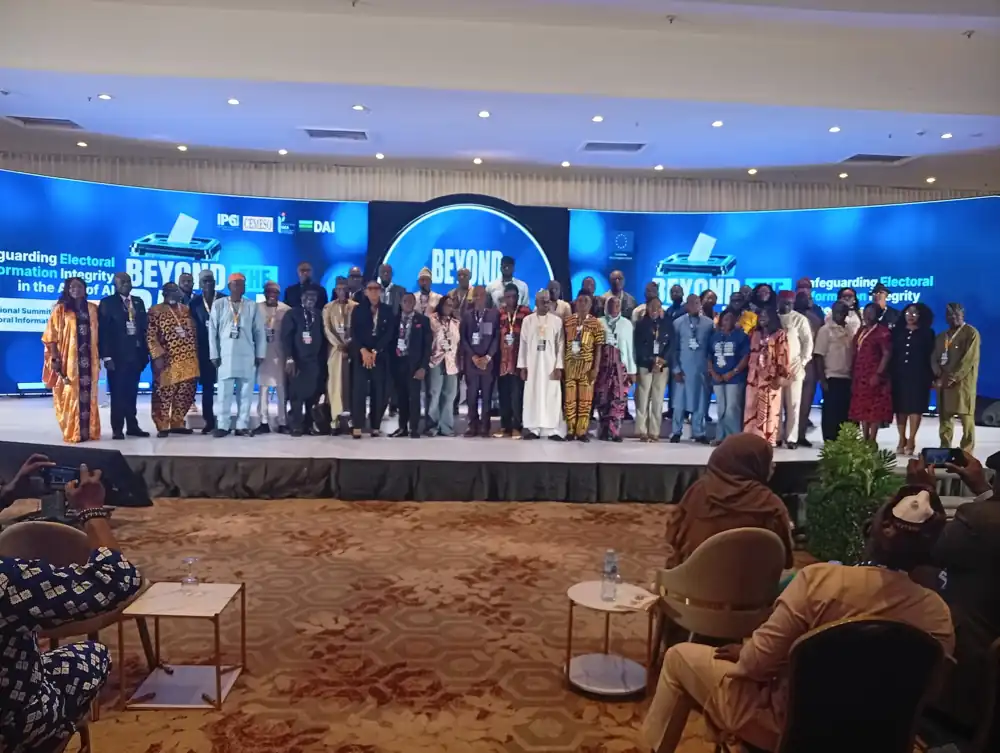
The International Press Centre (IPC) has called for sustained electoral accountability ahead of Nigeria’s 2027 general elections, as artificial intelligence expert Ade Atabatere urged greater transparency in the Independent National Electoral Commission (INEC), stronger youth participation and responsible use of emerging technologies in the electoral process.
Latest: 2027 presidential election: candidates, running mates and campaign updates (live tracker)

Key Highlights
- IPC calls for sustained electoral accountability before, during and after elections.
- AI expert Ade Atabatere urges INEC to strengthen transparency and public confidence.
- Atabatere raises concerns over limited youth representation in electoral discussions.
- Expert says AI can be used to spread misinformation or detect and counter false information.
- IPC plans to harmonise summit recommendations into a communiqué.
- Stakeholders call for stronger collaboration among government, media, civil society and technology experts.
The calls were made at the conclusion of a national summit organised by the IPC under the theme, Beyond the Ballot: Safeguarding Electoral Information Integrity in the Age of AI. The meeting examined the growing influence of artificial intelligence, disinformation and foreign information manipulation and interference on Nigeria’s democratic process.
The summit, chaired by former INEC Chairman, Professor Attahiru Jega, brought together media professionals, academics, technology experts, civil society organisations and electoral stakeholders to examine ways of protecting electoral information integrity in the digital age.
Professor Abigail Ogwezzy-Ndisika delivered the keynote address, while panel discussions considered the opportunities and risks associated with emerging technologies and the responsibilities of institutions, political actors and the media in ensuring credible elections.
IPC Seeks Accountability Beyond Election Day
Speaking at the closing session, the Executive Director of the Institute for Media and Society (IMS), Dr Akin Akingbulu, commended the European Union and its European Union Support to Democratic Governance in Nigeria (EU-SDGN) project for supporting the initiative.
Akingbulu described the support as evidence of commitment to strengthening democratic institutions and promoting responsible media development.
He acknowledged the efforts of the programme management team, particularly Laoluola Umi, who coordinated the project, as well as the keynote speaker, panellists, moderators, committee members, researchers and technical experts.
He also recognised Dr Adebola, Dr Mundey and Professor Mustafa for their research contributions and the preparation of evidence briefings and supporting documents that informed the summit’s discussions.
Other acknowledgements went to Media Insight for the event’s branding and visual presentation, as well as government agencies, institutional representatives and former INEC technical advisers who participated in the meeting.
In his closing remarks, IPC Director-General, Dr Larry Arogundade, highlighted the importance of the summit’s simulation exercise, which brought together INEC officials, civil society representatives and media practitioners to demonstrate the challenges associated with electoral information manipulation.
He commended the simulation team led by Amad Aloko and acknowledged online participants, media executives, broadcasting organisations and journalists who covered the event.
Arogundade disclosed that comments, recommendations and proposals from the different sessions would be harmonised into a communiqué reflecting the collective positions of participants.
He said the discussions had gone beyond election-day concerns to examine issues affecting the electoral process before, during and after voting.
According to him, protecting electoral integrity requires sustained engagement and collaboration among relevant institutions and stakeholders throughout the democratic process.
Ade Atabatere Questions INEC’s Readiness for 2027
Speaking in an interview with The Trumpet Newspaper and TV after the summit, AI and technology expert Ade Atabatere expressed cautious optimism about INEC’s preparedness for the 2027 general elections.
Asked whether the commission was adequately prepared to tackle emerging technological challenges, particularly the manipulation of electoral information through artificial intelligence, Atabatere said its actual level of preparedness would become clearer during the elections.
He, however, observed that the current INEC administration appeared to be introducing more checks and balances than its predecessor, suggesting that the commission could be better positioned to address some of the shortcomings experienced in the past.
Atabatere identified transparency as a major requirement for strengthening INEC and restoring public confidence in the electoral system.
Asked what major reform he would introduce at the commission if given the opportunity, he said transparency would be his priority.
He added that the need for transparency extended beyond INEC to other sectors of the country.
Expert Challenges Political Parties to Present Clear Programmes
Atabatere also challenged political parties and aspirants preparing for the 2027 elections to focus on clearly defined policy programmes rather than build their campaigns mainly around removing the incumbent administration.
Drawing on his decades of political experience, he argued that Nigerians should demand explanations of what candidates intend to achieve and how they plan to fulfil their promises.
He maintained that voters should pay attention to candidates who present specific programmes and implementation strategies instead of making broad promises without explaining how they would deliver them.
Youth Inclusion Must Be Part of Electoral Reforms
The Bootstrap Africa think tank leader also expressed concern over what he described as inadequate participation of young Nigerians in discussions shaping the country’s electoral and democratic future.
He observed that although the summit featured contributions from academics, professors, doctors and other experienced professionals, the representation of young people, particularly those below 40, was limited.
According to him, Nigeria’s generational divide and the absence of effective platforms for interaction between age groups could produce policies and laws that fail to reflect the realities and aspirations of younger citizens.
Referring to a conversation with a senator involved in lawmaking, Atabatere questioned whether policymakers sufficiently considered the interests of younger generations who would live with the consequences of decisions taken today.
He argued that laws and public policies should reflect the needs of the people they are intended to serve, stressing the importance of consulting and involving younger Nigerians in decisions that affect their future.
He called for deliberate engagement between older and younger citizens to ensure that different generations contribute meaningfully to national conversations.
Atabatere further questioned how the concerns of young people could be adequately represented in discussions about online misinformation and digital manipulation when many of those actively involved in digital spaces were not sufficiently represented at the summit.
He said conversations about electoral information integrity should accommodate young people, political stakeholders and communities directly affected by digital information, alongside academics and institutional representatives.
AI Can Fight the Misinformation It Creates, Expert Says
On the growing debate surrounding artificial intelligence, Atabatere argued that the technology should not be regarded as inherently harmful or beneficial, explaining that its impact largely depends on how people deploy it.
Using cars and firearms as examples, he noted that technology could serve constructive or destructive purposes depending on the intentions of its users.
He said artificial intelligence could be used to generate misinformation and manipulate public opinion, but could also provide tools for detecting and countering false information.
The expert disclosed that his team had developed an AI-powered system capable of responding to false information in real time.
He argued that efforts to combat AI-generated disinformation would increasingly require similar technological solutions.
According to him, the appropriate response to the misuse of artificial intelligence is to develop responsible systems capable of identifying and countering its harmful applications.
Read also:
- NDC Cautions INEC Against AI Risks In Collating 2027 Election Results
- INEC, EU Raise Concerns Over AI-Driven Misinformation Ahead Of 2027 Elections
- INEC Assures Nigerians of Readiness for 2027 Elections, Says Preparations on Track
Bootstrap Africa Develops Legislative and Public Communication Initiatives
Atabatere also discussed initiatives under Bootstrap Africa aimed at improving public participation and cooperation between government and the private sector.
He said the organisation leads a legislative advocacy initiative through Legishield.com, a platform designed to analyse bills before the National Assembly and provide feedback and suggested corrections to improve the legislative process.
He also introduced Olayo, an initiative intended to connect public institutions with private-sector companies willing to deploy their corporate social responsibility resources towards public service announcements and government communication.
According to him, the initiative seeks to strengthen public-private sector cooperation, particularly in reaching communities that government communication efforts might otherwise fail to reach.
Atabatere argued that Nigerians often place excessive responsibility on government while failing to participate sufficiently in addressing national challenges.
He called for stronger collaboration between public institutions and private organisations, saying closer engagement would help both sectors understand their respective challenges and develop practical solutions.
Summit Calls for Continued Stakeholder Collaboration
The summit ended with calls for electoral accountability, transparency, responsible deployment of artificial intelligence, inclusive democratic participation and stronger institutional collaboration ahead of the 2027 general elections.
Its discussions also highlighted the need to protect electoral information integrity beyond election day through sustained cooperation among government institutions, the media, technology experts, civil society organisations and citizens.
Participants’ recommendations are expected to be reflected in a communiqué to be prepared by the IPC following the harmonisation of contributions from the summit.
For more updates on the 2027 elections, follow us on X.


