
• Advert Rates
  • Careers
  • About Us
  • Contact Us
  • Digital Store
Sunday, October 18, 2026
The Trumpet Newspaper Nigeria
No Result
View All Result
  • Home
  • News
    • Breaking News
    • Headlines
    • Metro
    • Health
    • Nigeria News
    • Naija Newspapers
  • Politics
    • Tinubu — Latest News
    • Atiku — Latest News
    • Obi — Latest News
  • Business
    • Ecommerce
    • Economy
    • Start-up
    • Aviation
  • Entertainment
    • BBNaija
    • Viral
  • Sports
    • Super Eagles
    • Premier League
    • Nigerian Football
    • Major Clubs
  • Opinion
    • Religion
    • Columnists
    • Contributors
    • Editorial
  • Global
    • Climate
    • Culture
    • Tourism
    • Technology
    • Weather
    • Social Media
  • Live Trackers
    • NPower Payment News
    • YEIDEP Disbursement
    • TVET Stipend Updates
    • Dangote Refinery News
    • e-Edition
    • Dollar to Naira
    • JAMB
    • WAEC/NECO
  • Niger Delta
    • Rivers State
    • Delta State
    • Edo State
    • Bayelsa State
  • Home
  • News
    • Breaking News
    • Headlines
    • Metro
    • Health
    • Nigeria News
    • Naija Newspapers
  • Politics
    • Tinubu — Latest News
    • Atiku — Latest News
    • Obi — Latest News
  • Business
    • Ecommerce
    • Economy
    • Start-up
    • Aviation
  • Entertainment
    • BBNaija
    • Viral
  • Sports
    • Super Eagles
    • Premier League
    • Nigerian Football
    • Major Clubs
  • Opinion
    • Religion
    • Columnists
    • Contributors
    • Editorial
  • Global
    • Climate
    • Culture
    • Tourism
    • Technology
    • Weather
    • Social Media
  • Live Trackers
    • NPower Payment News
    • YEIDEP Disbursement
    • TVET Stipend Updates
    • Dangote Refinery News
    • e-Edition
    • Dollar to Naira
    • JAMB
    • WAEC/NECO
  • Niger Delta
    • Rivers State
    • Delta State
    • Edo State
    • Bayelsa State
No Result
View All Result
The Trumpet Newspaper Nigeria
No Result
View All Result
ADVERTISEMENT
Home Agriculture

Nigeria Spends $1.19bn on Food Imports in H1 2026 Despite Local Production Drive

Obah Sylva by Obah Sylva
October 18, 2026
in Agriculture, Business
Reading Time: 4 mins read
1
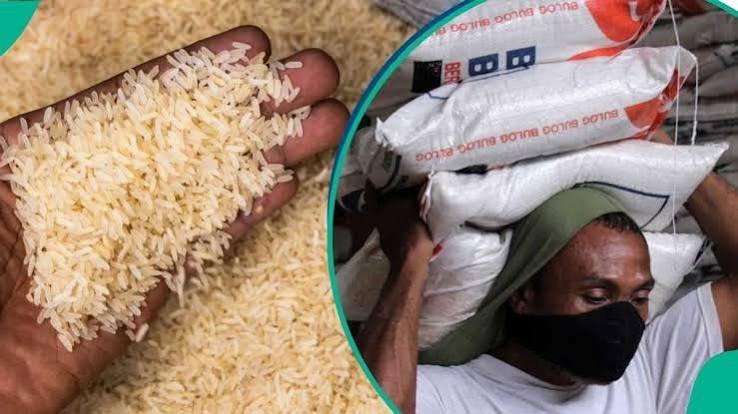
Nigeria staple food shortages
0
SHARES
4
VIEWS
Share on FacebookShare on TwitterShare on LinkedinShare on WhatsAppShare on Pinterest

Nigeria spent $1.19 billion on foreign exchange for food imports in the first half of 2026, an 11.41 per cent increase from the $1.07 billion recorded in the corresponding period of 2025, according to an analysis of the Central Bank of Nigeria’s (CBN) Quarterly Statistical Bulletin for the second quarter of 2026.

The increase came despite Federal Government efforts to boost domestic agricultural production and reduce reliance on imported food. The additional $121.52 million was driven largely by higher foreign exchange spending in the second quarter, which more than offset the decline recorded in the first three months of the year.

ADVERTISEMENT

Key Highlights

  • Nigeria’s food import foreign exchange spending rose 11.41 per cent to $1.19 billion in H1 2026.
  • Second-quarter spending increased 26.38 per cent year-on-year to $650 million.
  • April recorded the sharpest monthly increase, with spending rising 54.28 per cent.
  • Agricultural insecurity and limited access to modern farming equipment remain major concerns.
  • The figures highlight the challenge of reducing food imports despite efforts to expand local production.

Nigeria’s Food Import Spending Rises in Five Months

A monthly breakdown of the CBN figures showed that food-related foreign exchange spending increased year-on-year in five of the six months under review, with February recording the only decline.

In January 2026, spending rose by 8.89 per cent to $232.05 million from $213.11 million in January 2025.

February recorded a 22.90 per cent decline, with spending falling to $150.87 million from $195.68 million in the corresponding month of the previous year.

Spending increased in March to $153.73 million from $141.30 million, while April recorded the sharpest rise, climbing 54.28 per cent to $217.74 million from $141.13 million.

In May, food import foreign exchange utilisation rose by 8.59 per cent to $220.26 million from $202.83 million. June spending increased by 23.92 per cent to approximately $212 million from $171.08 million.

The figures indicate that higher spending in the second quarter was the principal driver of the overall increase during the first half of 2026.

Second-Quarter Food Import Spending Jumps 26.38%

On a quarterly basis, Nigeria’s food import foreign exchange spending declined by 2.57 per cent in the first quarter of 2026, falling to $536.65 million from $550.79 million in the corresponding period of 2025.

The trend reversed in the second quarter, when spending surged by 26.38 per cent to $650 million from $514.34 million a year earlier.

The second-quarter increase more than offset the first-quarter reduction, resulting in higher overall food import spending during the six-month period.

For context, the figures show that Nigeria’s full-year food import foreign exchange utilisation stood at $2.34 billion in 2025, down 7.37 per cent from $2.53 billion in 2024.

Approximately $1.07 billion of the 2025 total was recorded in the first half, while about $1.27 billion to $1.28 billion was spent in the second half.

CBN and NBS Figures Measure Different Aspects of Imports

Separate data from the National Bureau of Statistics (NBS) showed a different trend in the value of food and beverage imports.

According to the figures, food and beverage imports declined by 3.1 per cent to ₦3.30 trillion in the first half of 2026 from ₦3.40 trillion in the corresponding period of 2025.

The CBN and NBS figures measure different aspects of trade and should not be treated as directly equivalent. The CBN data tracks foreign exchange utilisation for food imports, while the NBS figures refer to the recorded value of imports in naira.

Differences in measurement, valuation and coverage can produce contrasting trends. The figures therefore require separate interpretation when assessing Nigeria’s food import dependence.

Insecurity, Low Mechanisation Hamper Local Production

Agricultural stakeholders have identified insecurity and limited access to modern farming technology as major obstacles to increasing domestic food production.

Femi Egbesola, President of the Association of Small Business Owners of Nigeria, attributed persistent import demand partly to insecurity that has forced farmers to abandon their farmlands.

“Most of the farmers are no longer on the farms because of insecurity. Many farmlands have been deserted,” Egbesola said.

He also argued that agricultural productivity remained below global standards because many farmers continued to rely on outdated tools and equipment.

Egbesola called for greater mechanisation and the integration of modern technology into smallholder farming to improve yields and strengthen local food supply.

Insecurity in farming communities can disrupt planting and harvesting, reduce the area of land under cultivation and limit the movement of agricultural produce to markets. These challenges can place additional pressure on food supply and import demand.
Read also:

  • World Food Day 2026: HOMEF Urges Support for Indigenous Seeds, Food Sovereignty
  • Nigeria’s Inflation Falls to 14.63% in September 2026, but High Prices Still Squeeze Households
  • CAN Urges Tinubu to Reduce Fuel, Food Prices as Nigerians Face Rising Cost of Living

Sanusi Warns Against Policies That Undermine Local Producers

The Emir of Kano, Muhammadu Sanusi II, has previously raised concerns about the effects of import policies on domestic agricultural businesses.

Sanusi warned that policies opening the market to imported products, including rice, had damaged local mills and contributed to bad loans within the agricultural value chain.

He also argued for protecting vulnerable households from high food prices without undermining domestic producers.

The debate highlights the challenge facing policymakers: imports can help meet immediate food demand and influence market prices, while poorly managed import policies may weaken incentives for local investment and production.

Public Reactions Focus on Insecurity and Government Policy

Reactions to the report on social media centred on insecurity, the cost of food and questions about the effectiveness of government agricultural policies.

Some users argued that farmers could not increase production while facing threats of violence and kidnapping. Others expressed frustration that spending on food imports remained high despite efforts to promote domestic agriculture.

Some reactions also raised concerns about governance and alleged corruption, although such claims were opinions expressed by users and were not independently substantiated by the figures cited in the report.

The discussion reflects wider public concerns about the relationship between agricultural production, food prices, security and government spending.

Food Import Bill Highlights Challenges Facing Agriculture

Nigeria’s $1.19 billion food import foreign exchange bill in the first half of 2026 highlights the difficulty of reducing dependence on imported food while domestic production continues to face structural constraints.

Although full-year food import foreign exchange utilisation declined in 2025 compared with 2024, the increase recorded in the first half of 2026, particularly during the second quarter, points to renewed pressure.

Improving security in farming communities, expanding access to mechanisation, strengthening rural infrastructure and supporting smallholder farmers could help increase domestic output and improve the resilience of local food systems.

The figures also underline the need to distinguish between foreign exchange utilisation and the naira value of recorded imports when evaluating the effectiveness of policies designed to reduce Nigeria’s food import bill.

For more updates on Nigeria’s economy and agriculture, follow us on X.

Tags: agricultural insecurity NigeriaCBN food import dataCBN Quarterly Statistical Bulletinfood security in Nigerialocal food production Nigeriamechanisation for Nigerian farmersNBS food and beverage importsNigeria food import billNigeria food import spending H1 2026Nigeria food imports 2026Nigeria foreign exchange utilisation
Previous Post

Yobe Approves New Salary Structure For Top Civil Servants

Next Post

Survival Borrowing in Nigeria: How Rising Living Costs Trap Households in Debt

Obah Sylva

Obah Sylva

Next Post
7 Loan Apps Nigerians Actually Use for Instant Cash

Survival Borrowing in Nigeria: How Rising Living Costs Trap Households in Debt

About The Trumpet

The Trumpet is a Nigerian based national news media, owned, trademarked and operated by Elomaz Communications Limited with headquarters in FCT-Abuja and regional offices in Lagos and Delta States

Follow Us

Resources

  • Home
  • News
    • Breaking News
    • Headlines
    • Metro
    • Health
    • Nigeria News
    • Naija Newspapers
  • Politics
    • Tinubu — Latest News
    • Atiku — Latest News
    • Obi — Latest News
  • Business
    • Ecommerce
    • Economy
    • Start-up
    • Aviation
  • Entertainment
    • BBNaija
    • Viral
  • Sports
    • Super Eagles
    • Premier League
    • Nigerian Football
    • Major Clubs
  • Opinion
    • Religion
    • Columnists
    • Contributors
    • Editorial
  • Global
    • Climate
    • Culture
    • Tourism
    • Technology
    • Weather
    • Social Media
  • Live Trackers
    • NPower Payment News
    • YEIDEP Disbursement
    • TVET Stipend Updates
    • Dangote Refinery News
    • e-Edition
    • Dollar to Naira
    • JAMB
    • WAEC/NECO
  • Niger Delta
    • Rivers State
    • Delta State
    • Edo State
    • Bayelsa State

Recent News

7 Loan Apps Nigerians Actually Use for Instant Cash

Survival Borrowing in Nigeria: How Rising Living Costs Trap Households in Debt

October 18, 2026
Nigeria staple food shortages

Nigeria Spends $1.19bn on Food Imports in H1 2026 Despite Local Production Drive

October 18, 2026
  • Cookie Policy
  • Disclaimer
  • Contact us
  • About Us
  • Cookie Policy
  • Disclaimer
  • Contact us
  • About Us

© 2026 The Trumpet News Papers - Developed by VIS Nigeria.

No Result
View All Result
  • Home
  • News
    • Breaking News
    • Headlines
    • Metro
    • Health
    • Nigeria News
    • Naija Newspapers
  • Politics
    • Tinubu — Latest News
    • Atiku — Latest News
    • Obi — Latest News
  • Business
    • Ecommerce
    • Economy
    • Start-up
    • Aviation
  • Entertainment
    • BBNaija
    • Viral
  • Sports
    • Super Eagles
    • Premier League
    • Nigerian Football
    • Major Clubs
  • Opinion
    • Religion
    • Columnists
    • Contributors
    • Editorial
  • Global
    • Climate
    • Culture
    • Tourism
    • Technology
    • Weather
    • Social Media
  • Live Trackers
    • NPower Payment News
    • YEIDEP Disbursement
    • TVET Stipend Updates
    • Dangote Refinery News
    • e-Edition
    • Dollar to Naira
    • JAMB
    • WAEC/NECO
  • Niger Delta
    • Rivers State
    • Delta State
    • Edo State
    • Bayelsa State

© 2026 The Trumpet News Papers - Developed by VIS Nigeria.

We use cookies on our website to give you the most relevant experience by remembering your preferences and repeat visits. By clicking “Accept All”, you consent to the use of ALL the cookies. However, you may visit "Cookie Settings" to provide a controlled consent.
Cookie SettingsAccept All
Manage consent

Privacy Overview

This website uses cookies to improve your experience while you navigate through the website. Out of these, the cookies that are categorized as necessary are stored on your browser as they are essential for the working of basic functionalities of the website. We also use third-party cookies that help us analyze and understand how you use this website. These cookies will be stored in your browser only with your consent. You also have the option to opt-out of these cookies. But opting out of some of these cookies may affect your browsing experience.
Necessary
Always Enabled
Necessary cookies are absolutely essential for the website to function properly. These cookies ensure basic functionalities and security features of the website, anonymously.
CookieDurationDescription
cookielawinfo-checkbox-analytics11 monthsThis cookie is set by GDPR Cookie Consent plugin. The cookie is used to store the user consent for the cookies in the category "Analytics".
cookielawinfo-checkbox-functional11 monthsThe cookie is set by GDPR cookie consent to record the user consent for the cookies in the category "Functional".
cookielawinfo-checkbox-necessary11 monthsThis cookie is set by GDPR Cookie Consent plugin. The cookies is used to store the user consent for the cookies in the category "Necessary".
cookielawinfo-checkbox-others11 monthsThis cookie is set by GDPR Cookie Consent plugin. The cookie is used to store the user consent for the cookies in the category "Other.
cookielawinfo-checkbox-performance11 monthsThis cookie is set by GDPR Cookie Consent plugin. The cookie is used to store the user consent for the cookies in the category "Performance".
viewed_cookie_policy11 monthsThe cookie is set by the GDPR Cookie Consent plugin and is used to store whether or not user has consented to the use of cookies. It does not store any personal data.
Functional
Functional cookies help to perform certain functionalities like sharing the content of the website on social media platforms, collect feedbacks, and other third-party features.
Performance
Performance cookies are used to understand and analyze the key performance indexes of the website which helps in delivering a better user experience for the visitors.
Analytics
Analytical cookies are used to understand how visitors interact with the website. These cookies help provide information on metrics the number of visitors, bounce rate, traffic source, etc.
Advertisement
Advertisement cookies are used to provide visitors with relevant ads and marketing campaigns. These cookies track visitors across websites and collect information to provide customized ads.
Others
Other uncategorized cookies are those that are being analyzed and have not been classified into a category as yet.
SAVE & ACCEPT