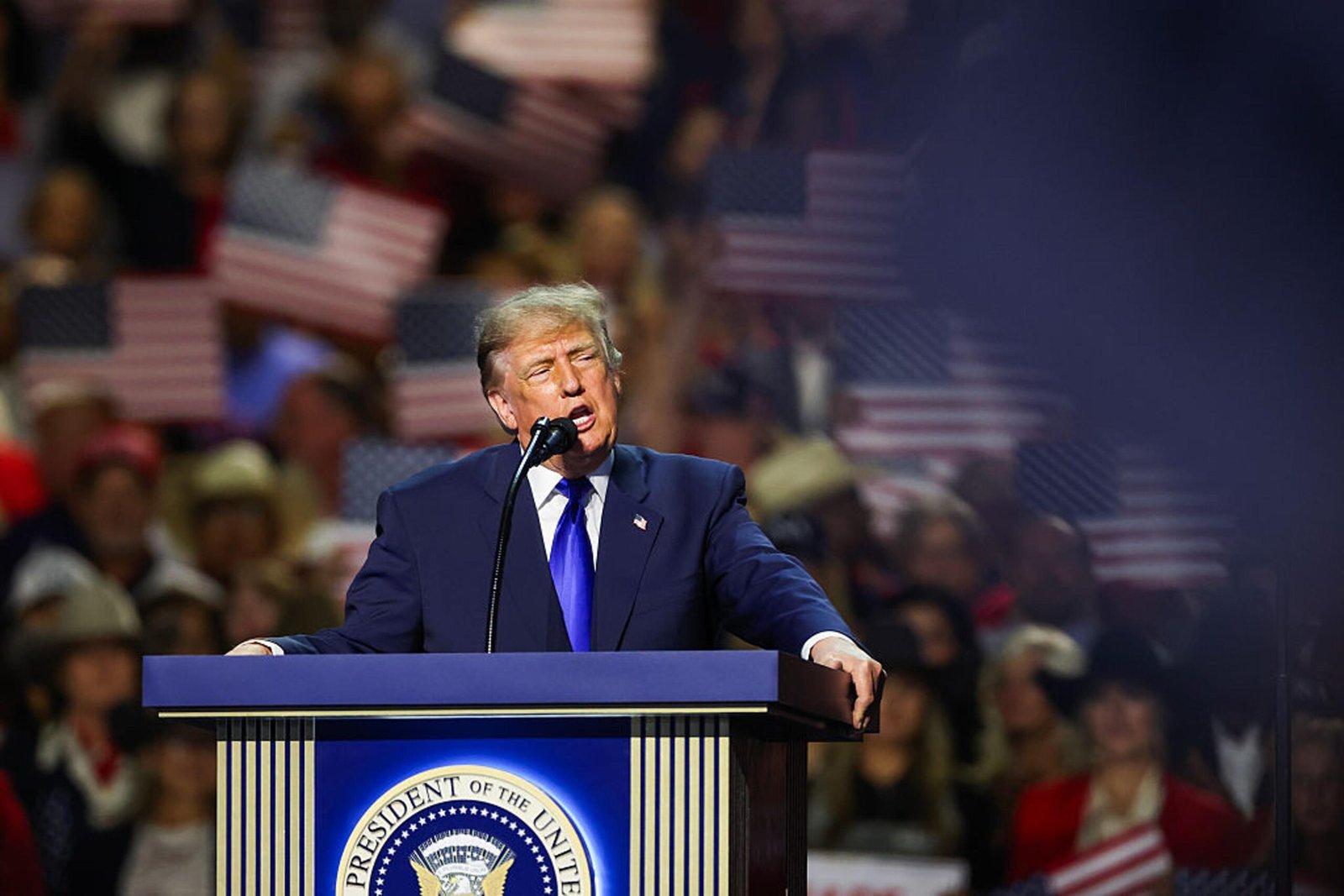
President Donald Trump has ended the use of taxpayer funds to pay for pro-administration television advertisements, saying he and his political fundraising group, MAGA Inc., will instead finance the ads following bipartisan criticism over their use of public money.
The advertisements, which began airing in late September during major television programmes including NFL games and Saturday Night Live, had been labelled “Paid for by the U.S. government.” Trump announced the change on Monday as the U.S. Supreme Court opened its new term with arguments in a major climate damages case involving oil companies.

Key Highlights
- Trump ends taxpayer-funded ads promoting his administration.
- Trump said MAGA Inc. will pay for the advertisements going forward.
- The ads aired during NFL games, college football, Fox News Sunday and Saturday Night Live.
- The White House had described the advertisements as public service announcements.
- The Department of Homeland Security was involved in funding the campaign.
- Estimates of taxpayer-funded airtime have ranged from more than $1.4 million to over $10 million.
- Both Republican and Democratic lawmakers criticised the use of taxpayer money for the advertisements.
- Trump said he would personally fund the ads and use money raised for MAGA Inc.
- The announcement came as the Supreme Court began hearing Suncor Energy v. Boulder County, a major climate liability case.
Trump Ends Taxpayer-Funded Ads After Bipartisan Criticism
Trump announced Monday that his administration would no longer use taxpayer funds to pay for the controversial television advertisements.
In a post on Truth Social, the President said he had decided to continue the patriotic advertisements but would pay for them himself and through money raised for MAGA Inc.
A White House official subsequently confirmed that MAGA Inc. would fund the advertisements going forward.
The administration has not immediately clarified whether the government will be reimbursed for advertisements that had already aired using public funds.
Pro-Trump Ads Air During NFL and Saturday Night Live
The advertisements began airing in late September and were described by the White House as public service announcements.
The spots carried the on-screen designation “Paid for by the U.S. government.”
According to advertising-tracking data, the advertisements appeared during high-profile programming, including NFL games, college football, Fox News Sunday and NBC’s Saturday Night Live.
One of the advertisements closely resembled a 2024 Trump campaign commercial featuring the President discussing what he described as a final political battle against the “deep state” and other opponents.
Other advertisements featured Trump at Mount Rushmore and used patriotic imagery connected to the administration’s description of a new “golden age” for the United States.
Millions in Taxpayer Money Used for Television Ads
The advertisements were funded through the Department of Homeland Security, with approximately $20 million reportedly shifted toward Customs and Border Protection for media-related work.
A $20 million contract was awarded to Maryland-based LMD Agency.
Estimates of the amount already spent on television airtime have varied.
Earlier estimates put the spending at more than $1.4 million to at least $2.5 million, while a later New York Times report said more than $10 million in taxpayer-funded advertisements had aired since September.
Advertising data indicated that about 30 percent of the tracked spending went toward football broadcasts.
Republicans and Democrats Criticise Use of Public Funds
The use of taxpayer money for the advertisements drew criticism from members of both major U.S. political parties.
Senate Majority Leader John Thune, a Republican, said he supported the message but questioned the decision to use taxpayer money to pay for it.
Republican Senator John Kennedy also raised concerns about the funding arrangement.
Democratic senators, including Patty Murray and Chris Murphy, argued that the advertisements could conflict with restrictions governing the use of federal appropriations for publicity or propaganda and raised questions about the Hatch Act.
The Trump administration has defended the advertisements as nonpolitical public service announcements, pointing to previous administrations that used public funds for campaigns concerning issues such as Medicare, the Affordable Care Act and COVID-19 vaccines.
Trump Says MAGA Inc. Will Fund Ads
Trump’s decision represents a shift from the previous arrangement in which government funds were used to purchase airtime.
The President said critics were unhappy that he was using U.S. government money for advertisements he considered positive promotion for the country.
He subsequently said he would pay for the advertisements himself and through money raised for MAGA Inc.
The super PAC has been reported to have hundreds of millions of dollars available for political spending.
However, neither MAGA Inc. nor the White House immediately disclosed whether taxpayers would be reimbursed for the advertisements already broadcast.
Read also:
- Supreme Court Hears ExxonMobil, Suncor Climate Damages Case as Justices Weigh Boulder Lawsuit
- US Midterm Elections: Latino Voters Emerge as Key Battleground as Trump Urges Early Voting
- Trump Pledges $5,000 ‘Dividend’ To Americans If Republicans Retain Congress In Midterm Elections
Supreme Court Begins Term With Climate Damages Case
Trump’s decision to end taxpayer-funded advertisements came as the U.S. Supreme Court opened its new term with arguments in a significant climate litigation case.
The justices heard Suncor Energy v. Boulder County, involving an effort by Boulder, Colorado, to seek damages from Exxon Mobil and Suncor Energy over costs the local government attributes to climate change.
The claimed costs include infrastructure damage, emergency response and public health expenses.
The oil companies, supported by the Trump administration, argue that federal law governing interstate air pollution prevents the state-law claims from proceeding.
Alito Recuses Himself From Climate Case
Justice Samuel Alito recused himself from the case because of his holdings in oil and gas companies, leaving eight justices to hear the arguments.
A 4-4 decision would leave in place the Colorado Supreme Court ruling that allowed Boulder’s case to proceed.
During Monday’s arguments, Chief Justice John Roberts questioned arguments that state lawsuits should be barred when courts routinely consider cases involving conduct originating outside a state but causing effects within it.
Justice Brett Kavanaugh, meanwhile, raised concerns that allowing Boulder’s lawsuit to proceed could encourage similar claims across the country and expose energy companies to potentially significant liabilities.
Trump Continues Criticism of Supreme Court
The Supreme Court climate case also comes amid Trump’s continuing criticism of the judiciary.
The President has previously criticised Supreme Court justices, including some of his own appointees, after the court declined to allow certain voting restrictions to take effect before the U.S. midterm elections.
Trump has praised Justices Clarence Thomas and Samuel Alito while criticising other members of the court over rulings involving issues such as tariffs, birthright citizenship and voting rules.
Alito recently expressed concern about increasingly hostile public rhetoric directed at the Supreme Court and individual justices.
Trump Ads and Supreme Court Fight Highlight Broader Tensions
The decision to shift funding for the advertisements from taxpayers to MAGA Inc. comes amid wider political and legal battles surrounding the Trump administration.
The controversy over the television campaign centres on whether public funds should be used for messaging that critics view as political, while the Supreme Court case could determine the future of climate-related lawsuits against major oil companies.
Both developments place questions of executive power, public spending, political messaging and federal authority at the centre of attention as the United States moves deeper into the 2026 political cycle.
For more global news and updates, follow us on X.