The African Democratic Congress (ADC) Presidential Campaign Council has challenged Vice President Kashim Shettima’s claim that President Bola Tinubu saved Nigeria from economic collapse, arguing that the statement instead raises questions about the record of the previous APC administration under Muhammadu Buhari.
Shettima had said Tinubu’s economic decisions prevented Nigeria from “falling into pieces” and described the country as being on the “road to Caracas” when the administration assumed office in 2023. In a response issued on Sunday, ADC Director of Media and Publicity Kola Ologbondiyan argued that the claim effectively indicts the APC government that preceded Tinubu.

Key Highlights
- The ADC replied to Shettima’s claim that Tinubu saved Nigeria from economic collapse.
- Shettima said Nigeria was on the “road to Caracas” before Tinubu took office.
- The ADC argued that the claim amounts to an indictment of the Buhari administration.
- Ologbondiyan questioned why voters should trust Tinubu if the APC’s previous government left Nigeria near collapse.
- The ADC also criticised the Tinubu administration over economic hardship and the cost of living, which it described as its own political assessment.
- The Presidency had not publicly responded to the ADC statement in the reports reviewed.
ADC Replies Shettima Over ‘Caracas’ Remark
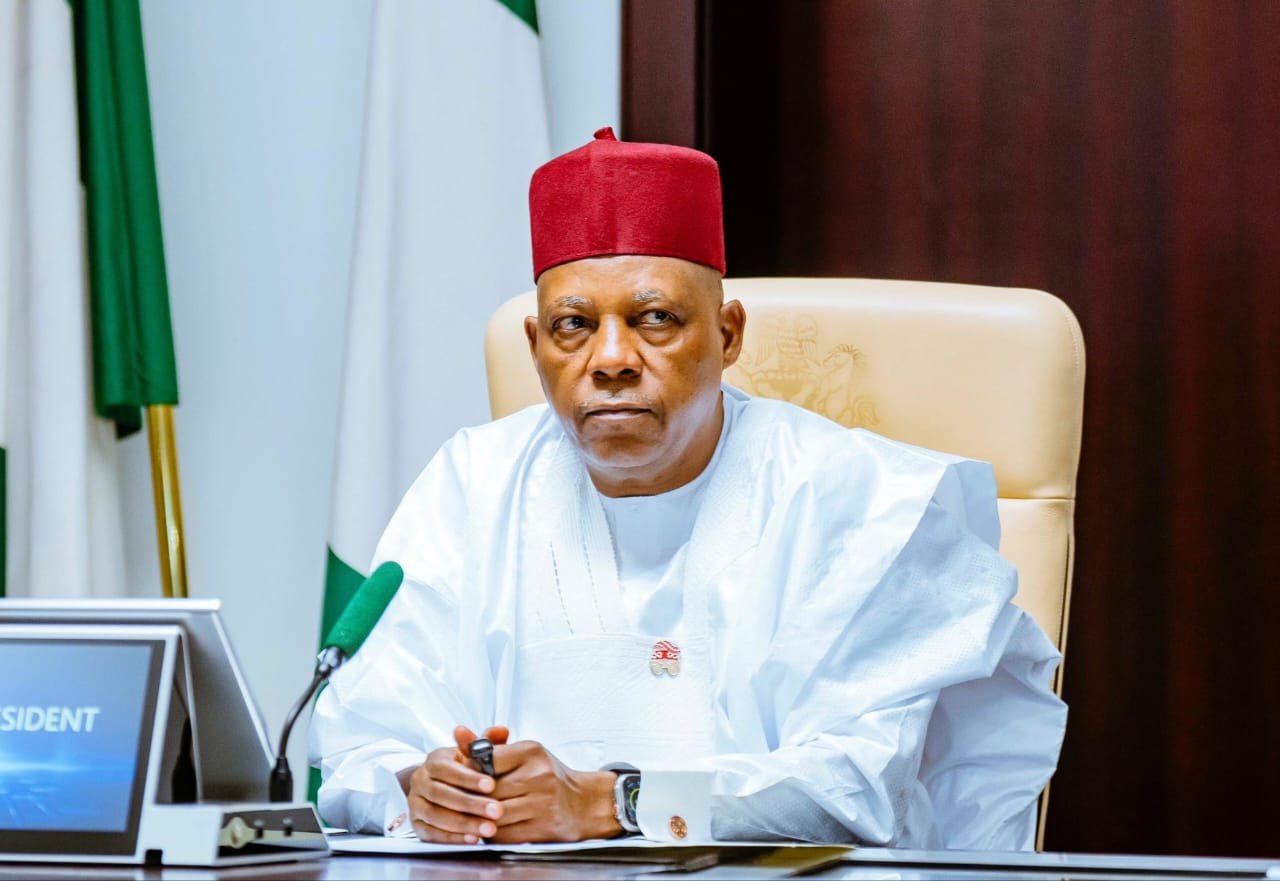
The controversy followed comments by Vice President Kashim Shettima on Saturday while speaking with journalists after meeting President Tinubu in Lagos.
Shettima defended the administration’s economic reforms, including the removal of the petrol subsidy and changes to the foreign-exchange system.
He said Nigeria’s foreign reserves were below $3.9 billion when the Tinubu administration assumed office and argued that the economy was approaching a critical point.
According to Shettima, Tinubu’s decisions helped prevent the country from sliding into a deeper economic crisis.
“We were on the road to Caracas. He saved our economy; he saved the nation from falling into pieces,” the Vice President said.
ADC Says Shettima’s Claim Indicts Buhari
Reacting to the statement, Ologbondiyan said Shettima’s description of Nigeria’s economic situation before 2023 raised questions about the APC’s eight years in power under Buhari.
“Vice President Shettima’s statement is self-indicting,” Ologbondiyan said.
He argued that if Nigeria was indeed heading towards a Caracas-like economic situation before Tinubu became president, responsibility should also be considered in the context of the previous APC administration.
The ADC spokesman asked why Nigerians should place their trust in Tinubu, who is seeking a second term on the APC platform, if the same party presided over the country before 2023.
ADC Links Tinubu To Buhari’s APC Record
Ologbondiyan further argued that the Tinubu administration cannot completely separate itself from Buhari’s government because both administrations operated under the APC.
He recalled that Tinubu had previously defended the Buhari administration and indicated that his government would build on its achievements.
The ADC therefore argued that the current administration should accept responsibility for the APC’s broader record rather than presenting the 2023 transition as a complete break from the previous government.
“Nigerians do not know Buhari as an individual; Nigerians know APC,” Ologbondiyan said, according to the statement.
ADC Rejects Claim That Tinubu Saved Nigeria
The opposition campaign council also rejected Shettima’s assessment that Tinubu had rescued Nigeria from economic collapse.
Ologbondiyan instead accused the administration of worsening economic hardship, citing inflation, naira depreciation, unemployment, insecurity and rising living costs.
“President Tinubu has not saved Nigeria from collapse,” he said, while describing the administration’s economic record in strongly critical terms.
Those statements represent the ADC’s political assessment of the Tinubu administration, rather than an independently established finding.
The government, meanwhile, has consistently defended its economic reforms as necessary measures aimed at stabilising the economy and creating the conditions for longer-term growth.
ADC Questions Tinubu’s Economic Record
The ADC campaign council also criticised the administration over conditions affecting Nigerians, including food prices, transportation costs, electricity and infrastructure.
Ologbondiyan said the government should be judged by the outcomes of its policies rather than by new announcements or promises.
The campaign council also questioned Shettima’s recent promise to deploy electric tricycles, buses and electric taxis under an e-logistics programme, according to reports on the ADC statement.
Read also:
- Shettima Says Tinubu’s 2027 Re-election Is Non-Negotiable for Nigeria’s Prosperity
- ADC Rejects Economist Tinubu 2027 Forecast, Says ‘A Forecast Is Not a Verdict’
- ADC attacks Tinubu over rising debt, labels Nigerian Economy a ‘Ponzi Scheme’
Shettima Defends Tinubu’s Economic Reforms
Shettima’s original argument was that the Tinubu administration inherited an economy facing serious pressure and took difficult decisions to prevent a deeper crisis.
He specifically cited the removal of the petrol subsidy and the realignment of the multiple exchange-rate system as major reforms.
The Vice President acknowledged that Nigerians were experiencing hardship but maintained that the government was implementing measures intended to ease the burden.
“Tough times do not last forever; tough people do,” Shettima said.
ADC And APC Face Off Ahead Of 2027
The exchange adds to the growing political debate ahead of the 2027 presidential election, with the ADC positioning itself as an opposition alternative to the ruling APC.
For the ADC, Shettima’s “Caracas” argument provides an opportunity to question the APC’s record across both the Buhari and Tinubu administrations.
For the presidency and APC, the central argument remains that Tinubu inherited significant economic challenges and has taken difficult reforms aimed at stabilising the country.
As the 2027 campaign environment develops, the dispute over whether Tinubu inherited an economy approaching collapse or has worsened existing problems is likely to remain a major point of political debate.
For more political updates, follow us on X.