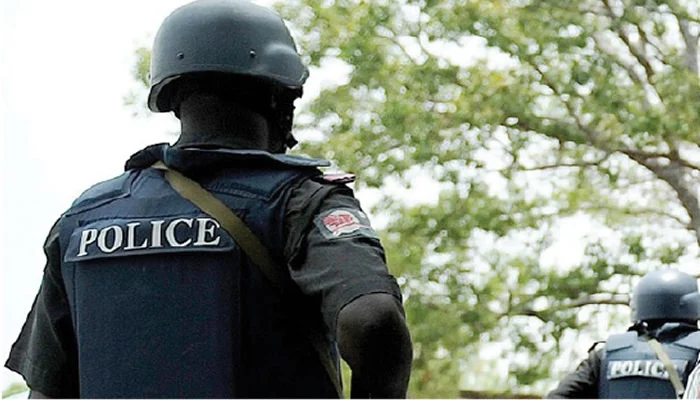
Only four state Houses of Assembly — Edo, Osun, Oyo and Rivers — have approved the constitutional amendment for State Police Services, leaving the proposal 20 approvals short of the required 24, according to a nationwide review published Sunday, October 4.
The National Assembly transmitted the Constitution of the Federal Republic of Nigeria, 1999 (Sixth Alteration) Bill, 2026, to all 36 state assemblies on September 16, only to find that several legislatures had yet to begin consideration, while some said they were still awaiting the bill.

Key Highlights
- Edo, Osun, Oyo and Rivers are the only states reported to have approved the State Police amendment.
- Section 9 requires approval from at least two-thirds of the 36 state assemblies — 24 states — for a constitutional alteration.
- The National Assembly’s 30-day period for state responses is an administrative target, not a constitutional deadline.
- Several assemblies are still studying the proposal, awaiting committee reports or say they have not received it.
- State concurrence alone does not create a state police service; states would still need enabling laws and operational safeguards.
Four States Approve State Police Amendment
Osun was the first to approve the proposal, passing it clause by clause on September 22 without amendment. Oyo later passed it at third reading, also without changes. In Edo, Majority Leader Osezua Ojiezele moved the concurrence motion, while the Rivers Assembly, led by Speaker Martin Amaewhule, approved the bill unanimously.
The approvals are resolutions supporting a proposed constitutional alteration. They do not, by themselves, establish state police services. The proposal must still meet the 24-state threshold and be completed and published as a constitutional alteration. States would then need to pass their own implementing laws and meet operational requirements.
The National Assembly’s Section 9 guide sets out the two-thirds state approval threshold and says presidential assent is not required for a constitutional alteration.
30-Day Window Is Administrative
The National Assembly asked state legislatures to communicate their decisions within 30 days of receiving the bill. The period is an administrative timeframe, not a constitutional deadline. With the bill transmitted on September 16, reports on October 4 said roughly 12 days remained in that window.
The National Assembly Clerk, Kamoru Ogunlana, has also clarified that the state police proposal is the only constitution-alteration bill so far transmitted to the 36 assemblies. Voice of Nigeria reported the clarification.
Assemblies Still Studying Proposal
In the South-West, Ondo has circulated the draft to lawmakers for study, Ekiti has received it but is yet to begin formal deliberation, and Ogun has set up a committee whose report is pending. Lagos endorsed state police in principle in July, but its formal concurrence on the specific constitutional amendment has not been confirmed.
In the South-South, Cross River has taken a first reading. Delta says it is consulting stakeholders, while Bayelsa had received the bill but had not debated it as of late September.
In the North, Kano, Kwara, Kebbi, Taraba and Gombe said they had not received official communication and could not deliberate without it. Yobe, Borno, Kogi, Nasarawa, Zamfara, Sokoto and Benue have the proposal but had not approved it. Reported reasons include time to study the bill, legislative recess and waiting for the proposal to be listed.
Plateau was the only northern state reported to have started formal consideration, with a first reading following a motion by Majority Leader Joseph Gokum. Bauchi set up a committee led by Deputy Speaker Jamilu Ummaru Dahiru and gave it two weeks to report.
South-East Assemblies Have Not Approved Bill
None of the five South-East assemblies had approved the bill as of the latest checks. Speakers from the zone agreed in principle on state police at a meeting in Awka, while Anambra was collating inputs.
Abia’s Assembly was on recess until October 6. Enugu had not formally introduced the bill, and Imo did not consider it at its first sitting after a two-month recess. Ebonyi’s Speaker promised an accelerated hearing, but no resolution had been passed.
Governors Seen as Key to Approval Threshold
The slow progress is political as well as procedural. Governors are widely seen as influential in whether state assemblies support the amendment, and some lawmakers have said they are waiting for their governors’ positions.
Critics of state police have raised concerns about funding, abuse and the risk of local forces being used against political opponents. Supporters argue that a single federal force cannot respond to banditry, kidnapping and insurgency quickly enough in every community.
Chief of Staff Femi Gbajabiamila, who chairs the presidential working group on the policing bill, has said states would not be allowed to start operations until they are certified ready on recruitment, training, equipment, pensions, complaints handling, funding, firearms control and oversight.
Read also:
For now, four states have approved the measure. Twenty more state assemblies must concur to reach the constitutional threshold for the proposed amendment.
Follow The Trumpet on X for more updates.