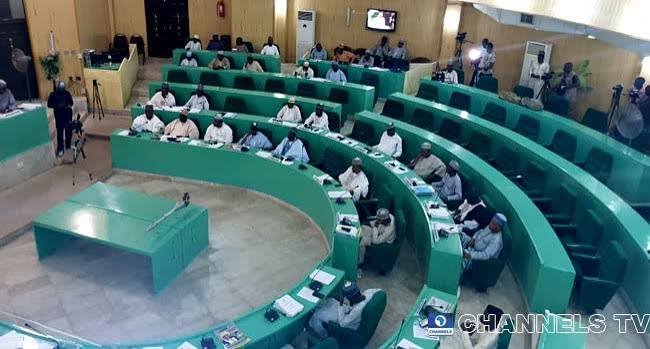
The Kano State House of Assembly has commenced consideration of the constitutional amendment bill seeking to establish state police services in Nigeria, bringing the proposed security reform before one of the country’s largest state legislatures.
The development follows the transmission of the Constitution of the Federal Republic of Nigeria 1999 (Sixth Alteration) Bill, 2026 to the 36 State Houses of Assembly for consideration. The Kano Assembly has begun its legislative process, with further consideration expected as lawmakers study the proposal.

Key Highlights
- Kano State House of Assembly begins consideration of the State Police Bill.
- The proposal seeks to establish State Police Services across Nigeria.
- At least 24 of the 36 state Houses of Assembly must approve the constitutional amendment.
- The National Assembly transmitted the bill to the states on September 16, 2026.
- The 30-day period communicated by the National Assembly is an administrative timeframe, not a constitutional deadline.
- Kano lawmakers are expected to examine the bill before further legislative action.
- Supporters cite local security needs, while critics have raised concerns about funding, political influence and oversight.
- Oyo, Osun, Edo and Rivers have been reported as having approved the bill so far.
Kano Assembly Begins Review of State Police Bill
The Kano State House of Assembly has commenced deliberation on the proposed constitutional amendment seeking to provide a legal framework for the establishment of state police.
The bill was transmitted to the Kano Assembly by the Clerk to the National Assembly and read on the floor of the House before being referred for further consideration.
The development places Kano among the state legislatures currently examining the proposal following its transmission by the National Assembly.
The proposed amendment is contained in the Sixth Alteration Bill, 2026, which deals specifically with the establishment of State Police Services and related matters.
Kano Speaker Calls for Proactive Security Measures
Kano State House of Assembly Speaker Jibril Isma’il-Falgore said the state remained prepared to address security challenges through appropriate legislative measures.
He noted Kano’s relatively peaceful security situation but emphasised the importance of maintaining and strengthening the state’s security architecture.
The Speaker’s position comes amid the wider national debate over whether policing should remain largely centralised under the Nigeria Police Force or whether states should have their own police services.
State Police Bill Requires Approval From 24 States
The proposed reform cannot become part of the Constitution through Kano’s approval alone.
Under Section 9 of the 1999 Constitution, a constitutional alteration requires approval from at least two-thirds of the 36 State Houses of Assembly. That means 24 state legislatures must approve the State Police Bill before the constitutional process can proceed to the next stage.
The National Assembly transmitted the bill to the states on September 16, 2026, asking them to consider the proposal and communicate their resolutions.
The Clerk to the National Assembly, Kamoru Ogunlana, said the 30-day period communicated to the state assemblies was administrative and not a constitutionally binding deadline.
What the State Police Bill Proposes
The constitutional amendment seeks to create a policing structure involving both federal and state police services.
Under the proposal, the federal police would continue to handle national-security responsibilities, while state police services would operate within individual states under a constitutional framework.
The proposal also provides for State Police Service Commissions, which would have responsibilities relating to the administration, appointment, promotion and discipline of state police personnel.
The proposed framework includes provisions concerning the appointment and oversight of state police leadership, with mechanisms involving state authorities and the National Police Council. The detailed structure is contained in the Sixth Alteration Bill, 2026.
Why State Police Remains Controversial
Supporters of state police have argued that a more decentralised policing structure could improve responses to security challenges by bringing policing closer to local communities.
However, the proposal has also generated concerns about how state police would be funded and supervised and whether political authorities could influence their operations.
State-level deliberations are therefore expected to consider issues including funding, accountability, civilian oversight, human-rights protections and the relationship between state and federal police authorities.
These concerns have also featured in discussions within state assemblies that have considered the proposal.
Oyo, Osun, Edo and Rivers Approve State Police Bill
Kano’s consideration comes after several state assemblies moved ahead with the constitutional amendment.
Oyo State House of Assembly approved the Sixth Alteration Bill on September 29, 2026, joining Osun, Edo and Rivers, which had previously approved the proposal according to reports.
The number of state approvals remains below the constitutional threshold of 24 required for the amendment process to advance.
Kano State Police Bill: What Happens Next?
The Kano Assembly will continue its consideration of the constitutional amendment through its legislative procedures.
The outcome of the national process will ultimately depend on the decisions of the 36 state Houses of Assembly.
If at least 24 state legislatures approve the amendment, the constitutional process can move to the subsequent stage prescribed by Section 9.
For now, Kano’s action represents another step in the ongoing national debate over the proposed establishment of state police in Nigeria.