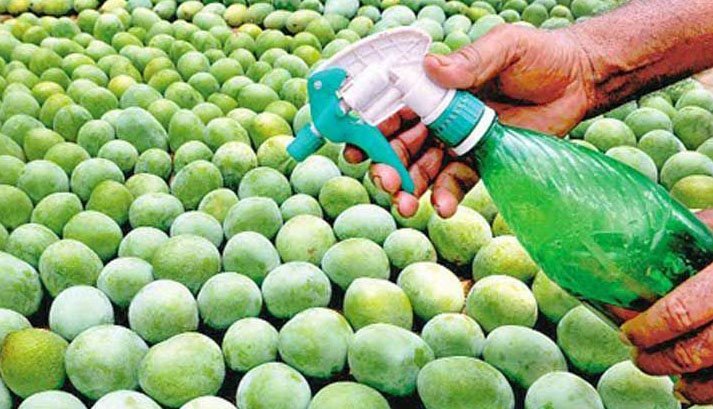
Health specialist Ayodele Olatomiwa has urged regulators, traders and consumers to guard against the use of calcium carbide to ripen fruit and the misuse of pesticides in food preservation. His warnings point to a food-safety concern, but do not establish that any particular fruit or market produce is contaminated.
Key Highlights
- Olatomiwa said calcium carbide can release acetylene gas when it reacts with moisture and should not be used to ripen food.
- NAFDAC has warned against calcium-carbide fruit ripening and urged sellers to stop the practice.
- Small surveys in Ado-Ekiti and Lagos recorded vendors’ self-reported practices; they did not establish nationwide use or test all produce for residues.
- Appearance, smell and home “float tests” cannot reliably confirm whether fruit has been chemically treated.
- Consumers can wash produce under clean running water, but washing cannot guarantee removal of chemical residues.
- People who suspect poisoning after chemical exposure should seek urgent medical care.
Why Calcium Carbide Raises Food-Safety Concerns
Olatomiwa told The Trumpet that calcium carbide reacts with moisture to produce acetylene, a gas that can trigger visible ripening changes in fruit. He warned that industrial-grade carbide may contain harmful impurities and should not be handled or applied to food.

Calcium carbide is different from controlled commercial ripening methods. NAFDAC has warned fruit sellers against using carbide to ripen produce, citing potential health risks. The agency’s warning was reported during a public awareness campaign in 2025.
Not every fruit ripened after harvest is unsafe. The concern is the use of unapproved or improperly handled chemicals, and any assessment of a specific fruit’s safety requires appropriate testing rather than visual guesswork.
What Vendor Surveys Do—and Do Not—Show
Olatomiwa cited studies from Nigerian markets to illustrate concerns about chemical use. A 2024 study of fruit ripening practices in Ado-Ekiti included 20 fruit sellers and 357 consumers; 10 of the 20 sellers reported using calcium carbide. The small, local survey does not show how common the practice is across Nigeria. Read the Ado-Ekiti study.
A separate 2023 survey asked 50 fruit and vegetable vendors in selected Lagos markets about preservation methods. Twenty-two reported using chemical preservatives, and the study listed several pesticides and other substances. These were vendors’ reports: the survey did not test every seller’s produce or establish the prevalence of contaminated food nationwide. Read the Lagos vendor survey.
The distinction matters: self-reported handling practices can justify further inspections, but they are not laboratory evidence that fruit on sale contains a specific chemical residue.
Warnings About Pesticides and Rodenticides
Olatomiwa also raised concerns about pesticides and rodenticides being misused in food preservation, naming products such as Sniper and substances including aluminium phosphide and brodifacoum. These substances have uses outside food treatment and can be dangerous when misused. The article does not establish that any particular trader, fruit or market has used them.
Where chemical exposure is suspected, consumers should avoid attempting to treat poisoning at home and seek urgent medical attention, especially if the person becomes seriously unwell. If possible, tell medical staff what may have been consumed and when.
Appearance Cannot Confirm Chemical Treatment
Olatomiwa said unusual colour, a green or woody stem, a hard interior or an unusual smell may prompt questions about ripeness. However, those characteristics can vary by fruit type, variety, maturity and storage. They are not proof that chemicals were used.
He also discussed a water “float test,” but such informal tests are not a reliable way to identify chemical residues. Laboratory analysis is needed to identify and measure specific contaminants. Consumers should not discard safe, nutritious fruit based only on its appearance or a home test.
Read also:
- Artificial Ripening Of Fruits: How Osinbajo’s Wife Revelation Exposes Hidden Health Dangers Facing Nigerians
- NAFDAC Raises Alarm Over Drug Hawking, Use Of Chemicals To Ripen Fruits
Safer Handling and Stronger Oversight
Consumers can wash fruit under clean running water before cutting or eating it. Washing is a basic hygiene step; it cannot guarantee that residues have been removed or make severely contaminated food safe.
Olatomiwa called for regular market surveillance, traceability from farms to markets, trader education and stronger enforcement against illegal chemical use. He also pointed to post-harvest challenges, including limited cold storage and transport difficulties, as issues that can increase pressure on traders to use unsafe shortcuts.
NAFDAC has separately urged fruit sellers to stop using calcium carbide for ripening. Read the report on NAFDAC’s warning.
For more updates, follow us on X.