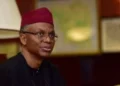
A resurfaced video of Emir of Kano Muhammadu Sanusi II, who was Central Bank of Nigeria (CBN) Governor Lamido Sanusi at the time, has renewed debate over his 2013 allegations that the Nigerian National Petroleum Corporation (NNPC) failed to account for billions of dollars in crude oil revenues. The renewed attention comes as the CBN under Governor Olayemi Cardoso continues to implement monetary and financial-sector reforms, including the latest reduction of the Monetary Policy Rate to 23 per cent.
Key Highlights
- Sanusi initially raised concerns over about $49.8 billion in crude oil proceeds that he said had not been accounted for.
- The figure was later revised during subsequent reconciliation exercises, with Sanusi eventually focusing on a much smaller amount.
- The Jonathan administration and NNPC disputed the original $49.8 billion figure.
- A PwC review later identified a minimum of $1.48 billion that NNPC and its subsidiary NPDC should refund or account for.
- The audit also identified substantial deductions and transactions involving subsidies, operating costs, taxes, royalties and other petroleum-sector obligations.
- The CBN under Olayemi Cardoso has introduced monetary and financial-sector reforms, with the MPR now at 23 per cent.
How Sanusi Raised The NNPC Revenue Question
In the video, Sanusi recounts writing a confidential letter to former President Goodluck Jonathan in September 2013 over discrepancies he said he identified in crude oil revenue records.

According to accounts of the episode, Sanusi initially put the potential unremitted amount at about $49.8 billion based on crude oil liftings and revenue information available to the CBN.
The allegation triggered a major dispute between the CBN, NNPC and other government institutions. Following reconciliation efforts, the figure was subsequently revised.
Historical reports show that Sanusi later referred to amounts in the region of $20 billion and other lower figures as the investigation and reconciliation process progressed. The controversy became one of the most prominent disputes over Nigeria’s oil revenue accounting during the Jonathan administration.
Jonathan Administration, NNPC Disputed $49.8bn Figure
The Federal Government and NNPC rejected the suggestion that $49.8 billion in crude oil revenue had simply disappeared from government accounts.
Officials argued that the initial calculation did not fully account for the complexities of Nigeria’s petroleum revenue system, including third-party interests, taxes, royalties, domestic crude allocations, petroleum subsidies and operating expenses.
The Senate Committee on Finance also investigated the matter and conducted reconciliation exercises involving the CBN, NNPC, Ministry of Finance and Ministry of Petroleum Resources. The findings challenged the interpretation that the entire $49.8 billion represented money that had been stolen or simply disappeared from the Federation Account.
Read also:
- CBN Cuts Interest Rate by 350 Basis Points to 23%, Biggest Reduction on Record
- FAAC Shares N2.338tn To FG, States, LGs In August
What The PwC Audit Found
The Federal Government subsequently commissioned PricewaterhouseCoopers (PwC) to review NNPC’s accounts following the controversy.
The PwC report, released in 2015, recommended that NNPC and the Nigerian Petroleum Development Company (NPDC) refund a minimum of $1.48 billion to the Federation Account.
The figure was substantially lower than Sanusi’s original $49.8 billion allegation and the later $20 billion figure that became prominent during the political controversy.
The review also examined various deductions and transactions associated with crude oil revenue, including petroleum subsidies, operating costs, taxes, royalties and other obligations. The report therefore did not establish that the original $49.8 billion had been stolen as a single amount. However, the audit did identify transactions and outstanding obligations that required further reconciliation and payment to government.
Sanusi’s Intervention Remains A Major Oil Transparency Debate
The resurfaced video has brought renewed attention to the broader issue behind the controversy: how Nigeria accounts for crude oil production, sales, subsidies and revenues due to the Federation Account.
The episode exposed disagreements between major government institutions over the interpretation and reconciliation of oil revenue figures. It also highlighted longstanding concerns about the transparency of NNPC’s financial operations and the complexity of Nigeria’s petroleum revenue system.
In 2015, Sanusi continued to argue that the PwC findings raised questions requiring further investigation, even though the audit’s recommended refund was substantially below his original allegation.
CBN Reforms Under Cardoso Renew Transparency Debate
The renewed interest in Sanusi’s intervention comes as the CBN continues its own programme of institutional and monetary reforms under Governor Olayemi Cardoso.
The apex bank says its reform programme includes strengthening monetary policy, improving foreign exchange market transparency, recapitalising banks, enhancing financial-sector regulation and improving monetary policy transmission.
In its latest monetary policy decision on September 22, 2026, the CBN reduced the Monetary Policy Rate from 26.5 per cent to 23 per cent and recalibrated the Standing Facilities Corridor to +50/-300 basis points around the MPR.
The CBN said the changes were intended to strengthen monetary policy transmission and restore the policy rate as the principal signal of monetary policy. The bank has also highlighted reforms to the foreign exchange market and banking-sector capitalisation as part of its broader effort to improve financial stability and investor confidence.
Why The $49.8bn Controversy Still Matters
More than a decade after Sanusi’s intervention, the dispute remains relevant to discussions about institutional accountability, oil revenue management and public disclosure.
The historical record shows a significant difference between the initial $49.8 billion figure, the later estimates discussed during reconciliation and the $1.48 billion minimum refund recommended by PwC. Those figures should not be treated as interchangeable or as proof that $49.8 billion was stolen.
The episode nevertheless raised important questions about the systems used to track crude oil revenues and the relationship between the CBN, NNPC and other government institutions.
The resurfaced video has therefore reopened an old debate at a time when Nigeria is again pursuing reforms aimed at improving transparency, financial stability and institutional accountability.
For more updates on this and other developing business stories, follow us on X.