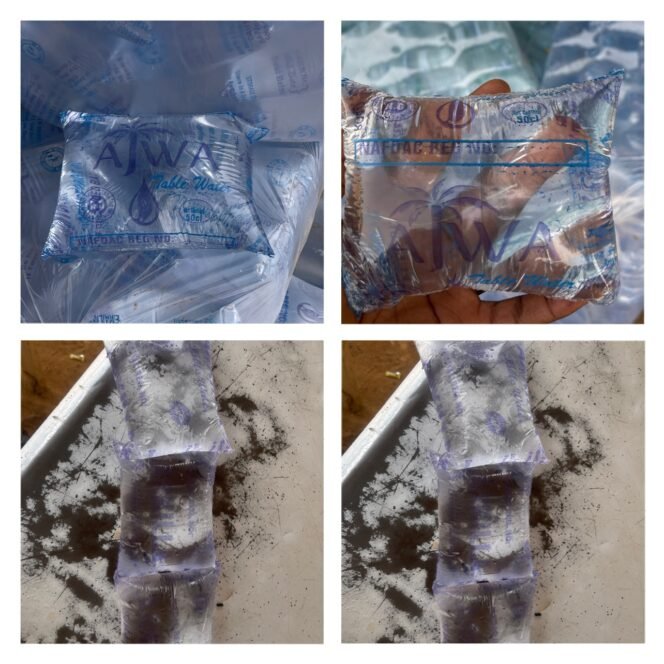
Sachet water, popularly known as “pure water”, remains one of the most widely consumed packaged drinking water products in Nigeria. But viral videos circulating on social media are increasingly exposing the poor conditions in which some sachet water is allegedly produced, raising fresh concerns about hygiene, regulation and consumer safety.
Key Highlights
- Viral videos have exposed makeshift sachet water production facilities in different parts of Nigeria.
- Some facilities shown online appear to operate in cramped or poorly maintained environments.
- NAFDAC has continued to raid and shut down sachet water factories accused of violating regulatory requirements.
- Some investigations have reported concerns over fake or expired NAFDAC registration numbers and inadequate treatment processes.
- Consumers have raised concerns about possible contamination and illnesses linked to some sachet water products.
- High production costs, unreliable electricity and intense price competition may encourage some producers to cut corners.
Viral Videos Expose Makeshift Pure Water Factories
Videos shared widely across social media platforms have repeatedly drawn attention to small-scale sachet water producers operating in environments that appear unsuitable for the production of drinking water.

Some of the footage shows makeshift facilities located inside cramped rooms, residential compounds and poorly maintained buildings. Workers are sometimes seen handling production equipment without adequate protective gear, while filtration and water treatment systems appear rudimentary or poorly maintained.
Other videos show sachet water being filled and sealed in environments that raise questions about whether adequate hygiene standards are being observed. While individual videos do not by themselves establish that every product shown is contaminated, they have intensified public scrutiny of the conditions under which some sachet water is produced.
Regulatory Challenges in Sachet Water Production
The sachet water industry includes thousands of legitimate producers operating under regulations established by the National Agency for Food and Drug Administration and Control (NAFDAC).
However, regulatory enforcement remains a challenge because informal and unregistered operators can continue to enter the market. Previous investigations and enforcement operations have uncovered facilities accused of operating without valid registration, using expired or allegedly fraudulent NAFDAC numbers, failing to maintain acceptable hygiene standards or using inadequate water treatment equipment.
Such practices can increase the risk of microbial or chemical contamination if the water source and treatment processes are not properly controlled.
Why Nigerians Continue to Depend on Sachet Water
The widespread consumption of sachet water is closely linked to Nigeria’s water supply challenges. For millions of Nigerians, sachet water provides an affordable and readily available alternative where reliable access to treated public water remains limited.
The relatively low cost and convenience of “pure water” have made it particularly popular among households, commuters, traders, students and workers. This dependence also means that concerns about the safety of sachet water have significant public health implications.
Read also:
- NAFDAC Warns Nigerians Over Fake ORACIRE+ Toothpaste As Outrage Spreads Online
- NAFDAC Incinerates N10.19bn Worth Of Counterfeit Products In Kano
- Artificial Ripening Of Fruits: How Osinbajo’s Wife Revelation Exposes Hidden Health Dangers Facing Nigerians
Consumer Complaints Raise Safety Concerns
Public reactions to viral videos often include shock and anger, particularly among consumers who regularly purchase sachet water. Complaints about stomach discomfort and other illnesses are sometimes associated by consumers with particular water products. However, such reports cannot automatically establish that a specific sachet water brand caused an illness without appropriate medical or laboratory evidence.
Laboratory testing cited in some reports has also raised concerns about contamination in certain sachet water products, including products that carried registration numbers. The concerns reinforce the importance of proper regulatory monitoring, water testing and compliance with production standards.
NAFDAC Steps Up Enforcement
NAFDAC has carried out raids, inspections and closures of sachet water production facilities in different parts of the country. The agency has shut down facilities accused of operating without valid licences, maintaining unhygienic production environments or using substandard equipment.
Regulators have repeatedly warned producers against clandestine operations and urged manufacturers to comply with established requirements for water treatment, packaging, hygiene and product registration. Consumers have also been advised to pay attention to NAFDAC registration details and other information displayed on sachet water packaging.
Why Makeshift Water Factories Persist
Despite regulatory interventions, informal sachet water production continues to present a challenge. The industry’s relatively low entry barrier allows small operators to establish production facilities with limited capital. At the same time, producers face rising costs for equipment, packaging materials, electricity, transportation and water treatment.
Nigeria’s unreliable electricity supply can further increase operating costs, particularly for businesses that depend on pumping, filtration, purification and packaging equipment. With consumers also demanding affordable products, some operators may face pressure to reduce production costs, creating the temptation to compromise on standards.
Viral Videos Put Regulators and Producers Under Pressure
Social media has increasingly become an informal channel for exposing alleged violations in the sachet water industry. A single video showing an unhygienic production facility can quickly reach thousands or millions of Nigerians, prompting public demands for investigation and regulatory action.
However, viral footage should not replace formal inspection, laboratory testing and due process. Regulatory authorities still need to establish whether a facility has violated the law and whether products are actually unsafe. The videos nevertheless serve an important purpose by drawing attention to problems that may otherwise remain hidden from consumers.
Stronger Regulation Needed
The recurring exposure of makeshift sachet water facilities highlights the need for sustained enforcement rather than occasional raids. NAFDAC and other relevant authorities need adequate resources to inspect production facilities, test products and take action against operators that fail to meet required standards.
Consumer awareness is equally important. Nigerians can reduce their exposure to unsafe products by purchasing sachet water from reputable producers and checking packaging and registration information. For updates on consumer safety alerts like this one, NAFDAC’s official portal publishes recall notices and enforcement actions.
Long term, however, improving access to reliable and affordable public water supply remains critical. As long as millions of Nigerians continue to depend on sachet water because of unreliable public water infrastructure, ensuring that every product entering the market meets basic safety standards will remain an important public health and regulatory challenge.
Follow us on X for more consumer safety updates.