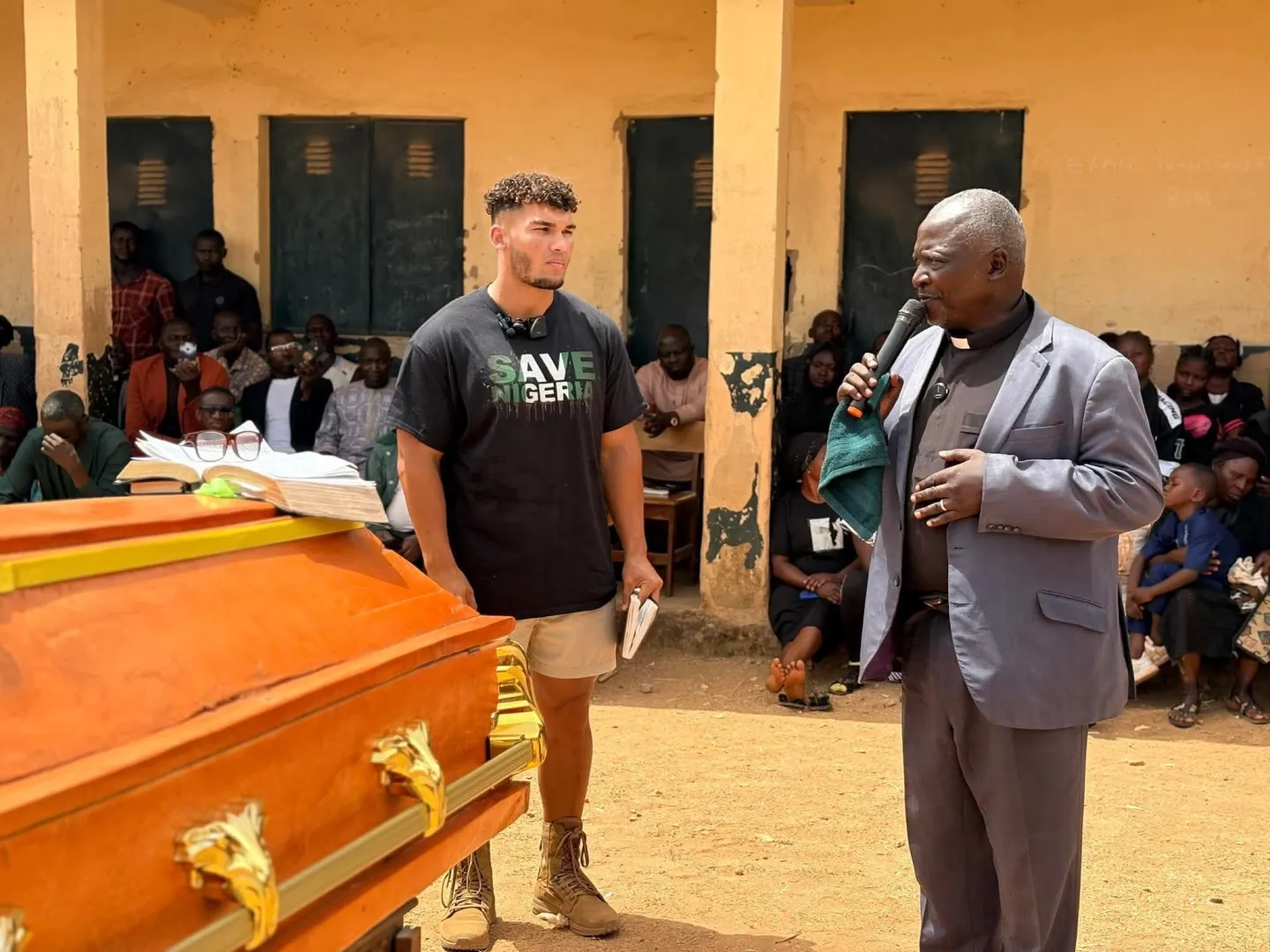
An American man, Alex Barbir has stirred controversy by questioning Pastor Enoch Adeboye and the Redeemed Christian Church of God (RCCG) over a reported $265,000 donation to the federal government for repatriation of 500 Nigerians from South Africa.
Key Highlights:
- Alex Barbir criticized RCCG over a reported $265,000 donation to the government.
- The money was reportedly meant to repatriate 500 Nigerians from South Africa.
- Barbir argued the funds should instead help poor and displaced Nigerians.
- He questioned RCCG’s support for communities affected by insecurity.
- His comments sparked debate over churches funding government initiatives.
Barbir questioned whether a church should make such a donation when many Nigerians, including church members, are facing economic hardship, insecurity and displacement.

In comments shared on Instagram, Barbir asked whether supporting government financially should be considered a priority for a church.
“The RCCG pastor literally gave $265,000 as a donation to the federal government. Is that the role of the church? To fund the operations of the government?” he asked.
He also questioned the use of money contributed by ordinary worshippers, arguing that such funds could instead be directed towards vulnerable Nigerians.
“To take tithes from the people who are frying akara on the street, living in extreme poverty, and then go give it to the government?” he said.
Barbir further suggested that the reported amount could have funded substantial humanitarian assistance for people affected by violence.
Read Also:
- Super Falcons star Rasheedat Ajibade pays tribute to Pastor Olukoya as she presents WAFCON medal
- Nigerian pastor jailed in U.S. over $4.2m COVID-19 relief fraud
- Pastor Adeboye to lead national prayer for economic recovery
“You could have built 600 homes for the persecuted,” he claimed.
He then challenged RCCG over its alleged level of assistance to communities affected by insecurity, asking how many villages the church had helped rebuild.
“I ask you, RCCG, how many villages have you helped rebuild in Nigeria? Zero,” Barbir alleged.
The humanitarian also expressed his dissatisfaction with what he characterised as a close relationship between major religious institutions and government officials, arguing that churches should prioritise people affected by violence and hardship.
“The church are the ones who are supposed to be the light, the ones who are standing with the forsaken, the persecuted, the afflicted, and instead you’re taking money from them and giving it to the government. It’s shameful,” he said.
Barbir’s comments have since added fuel to an ongoing debate about the role of churches in Nigeria’s social and political landscape , particularly concerning tithes, charitable spending and financial support for government initiatives.
For critics like Barbir, the answer appears obvious. For supporters of church-government collaboration, however, donations to public institutions can be viewed as another way religious organisations contribute to society.