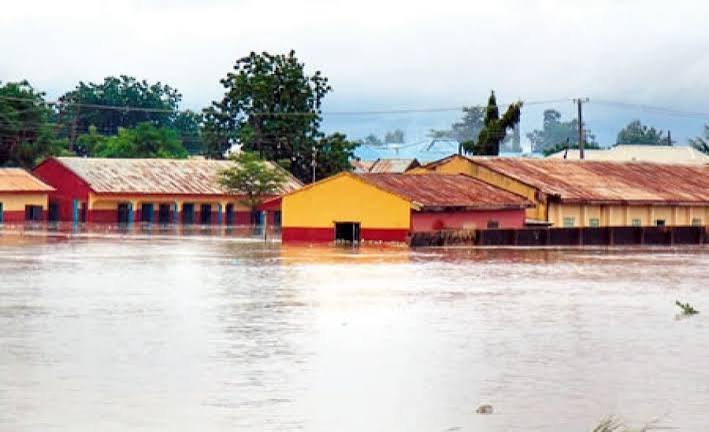
For residents of Boronji community, just a few kilometres from the Adamawa State Government House in Yola, the rainy season is not simply a period of relief from the heat or an opportunity for farmers and fishermen to earn a living.
It is a season they approach with fear and uncertainty.
As dark clouds gather and rainfall intensifies, residents begin to prepare for a familiar ordeal: rising floodwaters that can force them out of their homes and disrupt their daily lives. For years, flooding has reportedly remained a recurring problem in the community, with residents saying they have been left to endure the consequences season after season.

The situation has become so familiar that some residents have learnt to anticipate the arrival of the flood, while others prepare to relocate temporarily to safer and higher areas. In an exclusive interview with the youth Chairman of Boronji community, Pascal Iginatus, he said residents are routinely forced to leave their homes when floodwaters become severe. He explained that some residents move to higher grounds, including a primary school, where they seek temporary shelter until the waters recede.
“We usually move from our comfort zones to the hills and the primary school. At that point, we become vulnerable to attacks. Children also fall sick, while malaria and other water-borne diseases become common in the community,” Iginatus said. His account paints a picture of a community caught between the danger of remaining in flooded homes and the uncertainty of seeking refuge elsewhere. For families with children, the situation becomes even more difficult as displacement can disrupt schooling, expose residents to harsh living conditions and increase the risk of illness.
The community youth leader therefore appealed to the Adamawa State government and other relevant authorities to urgently intervene and develop a lasting solution to the recurring flooding. Beyond the destruction of homes and displacement of residents, flooding poses serious health concerns for the community. According to Iginatus, children are particularly vulnerable during periods of flooding, with malaria and other water-borne diseases becoming more common.
When floodwaters invade residential areas, the normal routines of families are disrupted. Access to clean water, sanitation and safe shelter can become more difficult, creating conditions that may expose residents to preventable diseases. For the people of Boronji, therefore, flood control is not merely an infrastructure issue. It is also a question of public health and human security. But while flooding brings hardship to many residents, some fishermen see an opportunity in the same waters that threaten their homes.
For them, the arrival of floodwaters also signals the beginning of a period when fish become more accessible. Some fishermen said they patiently prepare their nets ahead of the flood season, hoping to catch enough fish to generate income for their families. They acknowledged that the flood can destroy their houses and belongings, but said the fishing opportunities created by the rising waters help them survive economically.
Read also:
- Adamawa Proposes N609bn 2027 Budget, To Transmit Bill To State Assembly
- NEDC Kicks Off Maiden Football Tournament To Promote Peace, Youth Unity In Adamawa
- Adamawa Govt Warns Against Fake Jimeta Mall Shop Allocation, Urges Public to Avoid Fraudsters
Their situation reflects the complex relationship between the community and its surrounding environment. The same floodwaters that destroy homes can also provide food and income. The fishermen’s experience highlights one of the major challenges facing Boronji. A solution to the flooding problem must protect residents from destruction and displacement without taking away the economic activities upon which some families depend.
For fishermen, the answer may not necessarily be to eliminate the presence of water but to develop proper flood-management measures that can separate residential areas from dangerous flood paths while allowing legitimate fishing activities to continue. This, residents say, requires deliberate government intervention rather than temporary responses after disasters occur.
Residents believe that repeated flooding should no longer be treated as an unavoidable part of life in Boronji. Like Iginatus, the residents are calling for measures capable of addressing the root causes of the problem, including improved drainage and flood-control infrastructure, as well as emergency support for affected households. They also want authorities to consider the community’s peculiar circumstances and its dependence on fishing when designing any intervention.
For a community situated only a few kilometres from the seat of the state government, residents say they should not have to repeatedly abandon their homes whenever the rains intensify. A community waiting to be heard. As the rainy season continues, anxiety remains among residents who know that another heavy downpour could once again send them searching for higher ground. For families in Boronji, the issue is no longer simply about surviving one flood.
It is about breaking a cycle that has persisted for years.
It is about ensuring that children can remain safely at home, that families do not have to abandon their houses and that fishermen can earn a living without watching their homes disappear under floodwaters. The residents’ message to the government is therefore straightforward: they need urgent assistance, but above all, they need a permanent solution.
Until that happens, every rainy season will continue to bring the same question to Boronji: Will the next rainfall bring relief—or another flood that forces families to flee?