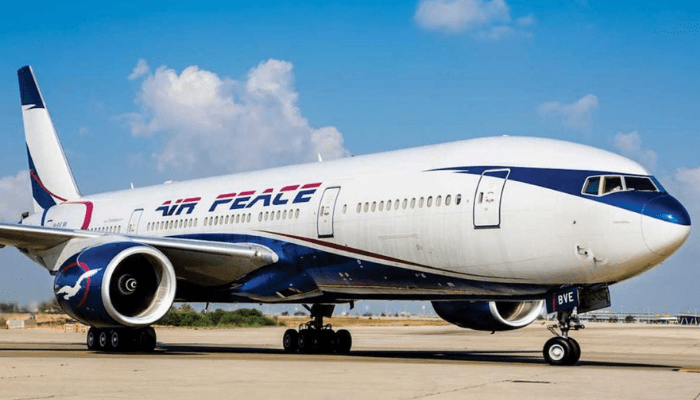
Hundreds of air travellers were stranded at the Murtala Muhammed International Airport, Lagos, and the Nnamdi Azikiwe International Airport, Abuja, on Tuesday, after aviation labour unions shut down Air Peace operations over alleged anti-union practices and the non-remittance of statutory charges.
The industrial action, which began in the early hours of August 11, was carried out by the National Union of Air Transport Employees, the Air Transport Services Senior Staff Association of Nigeria and the National Association of Aircraft Pilots and Engineers, with the backing of the Nigeria Labour Congress and the Trade Union Congress.

The unions reportedly commenced the picketing around 5am in Lagos, blocking access to Air Peace’s Zulu Terminal and preventing the airline from operating its scheduled flights.
One of the flights affected was an Air Peace service scheduled to depart Lagos for Abuja at about 6:30am.
Passengers who had arrived at the airport early for the flight were left waiting as access to the airline’s terminal was blocked.
A similar situation was reported in Abuja, where passengers encountered blocked access points and disrupted check-in operations as the unions prevented Air Peace from conducting normal flight operations.
Read Also:
- NCAA suspends services to Air Peace, Ibom Air, 9 other Airlines over debts
- NCAA queries Air Peace over flight disruptions
- Nigeria to London: Air Peace crashes business class fares from $11,000 to $3,000
The unions insisted that the action is not sudden, saying they have issued a warning to the airline on August 4 and provided time for the issues to be addressed.
At the heart of the dispute is an allegation that Air Peace had prevented some of its employees from freely joining trade unions of their choice.
The labour unions are demanding assurances that workers will be allowed to organise and belong to unions without intimidation or victimisation, insisting that employees have a right to freedom of association under Nigerian labour laws.
The unions have also raised concerns over the alleged withholding of five percent ticket sales charges and cargo sales charges collected on behalf of aviation agencies.
According to the labour groups, failure by airlines to remit the charges has affected the operations of aviation agencies and contributed to unresolved collective bargaining issues involving workers in the sector.
The shutdown immediately disrupted the plans of passengers travelling on Air Peace, with many left at the airports without clear information on when normal operations would resume.
Some passengers reportedly expressed frustration over the disruption, particularly those who had arrived early for morning flights.
One traveller complained that the development had completely disrupted his schedule, while another passenger said she arrived at the airport ahead of the 6:30am flight but was left waiting without certainty over the departure time.
The disruption has once again highlighted the vulnerability of Nigeria’s domestic aviation sector to industrial disputes, with passengers often bearing the immediate consequences of disagreements between airlines, workers and regulatory agencies.
Reacting to the development, Air Peace apologised to affected passengers and said the disruption was caused by circumstances beyond its control.
The airline said the unions barricaded its departure terminals at Lagos Terminal 1, including the Alpha and Zulu terminals, as well as Terminal 2 and its terminal at the Nnamdi Azikiwe International Airport, Abuja.
According to the airline, the blockade prevented scheduled flights from departing Lagos and Abuja and significantly disrupted its operations across the country.
Air Peace expressed regret over the inconvenience caused to passengers and said it was contacting travellers scheduled to fly later in the day with updates as the situation developed.
The Nigerian Civil Aviation Authority has also intervened in the dispute, appealing to the unions to suspend the picketing and return to dialogue.
The Director-General of the NCAA, Chris Ona Najomo, expressed concern over the disruption and urged the unions to exercise restraint while discussions continue with the Ministry of Aviation and Aerospace Development.
The aviation regulator also assured passengers that the industrial action had not compromised flight safety.
The development has nevertheless generated widespread concern among air travellers and members of the public, particularly over the growing frequency with which disputes involving airlines, workers and aviation authorities result in passengers being stranded.
For affected travellers, the shutdown could mean missed appointments, disrupted business schedules, additional accommodation and transportation costs, as well as uncertainty over refunds and rebooking.
The immediate focus is now on whether Air Peace and the unions can resolve their differences and restore normal flight operations before the disruption spreads further across the airline’s network.
While the unions are insisting on the resolution of the alleged labour rights and statutory remittance issues, the NCAA is urging both sides to return to negotiations. Air Peace, meanwhile, has apologised to passengers and maintained that the disruption resulted from the blockade of its terminals.If you want,