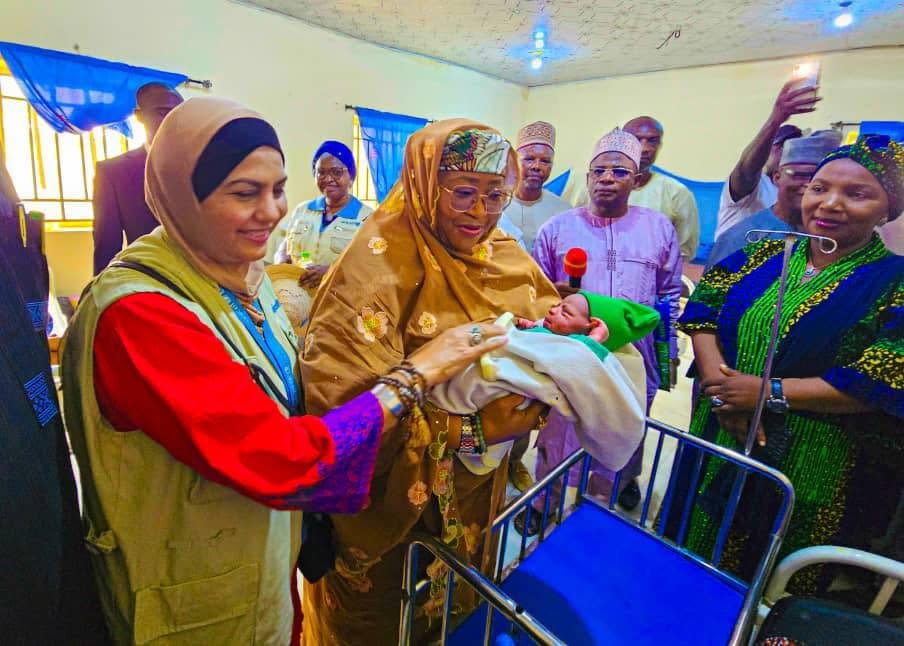
The Wife of the Adamawa State Governor, Hajiya Lami Ahmadu Umaru Fintiri, has urged mothers across the state to exclusively breastfeed their babies for the first six months of life, describing the practice as one of the most effective ways to improve maternal and child health.
The First Lady made the call on Wednesday while flagging off the 2026 World Breastfeeding Week at Nana Asma’u Primary Health Care Centre in Yola South Local Government Area.

The event, organised by the Adamawa State Government in partnership with Helen Keller International, UNICEF and other development partners, brought together health professionals, government officials, traditional leaders, nursing mothers and other stakeholders to promote optimal infant and young child feeding practices.
Speaking at the ceremony, Hajiya Lami said breastfeeding remains one of the most effective and affordable interventions for reducing infant mortality, boosting children’s immunity and ensuring healthy growth and development.
She urged mothers to initiate breastfeeding within one hour of delivery and maintain exclusive breastfeeding for the first six months of a baby’s life, stressing that infants should receive only breast milk during the period without water or any other food.
According to her, World Breastfeeding Week is a reminder that every child deserves the best nutritional start in life through exclusive breastfeeding during the first six months after birth.
The First Lady also reaffirmed the commitment of Governor Ahmadu Umaru Fintiri’s administration to strengthening maternal, newborn and child healthcare through sustained investment in the health sector and programmes aimed at improving the wellbeing of women and children across Adamawa State.
In his remarks, the Commissioner for Health and Human Services, Alhaji Chubado Muhammad Jada, represented by the Permanent Secretary in the ministry, Pharm. Mathias Zira Bubanani, encouraged mothers to embrace exclusive breastfeeding as the healthiest feeding option for newborns.
He said proper breastfeeding significantly reduces childhood illnesses, improves nutrition and contributes to better health outcomes for infants.
Read also:
- Nigeria Risks Losing International Climate Funding Over Neglect Of Conservation Areas,
- Sen. Akpoti-Uduaghan Launches 10,000-Tree Campaign To Combat Climate Change In Kogi Central
- FG Launches Ecological Transition Phase II to Create Green Jobs, Strengthen Climate Action in Nigeria
Also speaking, the Nutrition Programme Officer of the Transforming Lives Project at Helen Keller International, Musa Ali, outlined activities scheduled for the week-long campaign, including advocacy visits to health facilities, public enlightenment programmes and the distribution of breastfeeding support materials to lactating mothers.
He explained that the activities are intended to complement the state government’s efforts to improve maternal and child health services.
The UNICEF Chief of Field Office, Bauchi, Dr. Nuzhat Rafique, described breastfeeding as one of the most important investments in the health, survival and development of every child.
She said the 2026 theme, “Breastfeeding for a Sustainable Start in Life: Strengthen What Works,” highlights the need for sustained investment in systems that enable mothers to successfully initiate and continue breastfeeding.
Dr. Rafique noted that mothers require support from families, communities, healthcare workers, employers, governments and development partners to achieve optimal breastfeeding practices.
She called on fathers, grandmothers, traditional rulers and religious leaders to champion breastfeeding by supporting nursing mothers and strengthening community-based breastfeeding support systems.
She also urged healthcare providers to ensure mothers begin breastfeeding within one hour of delivery, receive appropriate counselling during antenatal and postnatal care, and are supported to overcome common breastfeeding challenges.
The UNICEF official further encouraged mothers to exclusively breastfeed their babies for the first six months and continue breastfeeding alongside appropriate complementary feeding until the child is at least two years old.
Some nursing mothers who attended the event shared their experiences with exclusive breastfeeding, describing it as essential to the healthy growth, development and wellbeing of their children.
World Breastfeeding Week is observed annually to raise awareness of the life-saving benefits of breastfeeding and to mobilise governments, healthcare institutions, communities and development partners to strengthen policies and programmes that support nursing mothers and promote healthy child development.