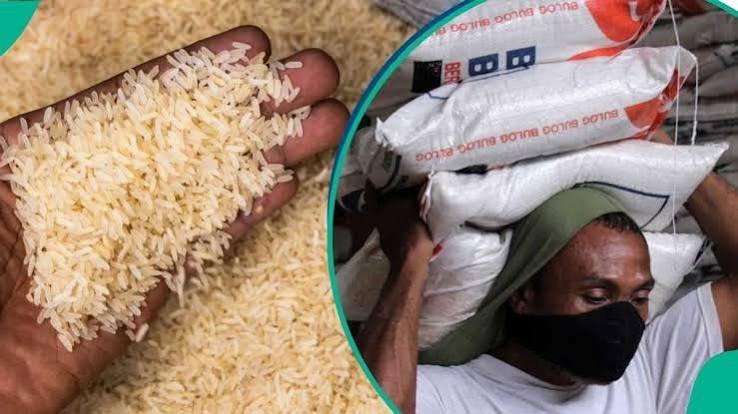
Nigeria could face rice, tomato and other staple food shortages within the next three months unless urgent action is taken to address declining agricultural production, insecurity and supply chain challenges, the President of the Organisation for Technology Advancement of Cold Chain in West Africa (OTACCWA), Mr Alexander Isong, has warned.

Key Highlights
Expert warns Nigeria may face rice, tomato and staple food shortages within three months.
Rice production projected to decline by 6% to about 8.3 million tonnes.
Tomato shortages may persist until the late harvest season in October.
Rising transport costs, insecurity and post-harvest losses threaten food supply.
Nigeria expected to import about 7.2 million tonnes of wheat.
Stakeholders urged to invest in cold chain infrastructure, logistics and farmer support.
Isong, who is also the Country Director of the Nigeria World Agriculture Forum, issued the warning during an interview with the News Agency of Nigeria (NAN) in Lagos.
He said the anticipated shortages could worsen food inflation and place additional pressure on households already struggling with rising food prices.
According to him, rice production is expected to decline by 6 per cent to about 8.3 million tonnes, while the total area under cultivation may fall by 7 per cent to approximately 4.2 million hectares.
“Rice is the big one. Production is projected to drop six per cent to 8.3 million tonnes. The area planted is down seven per cent to 4.2 million hectares. The United States Department of Agriculture confirms a five per cent year-on-year decline. Tomatoes are another headache,” he said.
Isong explained that lower production and reduced cultivation would significantly affect food availability in major markets nationwide, adding that tomato shortages could continue until the late harvest season expected in October.
He noted that maize, sorghum and millet may also experience supply pressure due to reduced planting recorded in 2025.
Highlighting the impact of logistics, Isong said transporting one tonne of grain from Kano to Lagos now costs about ₦70,000, compared to ₦45,000 previously, while transport costs on some routes have doubled or tripled.
He added that onions and peppers are already experiencing limited supply in key producing areas, resulting in sharp price increases.
The OTACCWA President also disclosed that Nigeria is expected to import approximately 7.2 million tonnes of wheat, reflecting the country’s continued dependence on foreign supplies.
He attributed the looming food shortages to insecurity, declining agricultural production, supply chain disruptions and inadequate storage infrastructure, noting that thousands of farmers have been displaced from major food-producing areas in northern Nigeria.
According to him, stronger agricultural GDP growth recorded in the first quarter of 2026 has not translated into improved food availability because production gains continue to be offset by insecurity, reduced planting and post-harvest losses.
Read also:
- Senator Izunaso Seeks Stronger Capital Market Laws To Drive Nigeria’s Economic Growth
- Shettima, 6 Governors Leave Nigeria To Study Benin’s Textile Industrial Model
- ECOWAS Intervenes As Ghana Releases Nigerian Onion Trucks, Trade Resumes
To avert the projected shortages, Isong called for coordinated action by the Federal Government, state governments, development partners and the private sector.
He urged authorities to strengthen security in farming communities, improve rural road networks, expand rail freight for agricultural produce, support irrigation, provide improved seeds and fertilisers, expand access to affordable credit and invest in cold chain infrastructure to reduce post-harvest losses.
He also encouraged state governments to establish aggregation centres, cold storage facilities, processing hubs and produce markets closer to farming communities, while calling on private investors to support food processing, contract farming and agricultural logistics.
“Nigeria produces enough food in many sectors, but too much of it is lost before it reaches consumers. If we reduce post-harvest losses, improve logistics, secure farming communities and support farmers, we can reduce shortages and stabilise food prices,” he said.