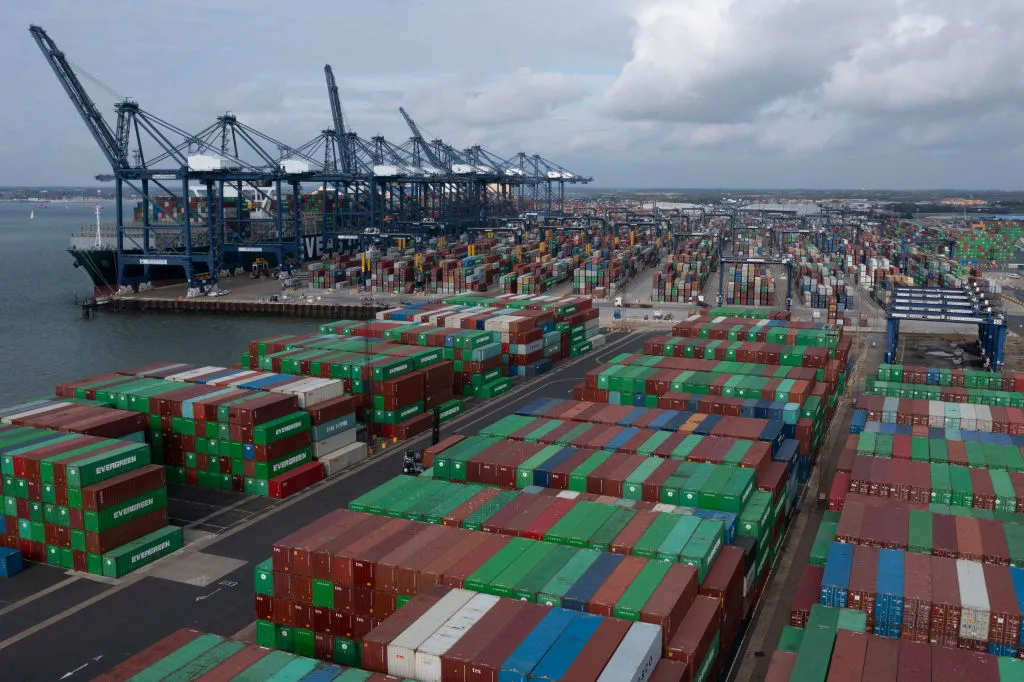
Nigerian dock workers have thrown their weight behind plans to revive the country’s long-dormant National Shipping Line, describing the initiative as a game-changer for job creation, economic sovereignty, and the development of the maritime sector.

The Nigerian National Shipping Line (NNSL), once a proud symbol of Nigeria’s maritime prowess with a fleet that operated across global routes in its heyday, was liquidated in the mid-1990s. Successive administrations have made attempts to revive a national carrier, but progress has been slow. The current Federal Government’s renewed push has now received enthusiastic endorsement from frontline port workers.
Workers’ Endorsement
Leaders of dock workers’ unions and associations at major ports, including Apapa and Tin Can Island in Lagos, as well as Onne and Port Harcourt, have expressed strong backing for the initiative. They argue that a functional national shipping line will generate thousands of direct and indirect jobs, reduce reliance on foreign shipping companies, and boost local capacity in ship management, seafaring, and related industries.
A union representative was quoted saying the revival would “restore dignity to Nigerian workers in the maritime sector” and create opportunities for young Nigerians to pursue careers at sea instead of seeking opportunities abroad. Workers highlighted the potential for skills transfer, improved welfare, and stronger bargaining power as indigenous shipping capacity grows.
Read Also:
- How Indian Billionaire Raj Gupta’s Ambitious Solar-Powered Steel Project Will Revolutionize Nigeria’s Industrial Landscape
- Artificial Intelligence and Academic Integrity: Where Should We Draw the Line?
- Dangote Group Signs $400 Million Deal With China’s XCMG To Expand Refinery To 1.4M BPD
The support comes amid broader efforts by the Federal Government to partner with private investors through a Public-Private Partnership (PPP) model to establish and operate the new national carrier. Officials have projected that a successful national shipping line could contribute significantly to foreign exchange earnings and reduce the huge amounts currently spent on freight by Nigerian importers and exporters.
Economic and Strategic Importance
Nigeria, Africa’s largest economy and a major oil exporter, currently depends heavily on foreign vessels for the movement of its cargo. This dependence costs the country billions of dollars annually in freight charges that could be retained in the local economy.
Reviving the National Shipping Line is seen as critical to:
Enhancing maritime security and control over Nigeria’s territorial waters and trade routes.
Promoting indigenous participation in the blue economy.
Creating employment for seafarers, marine engineers, and support staff.
Attracting investment into shipbuilding, repair, and ancillary services.
Supporting the African Continental Free Trade Area (AfCFTA) by improving intra-African trade logistics.
The government has assured stakeholders that the new entity will become operational soon and is engaging international technical partners to ensure viability and global competitiveness.
Challenges and Cautions
While support is widespread among dock workers and many maritime stakeholders, the initiative has faced skepticism in the past. Former President Olusegun Obasanjo, for instance, once advised against revival, citing past inefficiencies and losses. Critics worry about potential political interference, corruption, and the risk of the line becoming another drain on public resources.
Proponents, however, point to improved governance frameworks, anti-corruption measures, and a more business-friendly environment as reasons for optimism this time around.
Dock workers have called on the government to ensure transparency in the selection of partners, prioritize local content, and involve unions in the planning and implementation process to guarantee sustainability and protect workers’ interests.
Looking Ahead
The endorsement by dock workers adds momentum to the Federal Government’s maritime transformation agenda. As details of the partnership model and fleet acquisition plans emerge, industry watchers will be keen to see how quickly the new National Shipping Line can take to the waters.
For Nigeria’s teeming dock workers and the wider maritime community, the resuscitation of the national carrier represents more than just ships on the horizon — it symbolizes a renewed hope for economic empowerment and national pride in the maritime domain.
The coming months will be critical as the government works to translate this broad support into a commercially viable and competitive national fleet.