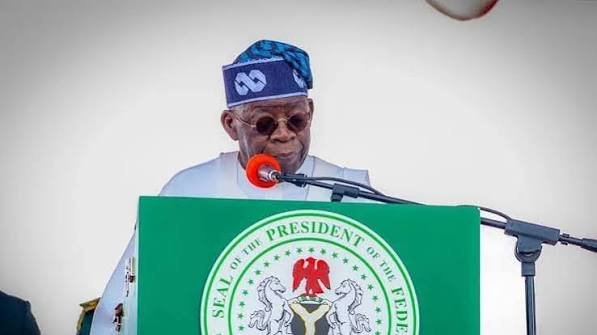
President Bola Tinubu has approved the expansion of the army from eight to 12 divisions and authorised the recruitment of 28,000 additional recruits as part of efforts to strengthen Nigeria’s security architecture amid persistent security challenges across the country.
Key Highlights
- President Bola Tinubu has approved the expansion of the Nigerian Army from eight to 12 divisions to strengthen national security.
- The President also authorised the recruitment of 28,000 additional personnel to boost the army’s operational capacity.
- The expansion is aimed at improving operational effectiveness, decentralising military command, and enhancing response to evolving security threats.
- The restructuring will be implemented in two phases:
- Phase One (by September 2026): Establishment of divisions in Makurdi, Ilorin and Jalingo, alongside reorganisation of existing formations.
- Phase Two (by December 2026): Establishment of the 83 Division in Benin City and completion of the restructuring.
The Presidency announced the approval on Thursday, saying the move is aimed at improving the army’s operational effectiveness, decentralising military command and boosting its capacity to respond to evolving security threats.

In a statement issued by the Special Adviser to the President on Information and Strategy, Bayo Onanuga, the Presidency said the decision reflects Tinubu’s commitment to strengthening the military.
According to the statement, the expansion forms part of the administration’s broader investment in the military, which includes the acquisition of critical military equipment, improved welfare for troops, force modernisation and enhanced operational readiness.
“The expansion builds on the administration’s sustained investments in the armed forces, including approval for the recruitment of 28,000 additional personnel, acquisition of critical military platforms and equipment, improvements in troop welfare, and ongoing support for operational readiness and force modernisation,” the statement said.
Under the new arrangement, the army will operate 12 divisions strategically located across the country.
Four new divisions will be established in Makurdi, Ilorin, Jalingo and Benin City.
The Presidency said the new formations are expected to improve command and control, speed up military response to security threats, strengthen border security and enhance the protection of critical national infrastructure.
“The establishment of the new divisions in Makurdi, Ilorin, Jalingo and Benin City will significantly improve command and control, decentralise operational decision-making, strengthen border security, enhance the protection of critical national infrastructure, improve counter-insurgency and internal security operations, and ensure faster military response to emerging threats nationwide,” Onanuga stated.
Read also:
- How Nigeria’s Digital Switchover Gave Birth to FreeTV
- Tinubu Expands Nigerian Army to 12 Divisions, Approves Recruitment of 28,000 Personnel
The restructuring will be implemented in two phases. The first phase, covering the establishment of the 5 Division in Makurdi, 9 Division in Ilorin and 10 Division in Jalingo, alongside the reorganisation of existing formations, is expected to be completed by September 2026.
The second phase, involving the creation of the 83 Division in Benin City and further restructuring, is scheduled for completion by December 2026.
Following the expansion, the army’s divisions will be headquartered in Kaduna (1 Division), Ibadan (2 Division), Jos (3 Division), Makurdi (5 Division), Port Harcourt (6 Division), Maiduguri (7 Division), Sokoto (8 Division), Ilorin (9 Division), Jalingo (10 Division), Lagos (81 Division), Enugu (82 Division) and Benin City (83 Division), with each responsible for designated states across the federation.
Tinubu also commended the Chief of Army Staff, Lieutenant General Waidi Shuaibu, as well as officers and soldiers of the Nigerian Army for what he described as their dedication and commitment to defending the country.
The president reaffirmed his administration’s resolve to continue investing in the armed forces to ensure they remain adequately equipped, motivated and capable of tackling security threats nationwide.