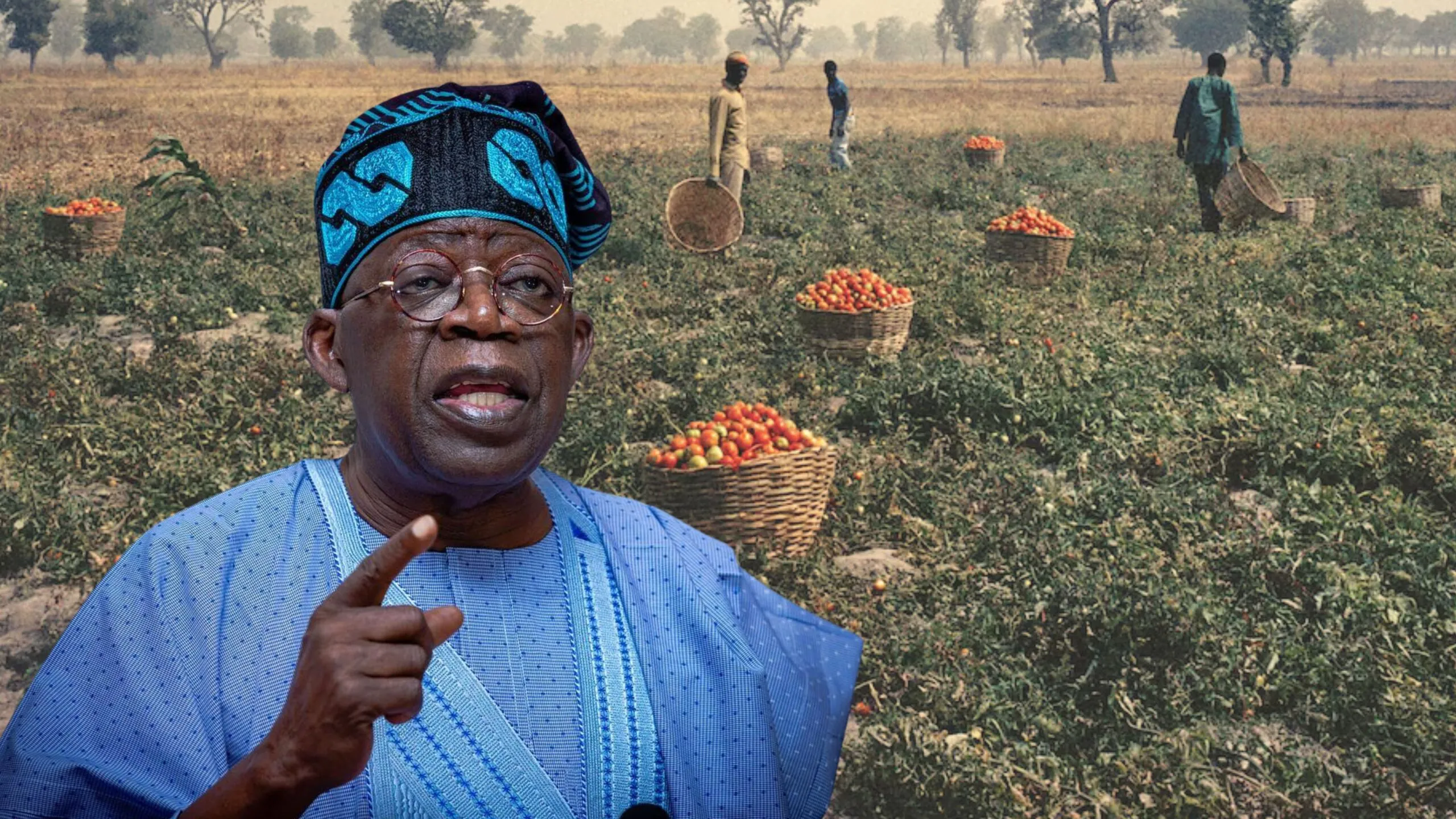
President Bola Ahmed Tinubu has reaffirmed his administration’s commitment to achieving food security, stating that strategic interventions under the Presidential Fertiliser Initiative (PFI) and the Renewed Hope Farm Input Support Programme (RH-FISP) are strengthening Nigeria’s agricultural sector and protecting farmers from global supply chain disruptions.
Key Highlights
- Tinubu says food security remains a major pillar of the Renewed Hope Agenda.
- Over 449,000 metric tonnes of fertiliser inputs secured as of May 2026.
- Strategic procurement generated savings of ₦61.58 billion in 2026.
- Nigeria now has more than 90 operational fertiliser blending plants.
- Over 128,000 smallholder farmers benefiting from RH-FISP intervention.
- More than 515,000 bags of locally produced fertiliser being distributed nationwide.
- Programme currently covers 25 states and the Federal Capital Territory.
- Government targets improved productivity and reduced food prices.
In a statement titled “Building Resilience for Food Security Through PFI & RH-FISP,” the President said food security remains a central pillar of his administration’s Renewed Hope Agenda, with deliberate efforts focused on boosting local production, reducing dependence on imports, and enhancing agricultural resilience.

According to the President, global supply chain disruptions, rising fertiliser costs, and geopolitical tensions in the Middle East posed significant risks to Nigeria’s agricultural sector, creating concerns over potential shortages, reduced productivity, and higher food prices.
However, he said the government acted proactively through the Presidential Fertiliser Initiative, which has now been restructured under the Ministry of Finance Incorporated (MOFI), to secure critical raw materials, strengthen procurement systems, and protect Nigeria’s fertiliser blending industry from global market shocks.
Tinubu disclosed that as of May 2026, more than 449,000 metric tonnes of fertiliser inputs, equivalent to about nine million bags, had either been secured, discharged at ports, or were in transit to the country.
He added that the government remains on track to deliver approximately 1.1 million metric tonnes of fertiliser inputs this year, representing about 22 million bags.
Read Also:
- Bleak Sallah awaits Nigerians over skyrocketing prices of ram, foodstuffs, cooking gas
- ADC attacks Tinubu over rising debt, labels Nigerian Economy a ‘Ponzi Scheme’
- The Cost of Empty Stomachs: How Poverty Is Reshaping Security in Nigeria
The President further revealed that strategic contracting and procurement arrangements had generated savings of approximately ₦61.58 billion in 2026 alone, helping to make fertiliser more affordable for Nigerian farmers.
Highlighting progress in domestic production, Tinubu noted that Nigeria now boasts more than 90 operational fertiliser blending plants, making it the largest fertiliser blending hub in Sub-Saharan Africa.
According to him, the expansion has boosted local production, created jobs, stimulated industrial growth, and strengthened the resilience of the nation’s food system.
The President stressed that while securing fertiliser inputs is important, ensuring that the products reach farmers when needed is the ultimate objective.
To bridge that gap, he said the government launched the Renewed Hope Farm Input Support Programme (RH-FISP) through the National Agricultural Development Fund (NADF).
Under the programme, about 515,720 bags of locally produced fertiliser are currently being distributed to 128,930 smallholder farmers across 25 states and the Federal Capital Territory for the ongoing planting season.
Tinubu explained that the NADF is also supporting modern agricultural practices through digital extension services, harmonised fertiliser application guidance, and targeted support for priority crops such as rice, maize, cassava, and soybean.
The President assured Nigerians that his administration would continue implementing practical measures aimed at protecting farmers, strengthening agricultural value chains, increasing productivity, supporting local industries, and easing pressure on food prices.
“Our administration will not relent in its efforts to protect farmers, raise productivity, strengthen the agricultural value chain, support local industry, and ease pressure on food prices over time,” he stated.
Tinubu described the initiatives as evidence of his administration’s commitment to fulfilling its promises to Nigerians, emphasizing that sustained investment in agriculture remains critical to achieving long-term food security and economic stability.