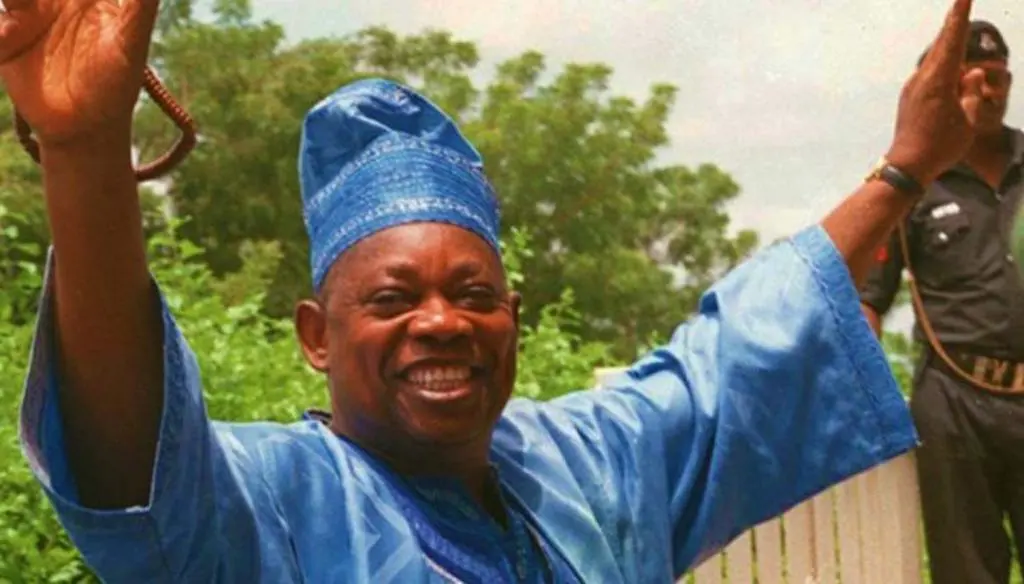
Moshood Kashimawo Olawale Abiola (MKO Abiola) remains one of Nigeria’s most influential political figures, remembered for winning the June 12, 1993, presidential election — an election widely considered one of the freest and fairest in the country’s history.
Key Highlights:
The businessman and philanthropist, who ran under the Social Democratic Party (SDP), defeated his rival in what appeared to be a clear victory across many parts of the country. However, the military government led by General Ibrahim Babangida annulled the results before they were officially declared, plunging Nigeria into a major political crisis.

After Babangida stepped aside, General Sani Abacha took power. Abiola later declared himself the rightful president of Nigeria in 1994 and was arrested for treason. He spent about four years in detention while demanding recognition of his electoral mandate.
His long imprisonment became a symbol of Nigeria’s struggle for democracy. Efforts were reportedly made by some leaders, including General Abdulsalami Abubakar, to secure his release as Abacha’s regime ended.
Read also:
- Seven Akwa Ibom federal lawmakers defect to APC
- Federal lawmaker donates mobile labs, renovates existing lab in Enugu school
- Federal lawmaker donates mobile labs, renovates existing lab in Enugu school
- J30 Abuja 2026: Nigeria, China Share Honours As Doubles Competition Ends
- Bashir Ahmad mourns former Defence spokesperson, calls death national tragedy
- Google Approves 90% of Play Store Submission, Then Deletes 2 Million Apps in Massive Cleanup
- Tragedy: Lifeless Bodies Of Newborn Twins Found In Anambra Drainage
- NMA Hails ECEWS At 25, Describes Organisation As Beacon Of Hope For Nigerians.
But on July 7, 1998, shortly after Abacha’s death and during a meeting with foreign diplomats and Nigerian officials in Abuja, MKO Abiola suddenly died. The circumstances surrounding his death sparked controversy and numerous questions, with investigations later pointing to natural causes while many Nigerians continued to suspect foul play.
Abiola’s death came just weeks before Nigeria’s return to civilian rule in 1999. Although he never occupied the presidency he was believed to have won, June 12 was later recognised as Nigeria’s Democracy Day in honour of his struggle.
MKO Abiola’s story remains a powerful reminder of a mandate denied, a man who won an election but never got the freedom to lead.