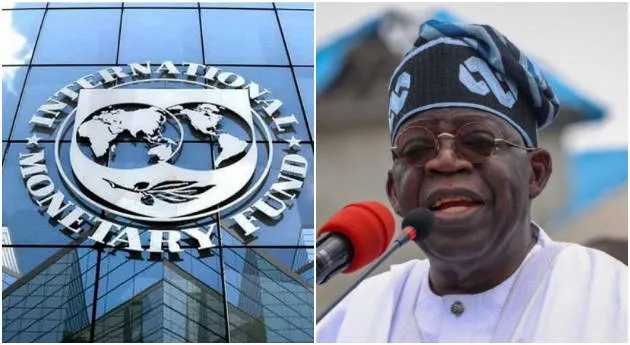
The Federal Government has welcomed the International Monetary Fund’s (IMF) positive assessment of Nigeria’s economy, describing it as independent validation of the sweeping economic reforms implemented under President Bola Ahmed Tinubu’s administration.
In a statement issued on Tuesday, the Minister of Finance and Coordinating Minister of the Economy, Taiwo Oyedele, said the IMF’s 2026 Article IV Mission Concluding Statement confirmed that the government’s economic reforms are strengthening macroeconomic stability, restoring investor confidence, and laying the foundation for sustainable growth.

Key Highlights
- Federal Government welcomes IMF’s positive assessment of Nigeria’s economy.
- IMF credits reforms with improving macroeconomic stability and investor confidence.
- Fuel subsidy removal and foreign exchange reforms cited as key achievements.
- Government says Nigeria remains resilient despite Middle East tensions.
- IMF projects economic growth above four percent in the medium term.
- Administration pledges continued investments in agriculture, infrastructure and social protection programmes.
- Government targets lower inflation, job creation and improved living standards.
According to the government, the IMF acknowledged that reforms introduced over the past two and a half years have improved foreign exchange market operations, strengthened external reserves, enhanced fiscal management, and reinforced the resilience of Nigeria’s banking sector.
The government said the report demonstrated that Nigeria is now better positioned to withstand external economic shocks than it has been in recent years.
“The bold and necessary reforms undertaken under the leadership of President Bola Ahmed Tinubu are strengthening macroeconomic stability, restoring confidence, and laying the foundation for sustainable and inclusive growth,” the statement said.
IMF Commends Key Economic Reforms
The IMF reportedly highlighted the impact of major policy decisions, including the removal of fuel subsidies, the elimination of deficit monetisation, the liberalisation of the foreign exchange market, and stricter fiscal discipline.
According to the Fund, these measures have helped reduce economic vulnerabilities and strengthen confidence in Nigeria’s economic outlook.
The government noted that the IMF’s findings support its position that difficult economic decisions were necessary to stabilise the economy and create a more sustainable growth path.
Nigeria Shows Resilience Amid Global Uncertainty
The Federal Government also pointed to the IMF’s assessment of Nigeria’s resilience in the face of global economic challenges, particularly the recent conflict in the Middle East.
The conflict has contributed to rising energy prices, higher food costs, tighter financial conditions, and disruptions to global supply chains.
Despite these challenges, the IMF observed that Nigeria’s foreign exchange parallel market premium remained below five percent, while sovereign risk spreads remained broadly stable, helping to sustain investor confidence.
The government added that Nigeria is well positioned to benefit from higher global energy prices through increased export earnings, improved fiscal revenues, and stronger foreign exchange inflows.
Focus on Energy, Agriculture and Investment
To maximise these opportunities, the government said it would continue efforts to increase crude oil production, expand domestic refining capacity, grow gas production and exports, and attract investments across the energy sector.
The administration also reaffirmed its commitment to boosting agricultural productivity through the Renewed Hope National Agricultural Mechanisation Programme and other initiatives designed to improve food security.
Officials said investments in irrigation, dry-season farming, agricultural inputs, financing, and value-chain development are expected to support job creation and moderate food inflation.
Poverty Reduction Remains a Priority
While acknowledging the IMF’s concerns about poverty and food insecurity, the government maintained that progress is being made.
It cited a reported increase of nearly 10 percent in per capita income growth in 2025 as evidence of improving economic conditions.
Read Also:
- Edun advises developing countries to fashion strategies to reduce impacts of gobal economic shocks
- FG, IsDB partnership aimed at achieving $1tn economy by 2030 -Edun
- Edun tasks NIPSS participants on practical pathways to unlock Nigeria’s orange economy
However, the administration stressed that economic growth must translate into meaningful improvements in the lives of Nigerians.
To achieve this, the government said it is expanding social intervention programmes, including direct cash transfers, support for small businesses, student loans through the Nigerian Education Loan Fund (NELFUND), consumer credit initiatives, and healthcare investments.
Medium-Term Outlook Remains Positive
The government welcomed the IMF’s medium-term projections, which forecast economic growth above four percent, stronger foreign reserves, rising investment inflows, and improved fiscal revenues.
According to the statement, Nigeria’s public debt has declined relative to Gross Domestic Product (GDP), while reserve buffers have strengthened considerably.
The administration also pointed to recent sovereign credit rating upgrades as evidence of growing international confidence in the Nigerian economy.
Government Pledges Continued Reforms
The Federal Government reiterated its commitment to maintaining macroeconomic stability, strengthening fiscal discipline, improving the investment climate, and implementing structural reforms aimed at supporting private-sector-led growth.
It said ongoing efforts would focus on infrastructure development, job creation, human capital development, and policies designed to attract both domestic and foreign investment.
“While challenges remain, the direction is clear and the foundations are stronger,” the statement said.
The government added that the ultimate goal of its reform agenda is to deliver tangible benefits for Nigerians through lower inflation, higher incomes, improved job opportunities, and a better quality of life.