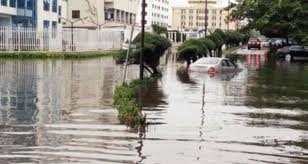
Residents of the Federal Capital Territory (FCT) faced significant disruptions on Monday and Tuesday as intense rainfall led to flash floods in various areas of the territory. This resulted in submerged roads, traffic chaos, and renewed concerns about the city’s drainage systems.
The downpour, which started late on May 25 and persisted into the early hours of May 26, impacted major neighborhoods such as Asokoro, Guzape, Lokogoma, Wuse, and parts of Gwarinpa, where floodwaters made it challenging for both drivers and pedestrians to navigate.
Social media was flooded with videos showing vehicles caught in rising waters, commuters navigating through inundated streets, and drainage systems overflowing after prolonged heavy rain.

Many residents criticized local authorities for not adequately enforcing environmental and construction regulations, despite numerous warnings from experts and meteorological agencies about heightened flood risks during the rainy season.
A Guzape resident, who preferred to be identified as Yinka, remarked that flooding has become an annual issue, despite the high living costs in the area.
“We pay high rents and taxes, yet every time it rains heavily, the roads turn into rivers. The drainage systems are either blocked or too small to manage the water flow,” he stated.
Another resident from Asokoro pointed out that recent construction near waterways has exacerbated the flooding problem.
“Areas that used to act as natural drainage paths are now filled with buildings. When it rains, the water has no place to go,” the resident explained.
The recent floods have reignited discussions about Nigeria’s 2026 annual flood outlook, released earlier this year by environmental authorities, which warned that several states and the FCT could face severe flooding between July and September.
Environmental experts have consistently highlighted that poor waste management, inadequate urban planning, and climate-related extreme weather events are contributing to the rising frequency of flash floods in major Nigerian cities.
Some residents expressed concerns that the situation could deteriorate in the coming months without urgent preventive actions.
Motorists were particularly hard hit, with traffic jams reported on several major roads as vehicles slowed down or stalled in flooded areas.
Business owners in certain parts of the city also reported losses due to the flooding, as customers struggled to reach shops and offices because of waterlogged streets.
The incident has since generated widespread reactions online, with many Nigerians criticizing the state of infrastructure in the nation’s capital despite its status as the seat of government.
Read also:
- Agency alerts 266 LGs in 33 states, FCT at risk of severe flooding
- Police confirm killing of 29-year-old woman whose body was dumped in canal in Abuja
- New study reveals widespread harassment, economic hardship facing journalists in FCT
@CityMonitorNG said: “This is the capital city of Nigeria, and roads are turning into rivers after rainfall. Authorities need to act urgently.”
@AbujaUpdates: “Asokoro and Guzape are among the most expensive places to live in Abuja, yet flooding remains a major problem every rainy season.”
@UrbanWatchNaija: “Blocked drainages, illegal structures, and poor environmental habits are destroying Abuja’s drainage system.”
@RealTalkNigeria: “The rainy season has barely started, and we are already seeing severe flooding in Abuja. July and August may be worse.”
@NaijaObserverX: “We cannot keep ignoring flood warnings every year and expect different results.”
As of Tuesday afternoon, there had been no official response from the Federal Capital Territory Administration (FCTA) regarding the flooding or any potential emergency measures.