The Federal Government has officially handed over the reconstruction of a new Carter Bridge in Lagos to China Civil Engineering Construction Corporation (CCECC), in a ₦545 billion project aimed at addressing long-standing structural concerns and modernising one of the state’s key transport links.
Key Highlights:
- ₦545 billion Carter Bridge reconstruction project awarded to CCECC
- Full replacement of existing Carter Bridge in Lagos approved
- Project duration set at 36 months
- 70% foreign financing, 30% federal government contribution
- Cable-stayed bridge design included in new structure
- Structural defects traced to underwater pile damage
- Emergency closure ordered on part of Eko Bridge due to safety concerns
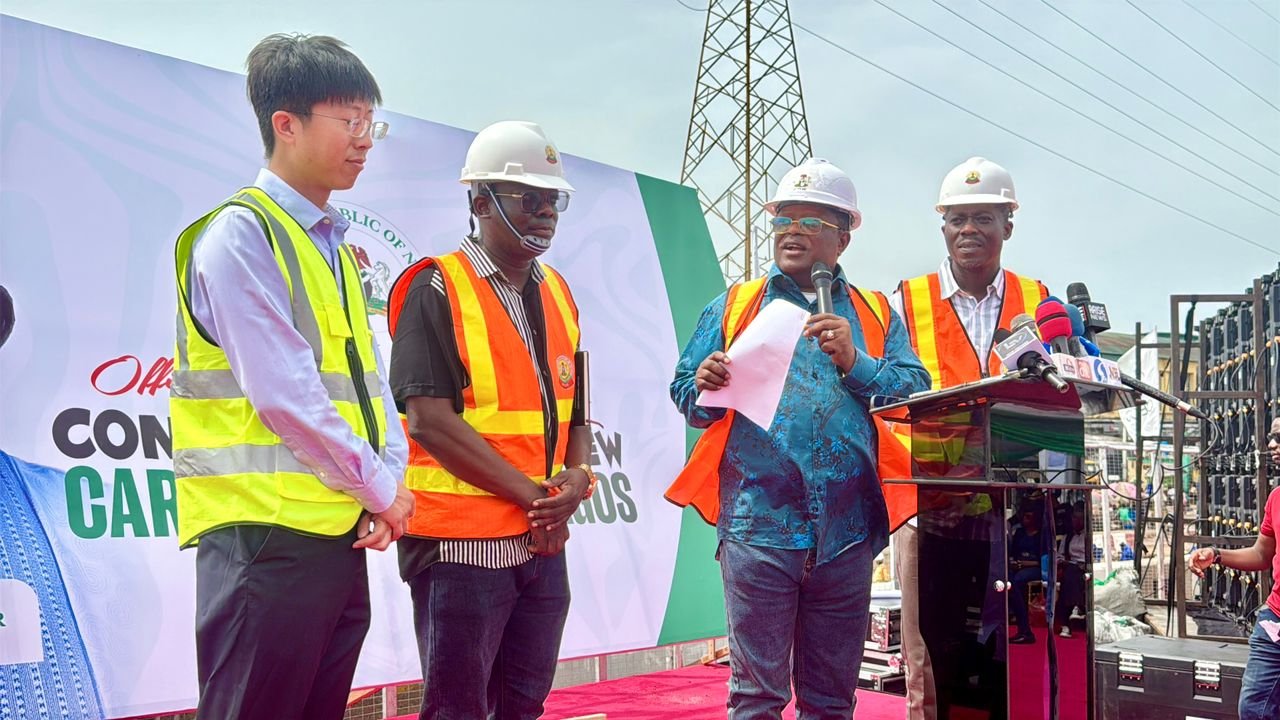
The handover ceremony took place on Wednesday at the Carter Bridge site on Lagos Island, where the Minister of Works, Senator David Umahi, explained that the decision followed years of technical assessments revealing severe underwater structural deterioration affecting both Carter Bridge and the 3rd Mainland Bridge.

According to the Ministry of Works, investigations dating back to 2013 and further assessments in 2019 identified progressive structural failures beneath the bridges, with experts warning that the damage was worsening over time.
Read Also:
- FG bans honorary degree holders from using ‘Dr’ title, declares it academic fraud
- We won’t reinstate subsidy regime on petroleum products – FG
- Nigerians in South Africa must fund their own repatriation — FG
Umahi stated that further underwater inspections conducted by specialist engineers under the current administration confirmed that some bridge piles had shifted from their pile caps, raising serious safety concerns.
He described the situation as severe, noting that repair attempts would cost nearly twice as much as constructing a new bridge. Following consultations with engineers, stakeholders, and lawmakers, the federal government approved a complete reconstruction instead of rehabilitation.
The new Carter Bridge will feature a modern cable-stayed section designed to improve durability, aesthetics, and navigational safety along Lagos waterways. The project is expected to be completed within 36 months.
The minister praised President Bola Ahmed Tinubu for prioritising infrastructure renewal, describing the project as part of a broader national effort to strengthen critical public assets and ensure long-term safety.
Umahi confirmed that the project was competitively bid, with seven companies invited and six firms, including Julius Berger, submitting proposals. He said CCECC was selected based on technical and commercial evaluation and recommended by the Bureau of Public Procurement.
The project will be financed through a combination of federal funding and external borrowing, with 30 percent provided by the government and 70 percent sourced externally.
The Minister directed CCECC to immediately mobilise to site, adding that the Ministry of Works would conduct monthly monitoring to ensure compliance with engineering and safety standards.
In a related development, Umahi announced an emergency partial closure of the Eko Bridge following structural damage caused by illegal sand mining activities. He said underwater investigations revealed that dredging operations had damaged key supporting piles beneath the bridge.
According to him, the damage compromised structural stability, prompting urgent safety measures, including the shutdown of one carriageway by midnight on Sunday, May 10, 2026.
He added that emergency repair works involving bridge lifting and underwater restoration would be carried out by Buildwell Construction, with specialist divers already deployed for inspection.
The minister assured Lagos residents that President Tinubu had been fully briefed and directed that both the Carter Bridge reconstruction and Eko Bridge repairs be treated as urgent national infrastructure priorities.
He appealed for public patience, stressing that the administration remains committed to safeguarding lives and restoring critical transport infrastructure across the country.