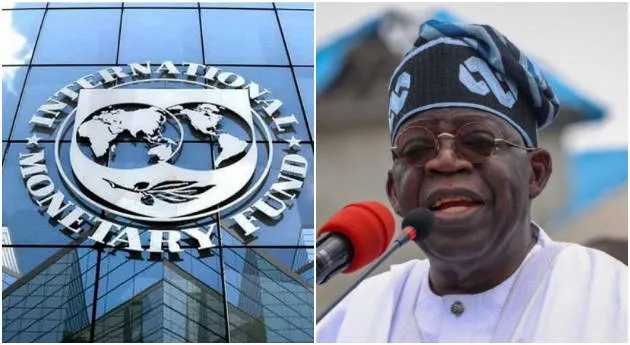
The International Monetary Fund (IMF) has expressed support for Nigeria’s recent bank recapitalisation exercise, saying the reform is already strengthening the country’s financial system and improving its ability to withstand economic shocks.
The endorsement comes as the Olayemi Cardoso-led Central Bank of Nigeria continues efforts to reinforce the banking sector under its ongoing financial reforms.

According to the IMF, the recapitalisation programme has increased capital buffers in Nigerian banks, making them more resilient amid global economic uncertainties, including oil price volatility and tightening financial conditions.
The fund noted that a well-capitalised banking system is critical for stability, as it enables banks to absorb shocks, support lending, and sustain economic growth.
Speaking at the IMF–World Bank Spring Meetings in Washington D.C., IMF officials said Nigeria’s banking sector reform represents a major step in strengthening financial stability and investor confidence.
IMF Financial Counsellor, Tobias Adrian, explained that bank capital becomes most valuable during periods of financial stress, stressing the importance of strong buffers in emerging economies.
He added that recapitalisation efforts like Nigeria’s are “welcome and effective,” especially in safeguarding financial systems during global uncertainty.
The IMF also projected Nigeria’s economic growth at 4.1% in 2026 and 4.3% in 2027, noting that the strengthened banking sector will support medium-term stability and development.
The reform, described as the most significant since the 2005 banking consolidation, required banks to raise their minimum capital base significantly.
At the end of the exercise, 33 banks collectively raised about ₦4.65 trillion, according to the Central Bank of Nigeria.
Read Also:
- Edun advises developing countries to fashion strategies to reduce impacts of gobal economic shocks
- FG, IsDB partnership aimed at achieving $1tn economy by 2030 -Edun
- Edun tasks NIPSS participants on practical pathways to unlock Nigeria’s orange economy
The apex bank said the funds were sourced both locally and internationally, reflecting continued investor confidence in Nigeria’s financial system.
Cardoso said the recapitalisation is designed to support Nigeria’s ambition of building a $1 trillion economy by improving banks’ ability to finance key sectors such as infrastructure, manufacturing, energy, and small businesses.
He added that the CBN will continue to enforce stronger governance and risk management standards to ensure the funds are effectively deployed.
Stakeholders in the financial sector also welcomed the development, saying it should translate into improved credit access, lower lending costs, and stronger support for economic growth.
With the recapitalisation now completed, attention is shifting to ensuring that banks deploy their strengthened capital base prudently to avoid past cycles of risky lending and financial instability.