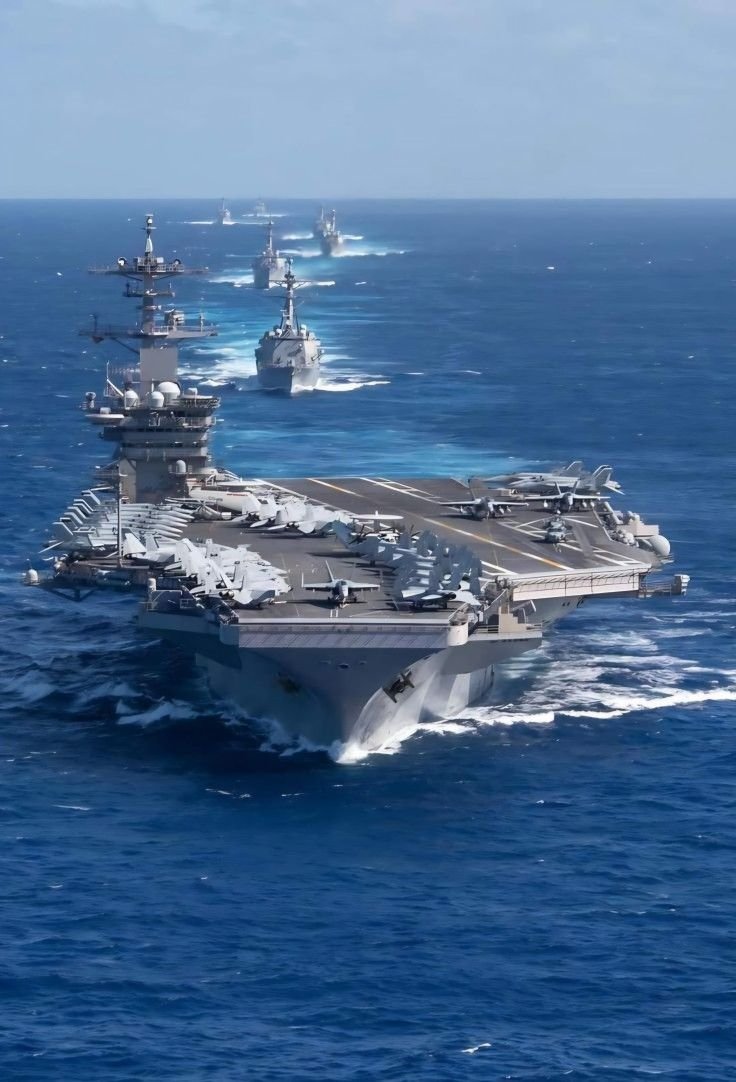
The United States has sent the USS Gerald R. Ford back to the Middle East, signaling a further buildup of its military presence as hostilities with Iran continue to escalate.
The nuclear-powered aircraft carrier, considered one of the most technologically advanced warships in operation, has resumed deployment after undergoing maintenance and resupply in Europe.

According to reports shared via Israel’s Army X handle on Friday, the vessel has returned to active duty and is ready to participate in ongoing military operations linked to the conflict.
Its return comes at a time of heightened tensions between Washington and Tehran, with the confrontation entering several weeks of sustained exchanges, including air raids, missile strikes, and increased risks to international shipping lanes—especially around the Strait of Hormuz.
The USS Gerald R. Ford had earlier been withdrawn from operations following a fire incident that required repairs, temporarily sidelining the vessel.
Read Also:
- UK-led 40-nation coalition pushes diplomatic solution to reopen Strait of Hormuz amid global energy crisis
- Bashir Ahmad, US Missionary Alex Barbir trade words after controversial exit from Nigeria
- Police arrest two suspected robbers, recover gun, stolen items in Delta
Despite that interruption, the carrier remains a key component of U.S. naval power, equipped with over 70 aircraft and a large complement of personnel capable of carrying out extended combat missions.
Defense observers say its redeployment reflects Washington’s determination to retain a strong military edge in the region.
The carrier is expected to join other U.S. naval forces, including the USS Abraham Lincoln and the USS George H. W. Bush, creating a formidable multi-carrier presence.
This move highlights the importance of naval airpower in the conflict, enabling the U.S. to conduct operations without relying entirely on land-based facilities.
It also serves as a clear message to Iran and its allies amid concerns that the situation could escalate further.
As developments continue, the international community is watching closely to see whether the growing military buildup will lead to a broader conflict or prompt renewed diplomatic efforts to ease tensions.