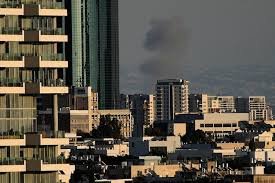
The speaker of the Iranian parliament warns the United States that “we are just getting started” after attacks on Monday in the Strait of Hormuz.
Mohammad Ghalibaf, who was the top negotiator in last month’s talks with the US, says “we know well that the continuation of the status quo is intolerable for America.”

Donald Trump’s “Project Freedom,” which began on Monday, aims to use the US military to guide stranded cargo ships out of the key waterway.
But Iran insists that it controls the strait, and yesterday fired missiles and drones at military and commercial ships, according to the US.
Trump said the US “shot down” seven Iranian “fast boats,” a claim denied by Tehran.
Around 2,000 ships are estimated to be stuck in the Strait of Hormuz. The US says two US-flagged vessels were able to leave yesterday.
Read Also:
- Trump suggests renaming Strait of Hormuz after himself, shares new map
- 2 ships attacked in Strait of Hormuz after Trump extends Iran ceasefire
- Iran threatens to shut Strait of Hormuz again over US blockade
The shipping company, Maersk, says one of its vessels was able to leave, accompanied by the US military.
Meanwhile, a former UK national security adviser, Lord Ricketts says the ceasefire between the US and Iran is “hanging by a thread” following reports of both countries trading fire in the Strait of Hormuz.
Lord Ricketts tells BBC Breakfast he is doubtful over how successful the US’s plan to escort commercial ships through the waterway will be given there are “hundreds” stranded and, before the war, dozens passed every day.
“They can’t possibly escort every single ship,” he says, adding it will only take one or two being hit for the shipping industry to “lose all confidence in the possibility of safe passage.”
He says “the only way” to secure a reliable passage is through an agreement with Iran.
The news that shipping company Maersk got one of its vessels through the Strait of Hormuz on Monday is only “a drop in the ocean” when it comes to easing the blockage, one trade association says.
Tim Wilkins, managing director at Intertanko, a trade body representing independent tanker owners and operators, tells BBC Radio 4’s Today programme it was “one vessel that was closely escorted under certain very tight circumstances.”