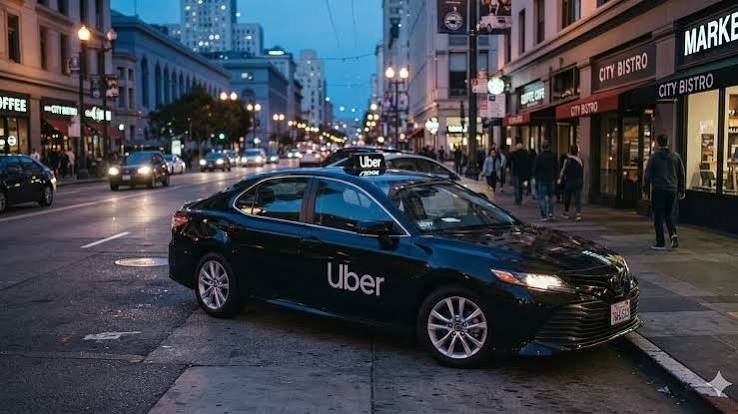
Uber Technologies has announced plans to cut approximately 3,300 jobs globally while expanding its investment in autonomous vehicles, including the launch of supervised AI-powered rides in London through a partnership with British technology company Wayve.

The workforce reduction, announced in early September 2026, represents about 10 per cent of Uber’s global workforce and comes as the ride-hailing giant seeks to simplify its organisational structure and redirect resources towards growth areas, particularly autonomous driving technology.
Key Highlights
Uber is cutting approximately 3,300 jobs globally, representing about 10 per cent of its workforce.
The company says the restructuring is aimed at making its organisation simpler and faster.
About 20 per cent of management positions are affected by the restructuring.
Uber is reducing small “micro-teams” and consolidating some operations.
The company has launched supervised autonomous rides in London with Wayve.
All autonomous rides currently have a trained safety driver onboard.
The initial London fleet consists of fewer than 20 vehicles.
Uber plans to invest heavily in autonomous vehicle technology and robotaxi partnerships.
Why Is Uber Cutting 3,300 Jobs?
Uber CEO Dara Khosrowshahi told employees that the layoffs were designed to reduce organisational complexity and speed up decision-making after years of rapid expansion.
According to the company, its growth created additional management layers, fragmented teams and small units that made decision-making more complicated.
The restructuring affects approximately 20 per cent of managers, although some affected managers are expected to move into individual contributor positions.
Uber is also reducing the number of employees positioned more than seven organisational layers below the chief executive by about 20 per cent.
The company is nearly halving the number of “micro-teams” consisting of one or two employees, while some delivery operations and engineering groups are being consolidated.
Uber Layoffs Bring Workforce Closer to 2021 Levels
The job cuts are expected to bring Uber’s workforce closer to levels recorded around 2021.
The company had approximately 34,000 employees at the end of 2025, with the restructuring expected to reduce its headcount to below 30,000.
Uber has also tightened its workplace policy, limiting fully remote positions to a small proportion of its workforce while reinforcing a hybrid model that requires employees to work from offices.
The company is expected to generate hundreds of millions of dollars, potentially reaching the low billions, in annual savings from the restructuring.
Uber plans to redirect some of those resources towards drivers, couriers, merchants, ride-hailing, delivery services and autonomous vehicle development.
Uber Says Layoffs Are Not Due to Business Downturn
Khosrowshahi said the restructuring was not a response to a deterioration in Uber’s underlying business.
Instead, he said the company needed to simplify its organisation after years of expansion and focus investment on its most important growth opportunities.
Autonomous vehicles have become a major part of Uber’s long-term strategy as competition intensifies from companies developing robotaxi technology.
Uber has committed significant resources to autonomous vehicle partnerships as it seeks to establish a position in the emerging self-driving transportation market.
Uber Launches Autonomous Rides in London
At the same time as the job cuts, Uber and Wayve launched supervised autonomous rides in London on September 3, 2026.
Read also:
- Why Uber Exited Nigeria After 12 Years Despite Ride-Hailing Demand
- Pyrates Confraternity Tasks Tinubu, INEC, Security Agencies On Peaceful Osun Guber Election
- Nigeria’s New Crypto Tax Law Sparks Industry Backlash Over Transaction Taxes
- Community Leaders In Cross River Meet To End Stigma, Discrimination Against Leprosy
- Diadem Breaks Silence On Dabota Lawson, Reveals ₦5m Gift Fallout
The service marks a major development in the UK’s autonomous transport sector, allowing selected Uber customers to be matched with an all-electric Ford Mustang Mach-E equipped with Wayve’s AI Driver technology.
The vehicles use cameras, radar and artificial intelligence to navigate roads and respond to their surroundings.
Customers requesting UberX, Uber Comfort or Uber Electric may be offered an autonomous vehicle as part of their journey.
Safety Driver Remains in Autonomous Uber Cars
Despite the autonomous technology, Uber’s London service is not yet fully driverless.
A trained safety driver licensed by Transport for London remains inside each vehicle to monitor the journey and take control if necessary.
Fully driverless commercial operations would require additional regulatory approvals.
Uber has said customers can accept an autonomous vehicle or switch to a conventional vehicle before it arrives.
The fares are also expected to match standard prices for the selected Uber service, meaning customers do not pay an additional charge for choosing an autonomous vehicle.
Small Fleet Initially Deployed
The initial autonomous fleet in London remains relatively small, with reports putting the number at fewer than 20 vehicles.
The service covers most areas of London but does not initially include airports.
More than 140,000 London users had reportedly opted in to increase their chances of being matched with an autonomous vehicle.
The vehicles also feature in-car screens designed to provide passengers with information about their journeys and support multiple languages.
Uber’s Autonomous Future
Uber’s simultaneous restructuring and expansion into autonomous mobility underline the company’s changing strategy.
While the company continues to depend heavily on human drivers and couriers, it is investing increasingly in technologies that could transform the economics of ride-hailing over the long term.
For drivers, the expansion of autonomous vehicles raises questions about how demand for human-operated rides could change if self-driving fleets become more widespread.
Uber, however, continues to maintain that it will invest in its existing driver and courier network.
For passengers, autonomous vehicles could eventually provide a new transportation option, but widespread driverless operations will depend on technological reliability, regulation, safety and public acceptance.
The London launch therefore represents an early step rather than the arrival of fully driverless ride-hailing.
Uber Faces High-Stakes AI and Mobility Shift
The latest developments show how Uber is attempting to balance two major priorities: reducing the cost and complexity of its existing organisation while investing aggressively in the future of autonomous transportation.
The Uber layoffs could provide additional resources for strategic investments, while the London autonomous ride launch gives the company an opportunity to test AI-powered transportation in one of the world’s busiest urban environments.
As competition in autonomous mobility intensifies, Uber’s ability to combine its global ride-hailing network with emerging self-driving technology could become increasingly important to its long-term position in the transportation industry.