
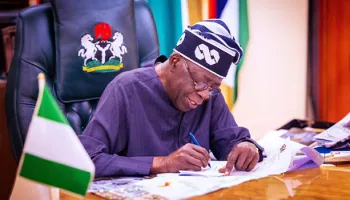
President Bola Tinubu has signed the 2026 Appropriation Bill into law, approving a record ₦68.32 trillion budget aimed at strengthening economic stability, infrastructure, and national development.
The president also approved an extension of the 2025 budget implementation timeline, shifting the deadline from March 31 to June 30, 2026.
The move is designed to allow ministries, departments, and agencies to complete ongoing capital projects and maximise the value of public spending.

Details of the 2026 budget were outlined in a statement by presidential spokesman, Bayo Onanuga.
The spending plan includes ₦4.799 trillion for statutory transfers, ₦15.8 trillion for debt servicing, ₦15.4 trillion for recurrent expenditure, and a significant ₦32.2 trillion about half of the total for capital projects under the Development Fund.
According to the Presidency, the heavy allocation to capital projects underscores the administration’s focus on infrastructure development, national security, economic growth, and inclusive prosperity under its policy agenda.
The extension of the 2025 budget specifically targets capital expenditures, giving MDAs additional time to consolidate ongoing projects, improve completion rates, and ensure efficient use of funds.
Read also:
- Tinubu submits 2026 FCT Budget to Senate for approval, prioritises infrastructure, social development
- Hope, doubt trail Tinubu’s 2026 budget proposal as President pushes for continuous implementation of 2025 appropriation
- Tinubu seeks National Assembly approval to extend 2025 Budget to March 2026
Tinubu directed government agencies to prioritise transparency, discipline, and efficiency in the utilisation of resources, stressing the importance of delivering projects on schedule and achieving value for money.
He also commended the National Assembly for its cooperation and swift passage of the budget, highlighting the need for continued collaboration between the executive and legislative arms to drive national development.
The president further assured Nigerians of ongoing fiscal reforms, improved revenue generation, and strategic investments aimed at stimulating economic growth, creating jobs, and strengthening social protection systems.