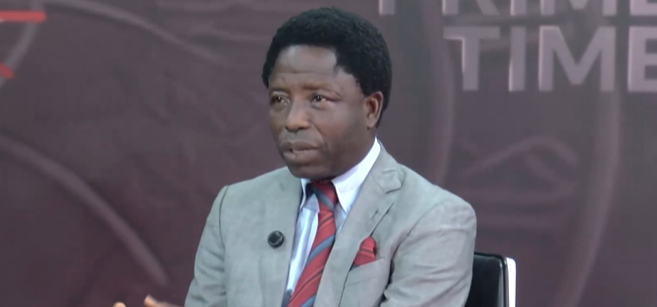
Development expert Dr. Taofiq Raimi has defended President Bola Tinubu’s measures to reduce the impact of high petrol prices on Nigerians, arguing that initiatives such as compressed natural gas (CNG) buses, cheaper transport programmes and targeted assistance form part of a broader response to economic hardship rather than a strategy designed solely to win votes ahead of the 2027 general elections.
Speaking on ARISE News’ Prime Time during a discussion titled “Tinubu’s Reforms and Nigeria’s High Cost of Living,” Raimi said the administration had introduced short-, medium- and long-term interventions to cushion the effects of petrol subsidy removal in May 2023.

Key Highlights
- Taofiq Raimi defended Tinubu’s measures to ease the impact of high petrol prices and rising living costs.
- The development expert said the government’s CNG and transport initiatives go beyond preparations for the 2027 elections.
- The National Affordable CNG Transit Programme targets reductions in transport costs through expanded CNG and electric mass transit.
- NNPC Retail’s temporary petrol discount and targeted support measures have also been presented as efforts to cushion economic hardship.
- Implementation of transport fare reductions has reportedly varied across states, with some commuters still facing high fares.
- Infrastructure gaps, including limited CNG refuelling stations, remain challenges to wider adoption.
Raimi Defends Tinubu’s Response to High Petrol Prices
Raimi said Tinubu was aware of the impact of rising petrol prices on transportation, food costs and other sectors of the Nigerian economy.
He argued that the administration’s interventions were intended to reduce the pressure on households and businesses following the removal of the petrol subsidy.
The APC member rejected suggestions that the measures were being introduced primarily to influence voters ahead of the 2027 elections.
He maintained that the government had pursued interventions since Tinubu assumed office in May 2023 and questioned why additional measures should be dismissed simply because they were being intensified at this stage.
Responding to questions about the timing of the latest initiatives, Raimi asked: “Why not now?”
His comments reflect the administration’s position that targeted relief and alternative-energy programmes can operate alongside its broader economic reforms.
Petrol Subsidy Removal Drives CNG Alternative
Tinubu announced the removal of the petrol subsidy during his inaugural address on May 29, 2023, declaring that “subsidy is gone”.
The policy was followed by significant increases in petrol prices, which subsequently contributed to higher transportation and food costs and intensified pressure on household budgets.
In response, the Federal Government introduced measures intended to reduce reliance on petrol, particularly in public transportation.
One of the major initiatives is the Presidential Initiative on Compressed Natural Gas (Pi-CNG), which promotes the conversion of vehicles to run on CNG and the development of supporting infrastructure. The programme has also expanded its focus to include electric vehicles.
Government figures cited in reports indicate that more than 120,000 vehicles have been converted to CNG, alongside the development of more than 400 certified conversion centres and over 90 CNG refuelling stations.
CNG is generally cheaper than petrol on an energy-equivalent basis, although the savings motorists achieve depend on conversion costs, vehicle efficiency, fuel availability and local prices.
The administration has presented the programme as part of its effort to reduce transportation costs without reinstating the former blanket petrol subsidy.
Tinubu’s CNG Programme Targets Cheaper Transport Fares
The Federal Government has also worked with state governments to expand affordable public transportation through alternative-energy buses.
In late August 2026, Tinubu met with the 36 state governors, leading to the National Affordable CNG Transit Programme under the Nigeria Governors’ Forum, chaired by Kwara State Governor AbdulRahman AbdulRazaq.
The programme was designed to encourage lower transport fares from October 1, 2026, by expanding the use of CNG and electric buses.
The objective is to pass some of the savings from cheaper energy and more efficient mass transit to commuters through reduced fares.
Examples cited in reports include Kaduna’s CNG bus programme, which reportedly provided free transport on major routes and carried about 3.2 million passengers over one year, generating estimated savings of more than ₦3.5 billion for commuters.
Some CNG-powered services on the Lagos-Ibadan route have also reportedly reduced fares from around ₦8,000 to ₦3,200 during initial implementation.
Similar initiatives have been reported on selected routes in Abuja and Borno State, although the availability and scale of fare reductions differ by location.
Government Introduces Additional Measures to Cushion Hardship
Alongside the longer-term transition to alternative fuels, the Federal Government has announced additional measures aimed at easing pressure on consumers.
These include a temporary petrol discount through NNPC Retail, expanded support for vulnerable households and accelerated deployment of CNG buses and refuelling infrastructure.
The petrol discount has been described by officials as a commercial arrangement under which NNPC Retail gives up part of its retail margin to reduce the price paid by customers, rather than a return to government-funded blanket subsidies.
Pi-CNG Executive Chairman Ismaeel Ahmed has also said that fare reductions have begun on some routes and that the government is continuing to expand the programme through infrastructure development and partnerships.
The effectiveness of these measures will depend on their reach, implementation and ability to deliver sustained savings to commuters and other consumers.
Read also:
- October 1 Transport Fare Cut: How Prepared Are FG, States for Nationwide Rollout?
- Eradiri Challenges Governors to Implement Tinubu’s Cheaper Transport Directive
- NNPC 30-Day Petrol Discount Sparks Opposition Backlash as Presidency Denies Subsidy Return
CNG Implementation Faces Infrastructure Challenges
Despite reported progress in some states, the rollout of cheaper transport initiatives has been uneven.
Reports indicate that some states did not achieve widespread or clearly measurable fare reductions by the October 1 target, leaving commuters in several locations paying unchanged or elevated fares.
Limited refuelling infrastructure remains a major challenge. Although the government has expanded conversion centres and CNG stations, the network must grow further to support large-scale adoption across Nigeria.
The administration has set a target of converting one million vehicles to CNG by 2027, a goal that will require continued investment, reliable gas supplies, additional refuelling stations and participation from private operators.
The cost of converting vehicles, availability of suitable buses and the ability of transport companies to pass savings on to passengers are also important factors.
For many Nigerians, the central question is whether the policies will translate into affordable and reliable transportation beyond selected routes and locations.
Subsidy Savings and Household Relief Remain Under Debate
The government has cited fiscal gains from petrol subsidy removal as part of its justification for the reform.
Finance Minister Taiwo Oyedele has reportedly put the additional resources mobilised for the Federation between June 2023 and December 2025 at approximately ₦15.8 trillion.
However, the relationship between those fiscal gains and improvements in household welfare remains a subject of public debate.
While some CNG bus and transport initiatives have reportedly delivered savings in specific locations, critics argue that many households continue to face high living costs and that the benefits of economic reforms have not reached all Nigerians equally.
The debate centres on whether government savings and alternative-energy investments can produce broad, sustained reductions in transport fares, food prices and other essential expenses.
Tinubu’s Economic Measures Face Scrutiny Ahead of 2027
Raimi’s defence of the administration’s policies comes as economic hardship, petrol prices and transportation costs remain important issues in discussions about Nigeria’s economic direction.
The government has maintained that alternative fuels, targeted support and mass-transit programmes can help cushion the effects of subsidy removal without returning to the former petrol subsidy system.
However, the outcome will depend on the consistency of implementation, the expansion of infrastructure and the extent to which lower operating costs are reflected in prices paid by consumers.
As the 2027 elections approach, the reach and measurable impact of the CNG programme and other relief measures are likely to remain central to public debate over the administration’s economic reforms.
For more updates, follow us on X.