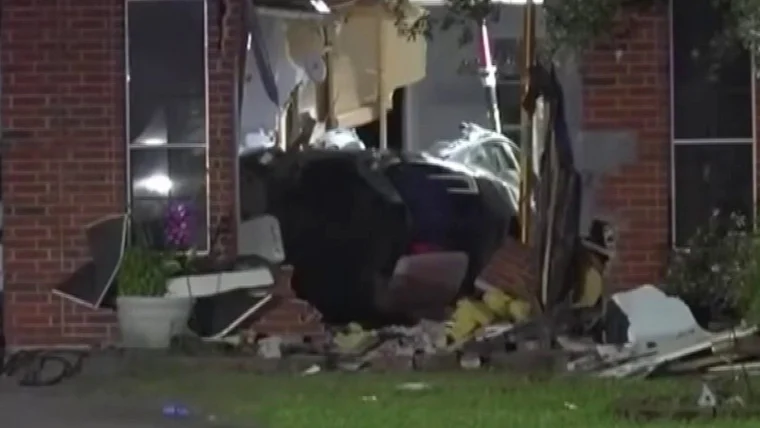
Tesla has moved to clarify the circumstances surrounding the Tesla viral crash in Texas, after reports suggested that the company’s Full Self-Driving (FSD) or Autopilot technology may have contributed to a fatal incident in which a Tesla Model 3 crashed into a residential property at high speed.
Key Highlights:
- Tesla disputes claims that Full Self-Driving caused the fatal crash.
- Elon Musk says the vehicle was travelling too fast for FSD operation in a residential area.
- Tesla data allegedly shows the driver manually pressed the accelerator to 100%.
- Vehicle reportedly reached 73 mph before impact.
- NHTSA has launched an investigation into the incident.
- Tesla pledges full cooperation with federal investigators.
The incident attracted widespread attention after reports indicated that a Tesla Model 3 left the roadway, crashed through a brick house, and fatally struck a resident identified as Martha Avila.

Responding to reports linking the accident to Tesla’s autonomous driving systems, Tesla Chief Executive Officer, Elon Musk, rejected the suggestion, arguing that the circumstances of the crash were inconsistent with the operation of the company’s self-driving technology.
“This makes no sense. FSD drives slowly through neighborhood streets, and this was a high-speed crash,” Musk stated.
Providing further details, Tesla’s Head of Artificial Intelligence, Ashok Elluswamy, said company data indicated that the driver manually overrode the self-driving system by fully depressing the accelerator pedal.
Read Also:
- Victor Osimhen gifts Sister Tesla Cybertruck worth N400m in surprise luxury present
- Elon Musk’s $1 Trillion Tesla pay deal faces crucial shareholder vote amid global backlash
- Investor panic as Elon Musk unveils “America Party,” Tesla shares drop by 7%
According to Elluswamy, the vehicle reached a speed of approximately 73 miles per hour, while records showed the accelerator remained fully engaged even after the collision occurred.
Authorities are currently investigating whether Tesla’s Autopilot system played any role in the crash.
The National Highway Traffic Safety Administration (NHTSA) has opened an investigation into the incident and is expected to review vehicle data, witness accounts, and technical evidence before determining the cause of the crash.
Tesla said it will cooperate fully with investigators and provide all available information needed to establish the facts.
The company also referenced a similar high-profile crash in Harris County, Texas, several years ago, where initial reports blamed Tesla’s Autopilot technology.
However, following a joint investigation involving Tesla and the National Transportation Safety Board (NTSB), authorities concluded that the Autopilot system was not engaged during the crash.
The NTSB’s findings revealed that accelerator pedal application reached as high as 98.8 percent, while the vehicle recorded speeds of up to 67 miles per hour in a residential area where the speed limit was significantly lower.
Industry observers note that the circumstances surrounding the current Tesla viral crash in Texas appear similar, although investigators have cautioned against drawing conclusions before the completion of the official probe.
The outcome of the NHTSA investigation is expected to provide clarity on whether driver actions, vehicle systems, road conditions, or a combination of factors contributed to the fatal collision.
As scrutiny of autonomous driving technology continues to grow worldwide, the case is likely to add to ongoing debates over driver responsibility, vehicle automation, and road safety.