
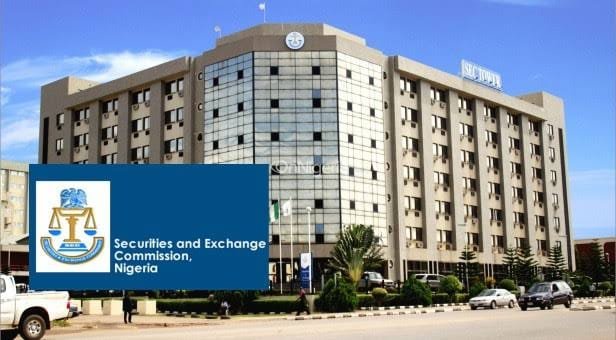
Nigeria’s sustainability reporting regime has entered a new implementation phase after the Securities and Exchange Commission (SEC) directed all public companies and significant public-interest capital market operators to submit plans for adopting the IFRS Sustainability Disclosure Standards by October 15, 2026.
The directive, contained in an SEC circular dated September 23, 2026, requires affected entities to explain how they will implement IFRS S1, which covers general sustainability-related financial disclosures, and IFRS S2, which focuses on climate-related disclosures.

Key Highlights
- SEC sets October 15, 2026 deadline for sustainability reporting implementation plans.
- Public companies and significant public-interest capital market operators are required to comply with the directive.
- Companies must provide details on board oversight, gap assessments, reporting systems and internal controls.
- Mandatory adoption of IFRS Sustainability Disclosure Standards for public-interest entities begins from January 1, 2028.
- SMEs are scheduled to come under mandatory adoption from January 1, 2030.
- The FRC released an amended sustainability reporting roadmap and Sustainability Reporting Guideline 1 in 2026.
SEC Requires Companies To Submit Implementation Plans
Under the new directive, the SEC said every public company and significant public-interest capital market operator must submit an implementation plan for adopting IFRS S1 and IFRS S2 no later than October 15, 2026.
The Commission said the requirement is intended to help it monitor the preparedness of regulated entities and support a smooth transition to mandatory sustainability reporting.
The implementation plans must cover at least eight areas, including governance arrangements, board oversight, an assessment of existing practices against IFRS S1 and S2 requirements, implementation timelines and data collection systems.
Companies must also provide details of their internal control and assurance arrangements, staff training plans, expected year of first sustainability reporting and challenges they anticipate during implementation.
The SEC said it will continue to engage with regulated entities and monitor compliance with the implementation timelines.
Nigeria Moves Towards Mandatory Sustainability Reporting
Nigeria’s sustainability reporting framework is based on the standards developed by the International Sustainability Standards Board (ISSB).
The Financial Reporting Council of Nigeria (FRC), working with relevant stakeholders including the SEC, developed a phased roadmap for implementation.
Under the amended 2026 roadmap, early adoption was encouraged for reporting periods ending on or before December 31, 2023, followed by a voluntary adoption period covering 2024 to 2027.
Mandatory adoption for public-interest entities is scheduled to begin with accounting periods starting on or after January 1, 2028, while SMEs are scheduled to follow from January 1, 2030.
The framework covers IFRS S1, which establishes general requirements for sustainability-related financial disclosures, and IFRS S2, which addresses climate-related disclosures.
What Companies Must Prepare
The SEC’s October deadline means affected companies must now demonstrate that they have begun preparing for the mandatory reporting regime.
Their implementation plans are expected to address:
- Board and management responsibility for sustainability reporting
- Gap analysis against IFRS S1 and IFRS S2
- Implementation timelines
- Sustainability data collection and reporting systems
- Internal controls
- Assurance arrangements
- Staff capacity building and training
- The expected year of first sustainability report
- Anticipated implementation challenges
The requirements place sustainability reporting within broader corporate governance, financial reporting and risk management processes.
FRC Updates Sustainability Reporting Roadmap
The SEC directive follows the FRC’s release of an amended roadmap and Sustainability Reporting Guideline 1 (SRG 1) in February 2026.
The FRC said the revised documents were designed to provide greater clarity on implementation, reporting timelines, assurance requirements and the categories of professionals who can undertake sustainability reporting work.
The amended framework also introduced an Adoption Readiness Test Assessment to help reporting entities determine their preparedness for the standards.
According to the FRC guideline, entities are expected to prepare documents such as a board resolution approving adoption, a gap analysis report and an implementation plan as part of the readiness process.
Read also:
- Investors confidence tied to accountable, transparent financial institutions, says SEC boss
- Dangote IPO: SEC Warns Investors Against Fraudulent Platforms
- Dangote Refinery IPO Oversubscription: What Happens If Demand Exceeds Available Shares?
Why Sustainability Reporting Matters
Sustainability reporting is increasingly becoming part of how investors assess companies and their exposure to environmental, social and governance risks.
IFRS S1 and IFRS S2 are designed to provide investors and other capital-market users with more consistent information about sustainability-related risks and opportunities that could affect a company’s prospects.
For Nigerian companies seeking international capital, the transition also means that sustainability information will increasingly form part of the broader financial reporting and corporate disclosure environment.
Companies Face 2028 Mandatory Reporting Deadline
The October 15 SEC deadline is a preparedness requirement. It does not itself mean that all affected companies must begin full mandatory sustainability reporting in 2026.
Under the FRC’s amended roadmap, mandatory adoption for public-interest entities begins from accounting periods starting on or after January 1, 2028. SMEs have a later mandatory adoption date of January 1, 2030.
This gives affected organisations time to establish governance structures, collect reliable sustainability data, strengthen internal controls and develop the expertise required to meet the reporting standards.
SEC Deadline Signals New Phase For Nigerian Companies
The SEC’s October 15 deadline marks a significant step in Nigeria’s transition from voluntary sustainability reporting to a structured mandatory regime.
With the FRC’s amended roadmap already in place and the SEC now requiring implementation plans from public companies and significant public-interest capital market operators, businesses will need to demonstrate how they intend to meet the 2028 reporting requirements.
The immediate deadline is October 15, 2026, while the wider regulatory milestone is the commencement of mandatory sustainability reporting for public-interest entities from January 1, 2028.
For more updates on this and other business stories, follow us on X.