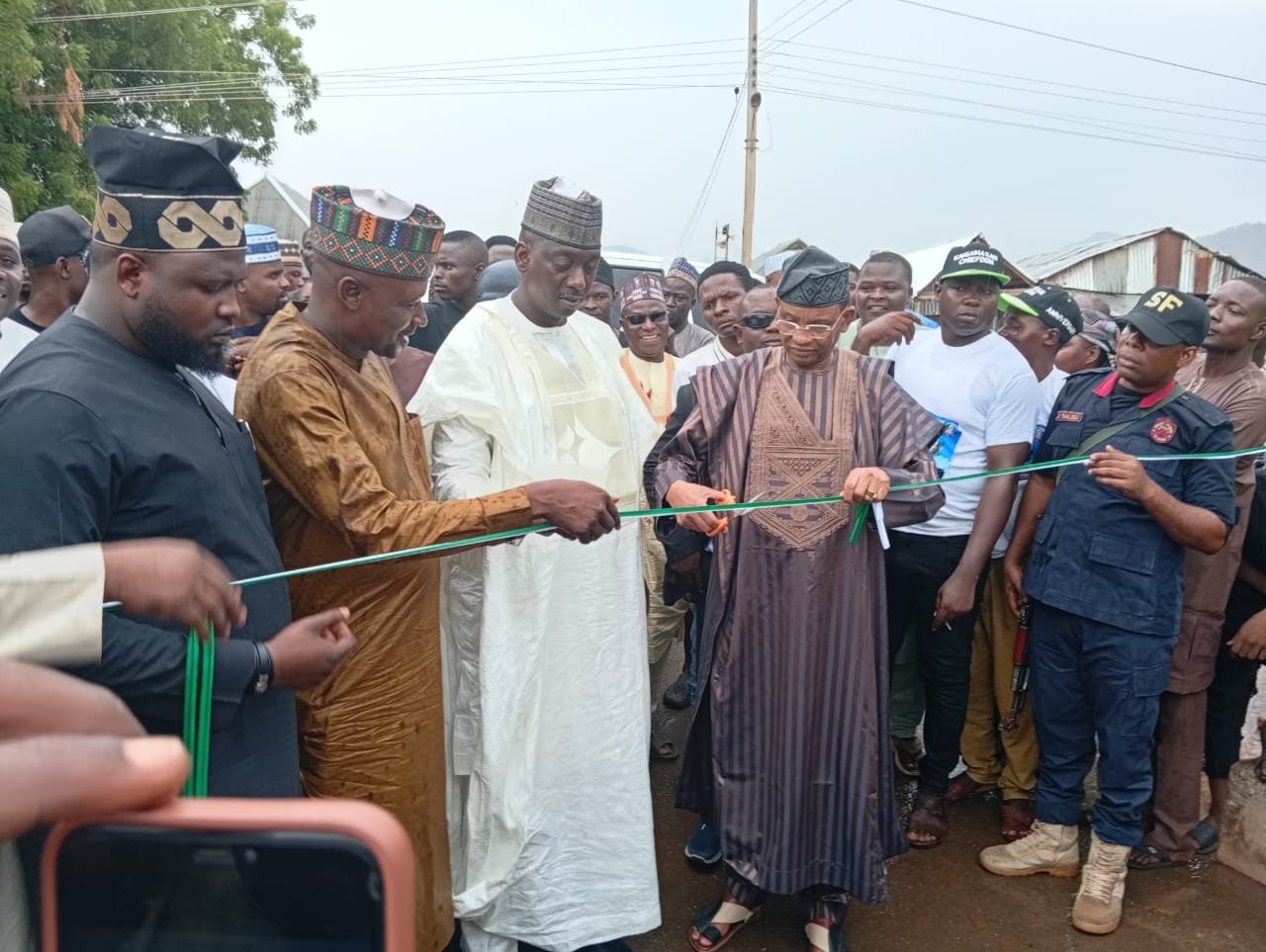
In many rural communities across Nigeria, access to timely healthcare remains a matter of life and death. For residents of Bali/Gassol Federal Constituency in Taraba State, that reality may be changing, following a series of interventions spearheaded by their representative in the National Assembly, Jafar Yakubu Chiroma.
Standing before a crowd of residents in Garba Chede town on Wednesday, Chiroma made a bold declaration: no life would be lost in the constituency due to lack of access to healthcare.

The statement came as he officially rolled out mini ambulances to primary healthcare centres across several wards—an effort aimed at tackling one of the most persistent challenges in rural healthcare delivery.
For years, many communities in Bali/Gassol have grappled with the absence of reliable means to transport critically ill patients to health facilities. Expectant mothers in labour, accident victims, and sick children often face long, difficult journeys—sometimes with fatal consequences.
Chiroma acknowledged this reality, noting that preventable deaths had become an unfortunate norm due to the lack of emergency response systems.
“For too long, our people have suffered preventable deaths because of lack of emergency transportation,” he said. “These ambulances will save mothers in labour, accident victims, and sick children. No longer will anyone die simply because they could not reach a clinic on time.”
The ambulances, distributed across multiple wards, are part of a wider health intervention strategy. The lawmaker revealed that similar distributions had earlier been carried out in eight other wards, underscoring a constituency-wide plan to strengthen primary healthcare systems.
While the ambulance rollout formed the centerpiece of the event, it was only one aspect of a broader development agenda.
Chiroma also commissioned a 2-kilometre road in Garba Chede, a project expected to significantly improve mobility within the area. For residents, especially during the rainy season, poor road conditions have long hindered access to markets, schools, and hospitals.
“This road is not just about connectivity; it is about opportunity,” the lawmaker noted, emphasizing its economic and social impact.
In addition, a 6,000-litre capacity borehole was inaugurated to address the pressing need for clean and safe water. In many rural households, women and children bear the burden of trekking long distances in search of water—often from unsafe sources.
Read Also:
- Vunobolki enters Adamawa governorship race, raises stakes within APC
- Adamawa CAN holds 2026 interdenominational Easter service to promote unity
- Adamawa College of Technology to recruit academic, technical staff
According to Chiroma, the borehole will serve thousands of residents, reduce the incidence of waterborne diseases, and ease the daily hardship faced by families.
The projects, Chiroma said, were made possible through collaboration with key stakeholders, including the Taraba State Government led by Agbu Kefas.
He expressed gratitude to government officials, traditional rulers, and community leaders for their roles in bringing the initiatives to fruition.
“These are kept promises,” he told residents of Kaigama Ward and the wider constituency. “But we will not stop here. Together, we will continue to deliver the dividends of democracy.”
The event also carried subtle political undertones ahead of the 2027 general elections. Representing Governor Kefas at the occasion, the Taraba State Chairman of the All Progressives Congress (APC), Abubakar Bawa, urged voters to reject politicians who exploit religion for political gain.
He further reaffirmed the party’s commitment to securing electoral victories at all levels in 2027, signaling early political mobilization.
For residents of Garba Chede and surrounding communities, the interventions represent more than political promises—they offer tangible improvements to daily life.
From faster emergency response times to safer drinking water and improved road access, the projects collectively address critical gaps in infrastructure and social services.
As rural constituencies continue to demand meaningful development, initiatives like these may serve as a model for how targeted interventions can reshape lives at the grassroots level—turning long-standing challenges into opportunities for progress.