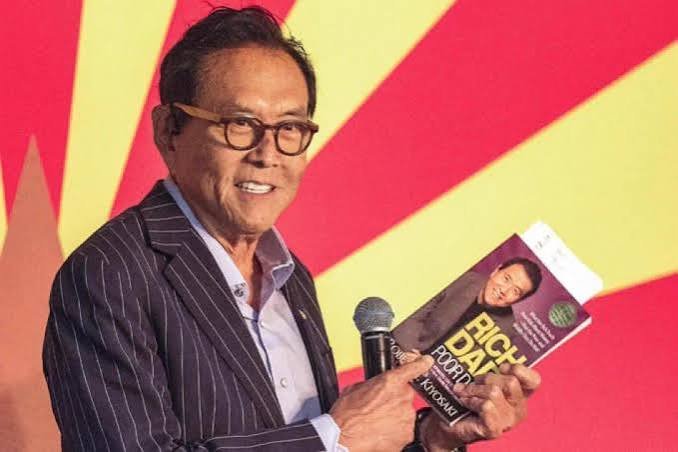
Renowned financial educator and author of the bestselling book ‘Rich Dad Poor Dad‘, Robert Kiyosaki, has disclosed that his real estate investment portfolio is carrying approximately $1.2 billion in debt.
Key Highlights
- Robert Kiyosaki reveals about $1.2 billion in real estate debt.
- The Rich Dad Poor Dad author says he uses debt to acquire income-generating assets.
- He cautions investors against copying his strategy without proper financial education.
- Former wife Kim Kiyosaki says the debt involves jointly owned real estate projects.
- Kiyosaki reportedly has interests linked to about 1,500 apartment units.
The 79-year-old made the revelation during a recent appearance on the Get Rich Education podcast, explaining that borrowing money to purchase income-producing assets has been a key component of his investment philosophy for decades.

“So, I’m a billion two in debt,” Kiyosaki said. Despite the staggering figure, Kiyosaki cautioned investors against attempting to replicate his strategy without first acquiring a proper understanding of how debt and investments work.
According to him, his approach to leveraging borrowed funds is based on years of experience and financial education.
“Should not do what I do, right? But I studied it since 1974… If you’re going to learn to use debt, you’d better take some education,” he said.
Kiyosaki has consistently advocated the use of what he describes as productive debt—borrowing to acquire assets capable of generating regular income, particularly properties.
However, his former wife and longtime business partner, Kim Kiyosaki, clarified that the reported $1.2 billion liability should not be interpreted as money personally owed by the author alone.
She explained that much of the debt is connected to jointly owned real estate projects involving business partners, including a portfolio of about 1,500 apartment units.
“So technically, yes, we have all this debt,” Kim said, adding that Kiyosaki’s individual portion represents only a fraction of the total amount.
The investment strategy reportedly allows investors to borrow against the rising value and equity of their properties, while the money received through such borrowing is generally treated as loans rather than taxable income.
Read also:
- Olukoyede Lists Achievements, Says EFCC Recovered N1.233tn, Secured Over 10,000 Convictions In 3 Years
- Shell Reaffirms Commitment To Safety At Contractor’s CEO Forum,
- AKK Pipeline Project 95% Completed: What It Means For Nigeria’s Industrialization
- NAF Opens 2026 Recruitment For Tradesmen, Non-Tradesmen
- NDA Publishes 78 Regular Combatant Course Admission List, Sets September 12 Reporting Date
- Army Dismiss 92 Regular Recruitment Intake Reports, Warn Applicants
- TRCN Raises Alarm Over Fraudsters Defrauding Teachers Across Nigeria
- Marwa Directs NDLEA Investigators To Trace, Seize, Recover Proceeds, Assets Of Drug Traffickers
Kiyosaki also uses separate limited liability companies for individual investments, a structure aimed at limiting the potential impact of financial problems in one investment on his other assets.
“If it all comes to hell, you can talk to my attorney,” he said, referring to the legal protections surrounding his investments.
“Firewalls — that’s the way the rich play the game.”
While the $1.2 billion debt figure has attracted significant attention, estimates suggest Kiyosaki’s personal share of the liabilities could be considerably lower.
The financial author has repeatedly maintained that wealthy investors distinguish between debt used to acquire cash-generating assets and borrowing used primarily to fund personal consumption.
Kiyosaki’s Rich Dad Poor Dad, first published in 1997, has sold more than 44 million copies worldwide and remains one of the most widely recorgnised books on personal finance and wealth creation.