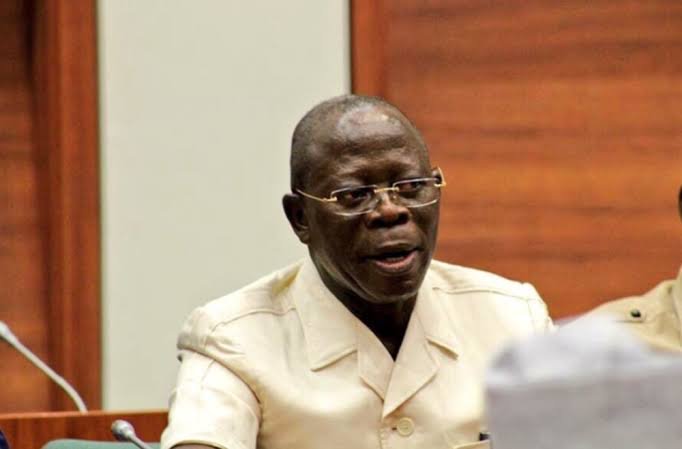
A special committee chaired by former Edo State Governor and Senator Adams Aliu Oshiomhole has submitted its report on the ownership, funding and status of the Museum of West African Art (MOWAA) project in Edo State.

The committee was constituted to investigate and clarify the ownership structure and funding history of the museum project.
Presenting the report, Oshiomhole alleged that the administration of former Edo State Governor Godwin Obaseki committed N3.8 billion in public funds to the project.
He also raised concerns over changes to the name and structure of the proposed museum, arguing that the alterations affected the original concept of a royal museum intended to house returned Benin artefacts.
Read Also:
- Senator Oshiomhole Endorses Death Penalty For Kidnappers, Bandits
- Forged Senators’ Signatures Claim: Oshiomhole Denies Making Allegation, Clarifies Suspension Comment
- Senate Dismisses Sen. Oshiomhole’s Forgery Claims Over Sen. Akpoti-Uduaghan’s Suspension
- Daddy Freeze Reacts as UBA Graduate Calls Tony Elumelu by First Name
- Renaissance Africa Energy Throws Weight Behind Bonny’s Push For Tourism, Investment Diversification
- Portugal Approves Burka Ban: Full-Face Coverings in Public Could Attract €3,000 Fine
- CDCFIB Recruitment Nears Conclusion, Candidates To Get Updates Within Four Weeks
- FG Declares Tuesday Public Holiday for 2026 Eid ul Mawlid
According to Oshiomhole, sustained efforts by the Oba of Benin to secure the return of artefacts taken from the ancient Benin Kingdom contributed to discussions about establishing a dedicated museum for the returned works.
He said the Obaseki administration initially agreed to fund the construction of a Benin Royal Museum on land provided by the Oba of Benin.
However, he said the administration later demolished the former Central Hospital and changed the project’s name, first to the Edo Museum of West African Art (EMOWA) and subsequently to the Museum of West African Art (MOWAA).
Oshiomhole said the Edo State Government initially provided N800 million as seed funding for the project, with additional contributions coming from other sources.
He cited a €4 million contribution from the German government and a $1.5 million donation from Leventis, among other contributions.
The former governor further claimed that about five days before the end of the Obaseki administration, another N1 billion was approved and released for the project, bringing the state’s alleged total expenditure to N3.8 billion.
Oshiomhole also questioned claims by MOWAA management regarding funds reportedly received for the project and allegedly spent on land acquisition and archaeological excavation.
He said the committee’s investigation had challenged some of those claims.
Based on its findings, the committee recommended that the existing facility should not be demolished, but retained and given a name that reflects what it described as its proper ownership.
It proposed that the facility be renamed the Benin Royal Museum of African Art, arguing that the name could help attract Benin artefacts held in different parts of the world.
The committee also recommended that the museum be returned to the Oba of Benin for management.
Oshiomhole argued that the traditional institution would provide continuity in the protection and management of the artefacts, noting that elected governments change while the Benin monarchy remains.
Receiving the report, the Edo State Governor commended the committee for what he described as a comprehensive and objective investigation.
He said the state government would constitute another committee to consider the report and prepare a white paper on the recommendations.
The governor also said the committee’s findings would be reviewed in collaboration with the Ministry of Justice before the recommendations were formally adopted.
He recalled that former Governor Obaseki had initially spoken about establishing a royal museum before the project subsequently became associated with MOWAA.
“I watched in a video clip where Obaseki promised to build a Royal Museum to celebrate our Royal father but dramatically changed to MOWAA. You have done a great job and our ancestors will bless you all,” he said.
Those present during the presentation included the Deputy Governor, Rt. Hon. Dennis Idahosa; the Secretary to the State Government, Umar Musa Ikhilor; the Attorney-General of Edo State, Prof. Roland Otaru; and other senior government officials.
The report is expected to form the basis for further government consideration of the ownership, management and future direction of the museum project.