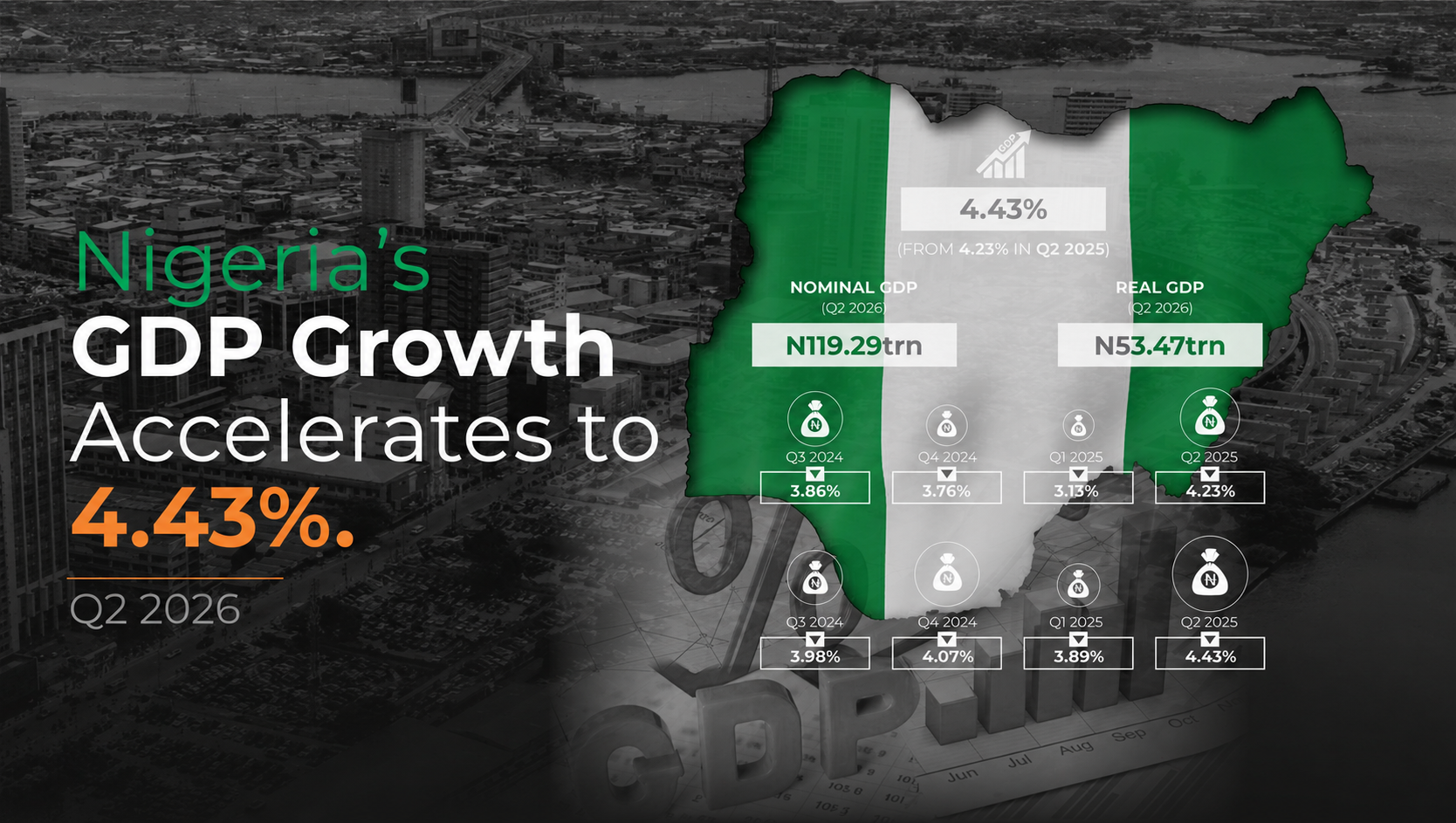
Nigeria’s economy grew by 4.43 per cent year-on-year in the second quarter of 2026, up from 4.23 per cent recorded in Q2 2025 and 3.89 per cent in the first quarter of 2026, according to the Federal Ministry of Finance.
Key Highlights

- Nigeria’s real GDP grew by 4.43 per cent in Q2 2026.
- First-half 2026 GDP growth rose to 4.16 per cent from 3.68 per cent in H1 2025.
- Manufacturing growth more than doubled to 3.24 per cent.
- Agriculture expanded by 4.39 per cent, while services grew by 4.60 per cent.
- The Federal Government is targeting a $1 trillion economy by 2030.
- The Ministry says Nigeria is positioned to strengthen its position among Africa’s largest economies.
In a statement issued on September 1, 2026, the ministry said the latest figures reflected sustained strengthening across key sectors of the economy.
It said real GDP growth for the first half of 2026 reached 4.16 per cent, compared with 3.68 per cent in the corresponding period of 2025.
The ministry also said economic expansion was becoming more broad-based, with 27 economic subsectors recording real growth above three per cent in Q2 2026, compared with 23 subsectors in the same period of 2025.
Manufacturing, Agriculture Drive Growth
The productive sectors recorded stronger performances during the quarter.
Manufacturing grew by 3.24 per cent, more than double the 1.60 per cent recorded in Q2 2025, which the ministry said reflected improved industrial output.
Agriculture expanded by 4.39 per cent, compared with 2.82 per cent in Q2 2025, while the services sector grew by 4.60 per cent, up from 3.94 per cent.
The Ministry of Finance also linked the stronger performance to relative stability and appreciation in the exchange rate.
According to the ministry, the naira appreciated by more than 12 per cent between the first half of 2025 and the first half of 2026, contributing to an estimated 17 per cent expansion of Nigeria’s economy in US dollar terms over the period.
The ministry said sustained growth, together with government social programmes, could strengthen dollar incomes, improve purchasing power and reduce poverty.
Read also:
- CIBN hails Abia Governor Alex Otti for 10% GDP growth, poverty reduction, job creation
- Agricultural, industrial sectors boost GDP growth to 3.98%-NBS
- $2bn broadband project will boost GDP growth, says minister
FG Targets $1 Trillion Economy
The Federal Government said the latest economic performance strengthens Nigeria’s prospects of achieving its target of a $1 trillion economy by 2030.
It added that continued macroeconomic stability, sustained growth across productive sectors and improved investor confidence could accelerate Nigeria’s emergence as Africa’s largest economy by 2028.
The ministry further stated that the International Monetary Fund had ranked Nigeria among the top 10 contributors to global real GDP growth in 2026, projecting that the country would account for approximately 1.5 per cent of global growth this year.
The Federal Government said the figures underscored the need to sustain economic reforms and maintain policy consistency as the benefits of the reforms gradually reach households.
It reaffirmed its commitment to promoting inclusive growth and translating economic gains into improved living standards and shared prosperity for Nigerians.