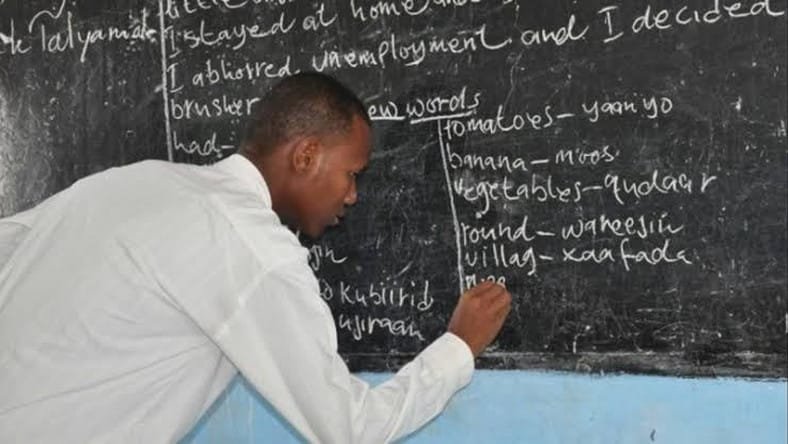
Nigeria is confronting a deepening teacher shortage that threatens to worsen learning outcomes for tens of millions of children, with the National Commission for Colleges of Education warning of a deficit of nearly 200,000 qualified teachers at the basic education level while enrolment in teacher training institutions continues to fall.
What Happened
NCCE Executive Secretary Angela Ajala raised the alarm at the 2nd Annual National Conference of the Committee of Provosts of Colleges of Education, held in Abuja. She disclosed that 18 states went five consecutive years without recruiting a single teacher and that some colleges of education recorded zero first-year admissions — a sign that the pipeline supplying qualified teachers is severely constricted.

At the primary school level, the situation is already critical. Available data shows 915,913 teachers serving 31.77 million pupils across public and private primary schools, yielding a teacher-pupil ratio of 1:35 — well above the UNESCO benchmark of 1:25. The Universal Basic Education Commission has put the primary-level teacher deficit at more than 165,000.
The education ministry’s 2026 budget proposal, presented by Minister Tunji Alausa before the National Assembly’s joint education committees, acknowledged the scale of the crisis. The ministry proposed a N2.4 trillion budget for education with a specific focus on teacher shortages and infrastructure deficits, though the allocation still falls short of the 15-to-20 per cent of national expenditure that UNESCO recommends. Nigeria’s education budget has averaged just 6.54 per cent of national expenditure between 2015 and 2025, according to available data.
Read Also:
- Education minister calls for overhaul of polytechnic education system
- Federal colleges of education to now award degrees – FG
- Provost pushes for ICT-driven reforms in Technical Education
Gender disparities compound the problem in some northern states, where female enrolment in colleges of education falls below 25 per cent of the student population, limiting both the diversity and scale of the future teaching workforce.
Why It Matters
Nigeria’s teacher shortage is not primarily a supply problem — the country has more than a million unemployed education graduates from its universities and colleges of education. The crisis is one of recruitment, welfare, and retention. Eighteen states chose not to hire available teachers for five consecutive years. Low salaries, poor working conditions, staggered or irregular pay, and limited career progression have made teaching deeply unattractive as a profession, driving qualified graduates toward private enterprise, the civil service, or overseas employment.
The consequences fall directly on children. Learning poverty — the inability to read or perform basic arithmetic by age ten — now affects more than 70 per cent of Nigerian children, according to available analysis. Overcrowded classrooms, absent or undertrained teachers, and schools in states where no teacher has been hired in years all contribute directly to that outcome.
The teacher shortage also intersects with Nigeria’s broader education crisis. Save the Children estimates that 28 million Nigerian children and adolescents currently lack access to formal schooling or digital learning. The NCCE’s push for curriculum reform and digital teacher preparation makes little impact if the structural conditions that drive teachers away from the profession remain unchanged.
What This Means for Nigeria
For the Federal Government, the teacher deficit represents an accountability test. Announcing a digital curriculum and a dual-mandate policy is a meaningful start, but it will not close a 200,000-teacher gap in classrooms where states continue to freeze recruitment.
For state governments — whose decisions on hiring, salary payment, and school funding directly determine whether a child has a teacher in front of them — the NCCE’s data should function as a direct indictment of years of neglect. Analysts and policy institutions have repeatedly called for a national salary and incentive framework, rural deployment packages, and ring-fenced budget allocations specifically for teacher recruitment.
For Nigerian families, particularly those in states with zero teacher recruitment over five years, the data confirms what parents and pupils already know from lived experience: classrooms are understaffed, teachers are overstretched, and the state has for years failed to act on a crisis it helped create.
“Eighteen states went five consecutive years without recruiting a single teacher, while some colleges recorded zero first-year intake.” — Angela Ajala, Executive Secretary, NCCE
The Bottom Line
Nigeria’s teacher deficit is large, worsening, and traceable to deliberate policy failures at the state level. The Federal Government’s curriculum reforms and budget proposals are necessary but insufficient on their own. Until the conditions that make teaching unattractive are reversed — competitive pay, reliable allowances, clear career progression, and active recruitment — Nigeria will continue to train teachers it does not hire and send children to classrooms where no one stands at the board.