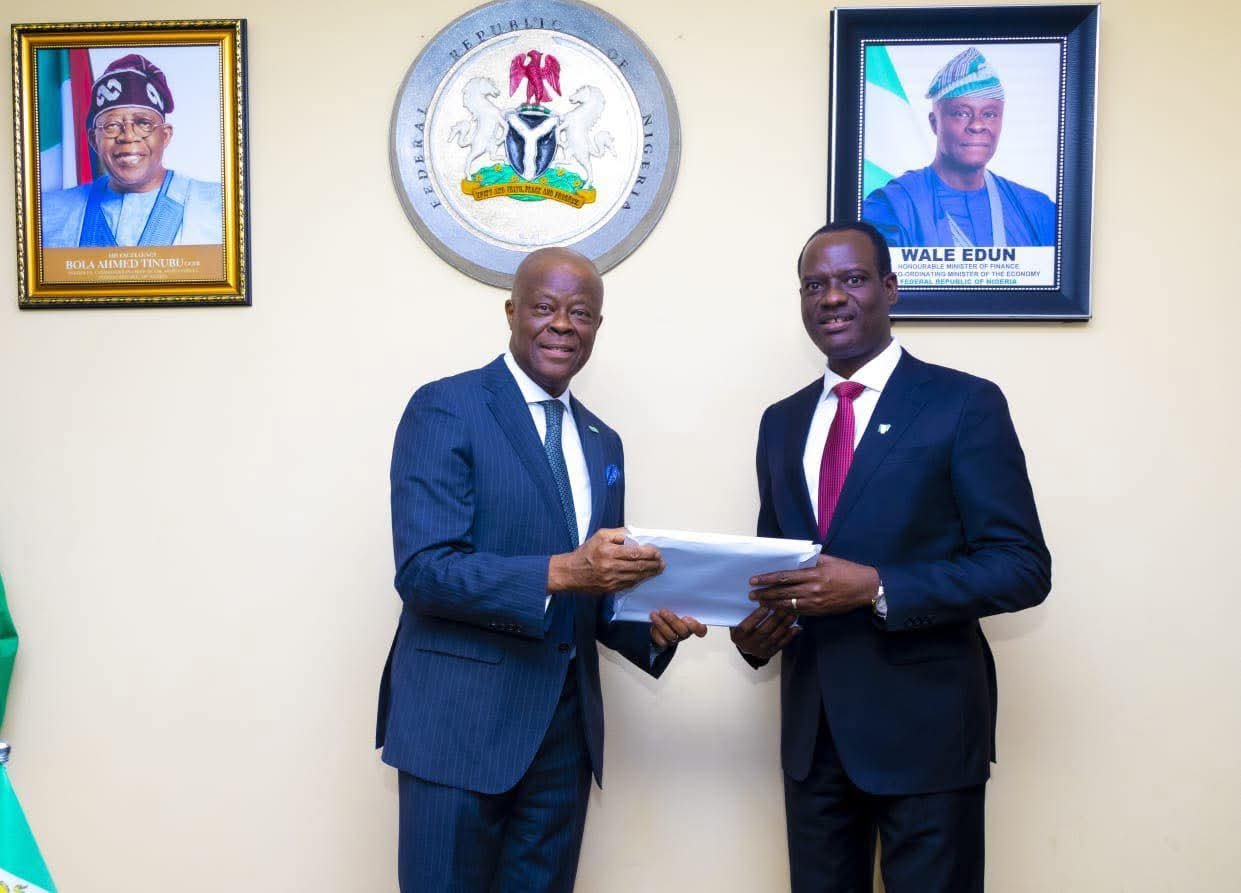
Nigeria’s Minister of Finance and Coordinating Minister of the Economy, Taiwo Oyedele, has declared that the country can no longer depend heavily on borrowing to fund national development, insisting that stronger tax reforms and sustainable revenue generation are now critical to the nation’s future.
Speaking at the 28th Annual Tax Conference of the Chartered Institute of Taxation of Nigeria in Abuja, Oyedele said Nigeria must build a resilient fiscal system capable of financing infrastructure, healthcare, education, security and social welfare without excessive reliance on debt.

Key Highlight:
- Taiwo Oyedele said Nigeria cannot continue relying heavily on borrowing to fund development.
- His comments came amid reports that the government is seeking a fresh $1.25 billion loan from the World Bank.
- Oyedele said ongoing tax reforms aim to improve revenue generation, reduce inequality, simplify taxation, and attract investment.
- The reforms include exempting minimum wage earners from personal income tax and plans to lower company income tax rates.
- Kashim Shettima and Adams Oshiomhole supported the reforms, calling them beneficial for economic growth and poverty reduction.
His remarks come amid reports that the Federal Government is seeking a fresh $1.25 billion loan from the World Bank to support economic reforms and job creation initiatives.
According to the minister, the government’s ongoing tax reforms are designed to improve fiscal sustainability, attract investment, reduce inequality and stimulate long-term economic growth.
Oyedele noted that Nigeria’s tax system has for years been weakened by multiple taxation, poor compliance, fragmented administration and overdependence on a narrow revenue base, making it difficult for government revenues to adequately support development needs.
He explained that the proposed reforms aim to simplify taxation, improve fairness and reduce the burden on low- and middle-income earners while creating a more investor-friendly environment.
The minister disclosed that minimum wage earners have now been exempted from personal income tax, while plans are underway to reduce company income tax rates in order to encourage business expansion and investment.
Read also:
- Tinubu appoints Oyedele as minister of state for finance
- We’re not going to reverse economic reforms, Oyedele assures investors
- From Tax Policy to National Strategy: Taiwo Oyedele’s appointment, its potential impact on Nigeria’s economy
He added that reforms to the Value Added Tax system are expected to lower operational costs, improve efficiency and help moderate inflationary pressures across the economy.
Oyedele further revealed that at least 15 states have already adopted tax harmonisation laws aimed at reducing multiple taxation and easing compliance burdens on businesses operating across the country.
Also speaking at the conference, Vice-President Kashim Shettima defended the reforms, describing them as pro-people and pro-business measures intended to strengthen the economy and lift millions of Nigerians out of poverty.
Former Edo State Governor, Adams Oshiomhole, also backed the reforms, arguing that wealthy Nigerians and private jet owners should contribute more through taxation to support national development.