
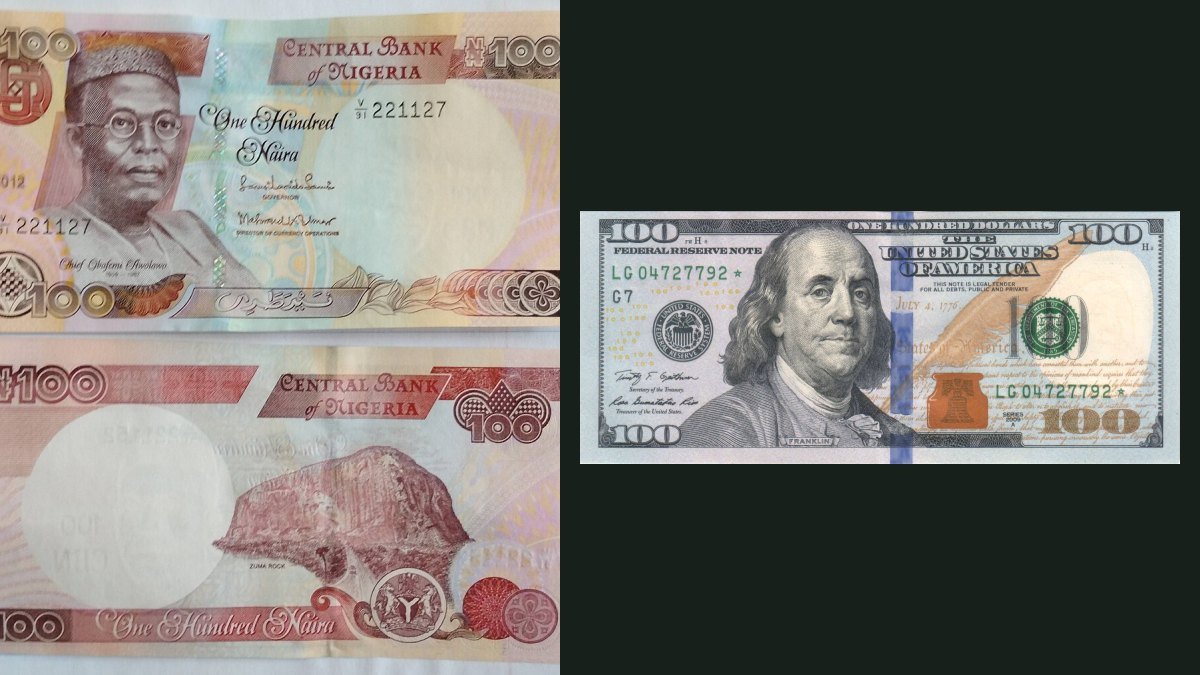
The Nigerian naira appreciated against the United States dollar at the official foreign exchange market on Thursday, November 26, 2026, as the dollar traded at ₦1,391.75, compared with the previous reading of approximately ₦1,394.
Latest: Dollar to naira today: official and black market rates (live tracker)

However, the dollar remained more expensive at the parallel market, commonly known as the black market, where it was exchanged between ₦1,450 and ₦1,455, highlighting the continued gap between the official and unofficial exchange rates.
Key Highlights
- Official dollar exchange rate falls to ₦1,391.75 as the naira gains value.
- CBN data shows an official buying rate of ₦1,391.25 and selling rate of ₦1,392.25.
- Dollar trades between ₦1,450 and ₦1,455 at the parallel market.
- The difference between the official central rate and parallel-market selling rate stands at ₦58.25–₦63.25.
- Buying $100 at the parallel market costs between ₦5,825 and ₦6,325 more than at the official central rate.
Data from the Central Bank of Nigeria (CBN) showed that the official market recorded a buying rate of ₦1,391.25 per dollar and a selling rate of ₦1,392.25, with a central rate of ₦1,391.75.
The latest central rate represents an appreciation of approximately ₦1.87 against the dollar compared with the previous reading.
Dollar Exchange Rate at the Black Market
Meanwhile, the parallel market continued to record higher exchange rates, with currency dealers buying the dollar at between ₦1,440 and ₦1,445 and selling it at between ₦1,450 and ₦1,455.
However, exchange rates at the parallel market may vary depending on the location, transaction amount and individual currency dealer.
Naira to Dollar Exchange Rates: How Much Is $1, $10, $100 and $1,000?
Based on the official central rate of ₦1,391.75, one dollar was equivalent to ₦1,391.75, while $10 exchanged for ₦13,917.50.
Similarly, $50 was valued at ₦69,587.50, while $100 exchanged for ₦139,175 at the official market.
At the parallel market, $1 exchanged for between ₦1,450 and ₦1,455, while $10 was valued at between ₦14,500 and ₦14,550.
The equivalent of $50 stood at between ₦72,500 and ₦72,750, while $100 exchanged for between ₦145,000 and ₦145,500.
For larger transactions, $500 was valued at ₦695,875 at the official market and between ₦725,000 and ₦727,500 at the parallel market.
Similarly, $1,000 exchanged for ₦1,391,750 at the official market, compared with between ₦1.45 million and ₦1.455 million at the parallel market.
Read also:
- Dollar to Naira Exchange Rate Today, November 25, 2026: Black Market Sells at ₦1,460, Official Rate ₦1,394
- CBN, NNPCL Sign MoU To Boost FX Inflows, Reserves And Energy Financing
Gap Between Official and Black Market Dollar Rates
The difference between the official central rate and the parallel-market selling rate stood at between ₦58.25 and ₦63.25 per dollar.
This means Nigerians purchasing $100 at the parallel market would pay between ₦5,825 and ₦6,325 more than the equivalent amount calculated using the official central rate.
The naira’s performance across both markets remains an important indicator of developments in Nigeria’s foreign exchange market, with the difference between official and parallel rates continuing to affect individuals and businesses requiring foreign currency.
For daily rate updates, follow us on X.