The ongoing conflict involving Iran, the United States and Israel is reportedly raising fresh concerns over global food security, with industry leaders warning that billions of meals could be lost each week due to disruptions in fertilizer supply.
Chief Executive of Yara International, Svein Tore Holsether, said the crisis, particularly the blockage of key shipping routes like the Strait of Hormuz, is already affecting the production and distribution of essential fertilisers worldwide.

According to him, as much as 500,000 tonnes of nitrogen fertilizer are currently not being produced, a shortfall that could translate into up to 10 billion fewer meals globally every week.
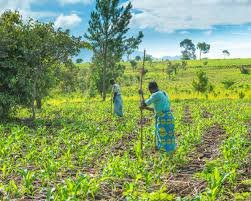
He warned that reduced fertilizer use could cut crop yields by as much as 50% in some regions during the first planting season.
Holsether noted that the impact would be most severe in developing regions, including parts of Africa, Asia, and Latin America, where fertilizer usage is already below optimal levels.
Read Also:
- Iran proposes new deal to ease tensions, reopen Strait of Hormuz
- Oil prices rise as US-Iran peace talks stall
- Trump cancels peace trip to Pakistan, warns talks with Iran will be “unproductive”
Countries in sub-Saharan Africa, in particular, could face “significant drops” in agricultural output.
The fertiliser market is highly interconnected, with about one-third of global supply such as urea, ammonia, potash, and phosphates typically passing through the Strait of Hormuz.
Disruptions in this corridor have already pushed fertiliser prices up by roughly 80% since the conflict escalated.
Experts warn that if the crisis persists, it could trigger a global bidding war for food, with wealthier nations outcompeting poorer ones.
Holsether cautioned that such a scenario would disproportionately affect vulnerable populations who cannot afford rising food prices.
While countries like the United Kingdom may avoid outright food shortages, consumers are expected to feel the effects through rising food costs in the coming months. Inflationary pressures are already building, with forecasts indicating further increases before the end of the year.
The United Nations and the World Food Programme have also raised alarms, estimating that the broader fallout from the Middle East crisis could push an additional 45 million people into acute hunger by 2026.
Agricultural experts say the timing of the disruption is critical. While planting seasons are underway in parts of Asia, shortages in fertiliser may not be fully reflected in food prices until later in the year, when harvests come in lower than expected.
Farmers worldwide are already grappling with rising production costs including fuel, energy, and inputs without corresponding increases in crop prices, further squeezing their margins.
As the conflict continues, global leaders are being urged to consider the wider humanitarian consequences, particularly for regions already struggling with food insecurity.