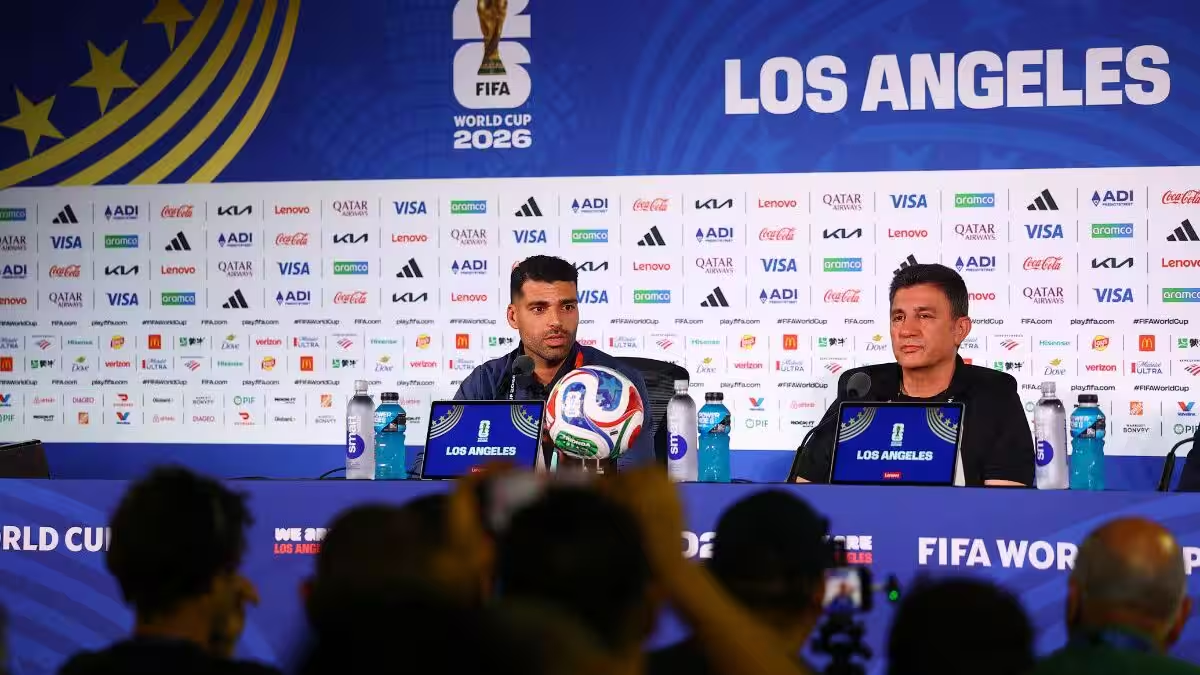
Iran head coach Amir Ghalenoei has alleged that his team was instructed to leave the United States immediately after its opening match of the 2026 FIFA World Cup, describing the arrangement as disruptive to the squad’s recovery and preparation plans.
Key Highlights:
- Amir Ghalenoei said Iran was told to leave the U.S. immediately after its match.
- He claimed the travel arrangement disrupted player recovery.
- Iran drew 2–2 with New Zealand national football team in Los Angeles.
- Andrew Giuliani said the rules were communicated in advance.
- Iran remains focused on advancing from the World Cup group stage.
Speaking after Iran’s 2-2 draw with New Zealand national football team in Los Angeles, Ghalenoei said the team had expected to spend the night in California before returning to its training base in Tijuana.

According to the coach, Iranian officials were instead required to leave U.S. territory immediately after the match, forcing the squad to travel back to Mexico without the recovery period they had planned.
He argued that the arrangement created avoidable logistical difficulties and affected the players’ ability to recover properly following a demanding World Cup fixture.
“They told us we had to leave immediately after the game. Recovery is very important for players, but we were asked to get on a plane and return to our camp in Tijuana,” Ghalenoei reportedly said.
The Iranian coach added that no detailed explanation was provided for the directive and suggested that decisions affecting the team were being made without consultation.
Ahead of the tournament, Iran established its World Cup base in Tijuana amid ongoing diplomatic tensions between Iran and the United States.
Read also:
- World Cup opener: Nigeria’s absence, visa barriers, ticket controversies cast shadow over football’s biggest showpiece
- Former Super Eagles goalie Daniel Akpeyi announces retirement from professional football
- Nigeria to host African Nations Cup Beach Volleyball Zone 3 qualifiers in Badagry
Ghalenoei explained that the team’s preferred arrangement had been to arrive in the United States two days before each match and depart the day after, allowing sufficient time for preparation and post-match recovery.
He claimed that the restrictions had placed Iran at a disadvantage compared with other participating nations, particularly regarding travel and recovery schedules.
However, the allegations were rejected by Andrew Giuliani, who said the travel conditions had been clearly communicated to Iranian officials before the start of the tournament.
According to Giuliani, Iran was informed in advance that its delegation would only be permitted to enter the United States one day before each match and would be required to leave on the same day after the final whistle.
He maintained that the arrangement had been established before the competition and would apply to all of Iran’s World Cup matches scheduled in Los Angeles and Seattle.
The issue adds another layer of political sensitivity to the 2026 World Cup, which is being jointly hosted by the United States, Mexico and Canada and has already faced scrutiny over visa policies, travel restrictions and broader geopolitical concerns involving participating nations.
Despite the controversy, Iran remains focused on its campaign as it seeks to progress from the group stage in one of the most closely watched editions of the World Cup in recent history.