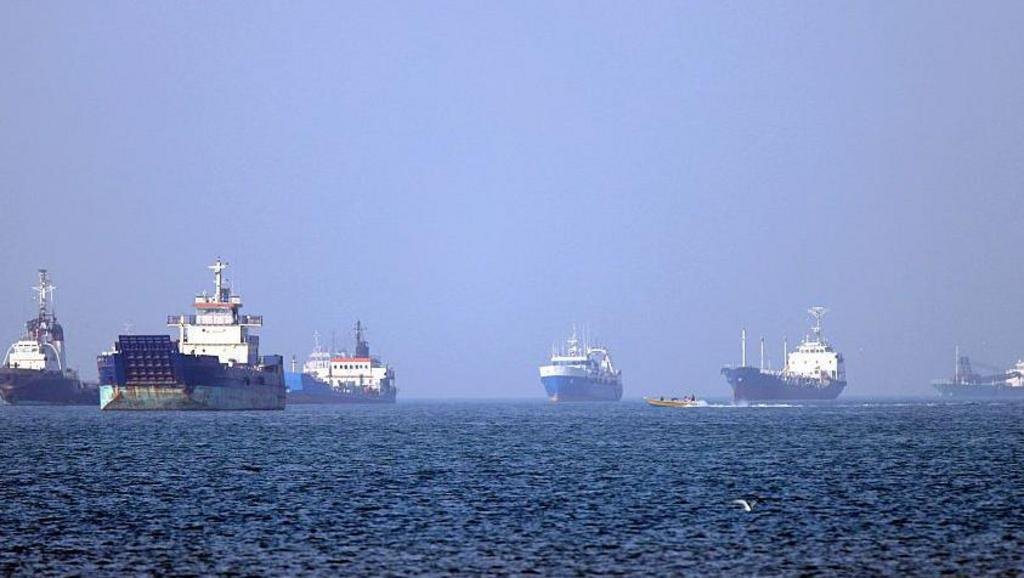
Iran has announced the closure of the strategic Strait of Hormuz following a naval confrontation involving a foreign vessel, a move that has sharply escalated tensions with the United States and sparked renewed concerns over global oil supplies and regional security.
According to Iran’s Islamic Revolutionary Guard Corps (IRGC), its naval forces intercepted a ship accused of travelling through an unauthorised route in the Gulf.

The military said warning shots were fired before the vessel was compelled to stop after allegedly ignoring repeated instructions.
The incident was followed by fresh US military strikes on Iranian positions, prompting Tehran to retaliate by declaring the Strait of Hormuz closed “until further notice” and launching attacks on US military bases and allied installations across the Middle East.
In a statement carried by the IRGC-affiliated Tasnim News Agency, Iranian authorities accused foreign powers of undermining security in one of the world’s busiest maritime trade routes through what they described as unlawful interference.
Read Also:
- Trump Declares Iran Ceasefire Dead, Describes Iranian Leaders As “Scum, Sick People”
- Strait Of Hormuz: US Launches Fresh Airstrikes On Iran After Commercial Shipping Attacks
- Iran’s Supreme Leader Absent As Senior Officials Attend Ayatollah Khamenei’s Funeral
- US Marks 250 Years Of Independence With Nationwide Celebrations
- Saudi Arabia Sign Landmark Nuclear Deal: US, Saudi Arabia Seal Historic Civilian Nuclear Cooperation Agreement
- Ex-porn Star Amaranta Wins Colombian Senate Seat
- Nigerian-Born Lobbyist Karl Von Batten Appointed to Trump’s White House Commission
The military insisted that the closure of the waterway had become unavoidable, warning that no commercial or military vessel would be permitted to transit the strait until what it called US interference in the region ceased.
Iran also warned that any attempt by Washington to challenge the blockade would trigger a stronger military response, declaring US military facilities across the region as potential targets if hostilities continue.
Adding to the hardline rhetoric, Iran’s parliamentary speaker and chief negotiator with the United States, Mohammed Bagher Ghalibaf, declared on social media that Tehran would no longer accept what it described as one-sided agreements.
The latest developments threaten the fragile peace deal reportedly reached between Washington and Tehran in June, which was aimed at ending months of military confrontation, restoring maritime traffic through the Strait of Hormuz and stabilising global energy markets.
Although both countries had agreed to pursue diplomatic engagement in Switzerland, the ceasefire has remained under pressure amid repeated military exchanges and unresolved disagreements over Iran’s nuclear programme.
Analysts warn that any prolonged closure of the Strait of Hormuz through which a significant portion of the world’s crude oil exports passes could disrupt global energy supply chains, push up oil prices and worsen inflation across many economies.