The International Monetary Fund (IMF) has raised concerns over growing budget deficits across Nigeria and several Sub-Saharan African countries, warning that unrealistic fiscal projections and weak budget discipline are worsening public finance challenges in the region.
In a recently released research paper titled Budget Credibility in Sub-Saharan Africa, the IMF said many governments continue to rely on ambitious revenue targets while spending above approved budget limits, resulting in persistent fiscal imbalances.
The report, which examined fiscal performances in 39 Sub-Saharan African countries between 2021 and 2024, found that the gap between approved budgets and actual fiscal outcomes remains widespread and deeply rooted.

According to the Fund, many countries consistently record higher-than-projected deficits because anticipated revenues often fall short, while recurrent expenditures continue to rise beyond planned levels.
The IMF noted that capital projects are usually the first to suffer whenever governments experience revenue shortfalls, delayed grants or disruptions in external financing.
“Capital spending is typically under-executed, especially when tax revenues fall short or grants are delayed,” the report stated.
It added that budget deficits frequently exceed initial projections due to overly optimistic revenue expectations and overspending on recurrent expenditures.
Key Highlights:
- The International Monetary Fund warned that many Sub-Saharan African countries, including Nigeria, are facing worsening budget deficits due to unrealistic revenue projections and weak fiscal discipline.
- In its report “Budget Credibility in Sub-Saharan Africa,” the IMF found that governments often overspend on recurrent expenses while actual revenues fall below expectations, creating persistent fiscal imbalances.
- The Fund noted that capital projects such as roads, schools, and hospitals are usually affected first during revenue shortfalls, leading to delays, scaling down, or abandonment of development programmes.
- The IMF stated that countries with stronger fiscal institutions and IMF-supported programmes generally manage budgets more effectively, while fragile and low-income states face larger fiscal slippages.
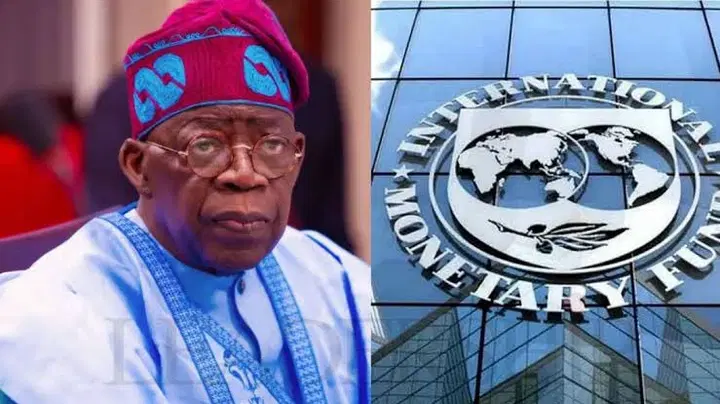
- In Nigeria, the warning comes as Bola Tinubu seeks approval for a larger 2026 budget and increased borrowing, with the proposed borrowing plan rising from N17.89 trillion to N29.20 trillion.
The Fund further explained that spending on salaries, subsidies, social transfers, goods and services often surpasses approved budget ceilings, increasing pressure on already strained public finances.
As a result, infrastructure projects including roads, schools, hospitals and other development programmes are often delayed, reduced in scope or abandoned during periods of fiscal pressure.
The report described fiscal slippages across the region as “persistent and often large,” noting that the trend reflects deeper institutional and governance weaknesses rather than temporary economic shocks or isolated forecasting errors.
According to the IMF, countries with stronger fiscal institutions and tighter expenditure controls generally perform better in aligning actual spending with approved budgets.
The Fund also observed that nations operating under IMF-supported programmes tend to record lower fiscal slippages due to stronger policy oversight and fiscal discipline.
Conversely, low-income and fragile states were found to experience larger budget deviations because of weaker administrative systems and limited financing options.
The IMF further stated that fiscal discipline often weakens during election periods as governments face increasing political pressure to spend outside approved fiscal plans.
It stressed that budget credibility goes beyond accurate forecasting and depends heavily on transparency, institutional quality, fiscal governance and effective policy implementation.
The warning comes amid earlier IMF projections that fiscal conditions across Sub-Saharan Africa may weaken further in 2026 despite improved commodity prices in some countries.
The Fund projected that the region’s median fiscal deficit could widen to 3.2 per cent of Gross Domestic Product (GDP).
In Nigeria, the concerns come as the Federal Government plans increased borrowing for the 2026 fiscal year.
Read also:
- IMF endorses Nigeria’s bank recapitalisation as capital buffers strengthen financial system
- Edun rules out seeking IMF bailout, expresses confidence in success of economic reforms
- Edun meets IMF director in Abuja, pushes for stronger ECOWAS economic coordination
The government recently raised its borrowing plan to N29.20 trillion following an expansion of the proposed national budget and fiscal deficit.
The revised borrowing estimate represents an increase of N11.31 trillion from the earlier projection of N17.89 trillion.
President Bola Tinubu had also asked the Senate to approve an upward review of the 2026 Appropriation Bill by N9 trillion, increasing the proposed budget from N58.4 trillion to N67.4 trillion.
Economic analysts say the IMF’s latest warning underscores growing concerns about debt sustainability, fiscal transparency and the long-term economic outlook of many African economies facing rising public expenditure and weak revenue growth.